In Praise of Investor Optimism

markets_1980043c

My industry is awash in optimism. This makes intuitive sense, for the entire process of investing assumes that the companies you invest in will go up in value. Regardless of how conservative and cautious a portfolio manager is, underlying his dour outlook is an optimist that runs a portfolio of various stocks, each one intended to make money.

optimism

For this reason it is incredibly rare to hear outright negativity from professionals, which I suspect contributes to a subtle sense of unease by the average Canadian who must both trust a portfolio manager to look after his money while scratching their heads at a market that can decline significantly in value with no perceivable change to the asset mix they are invested it.
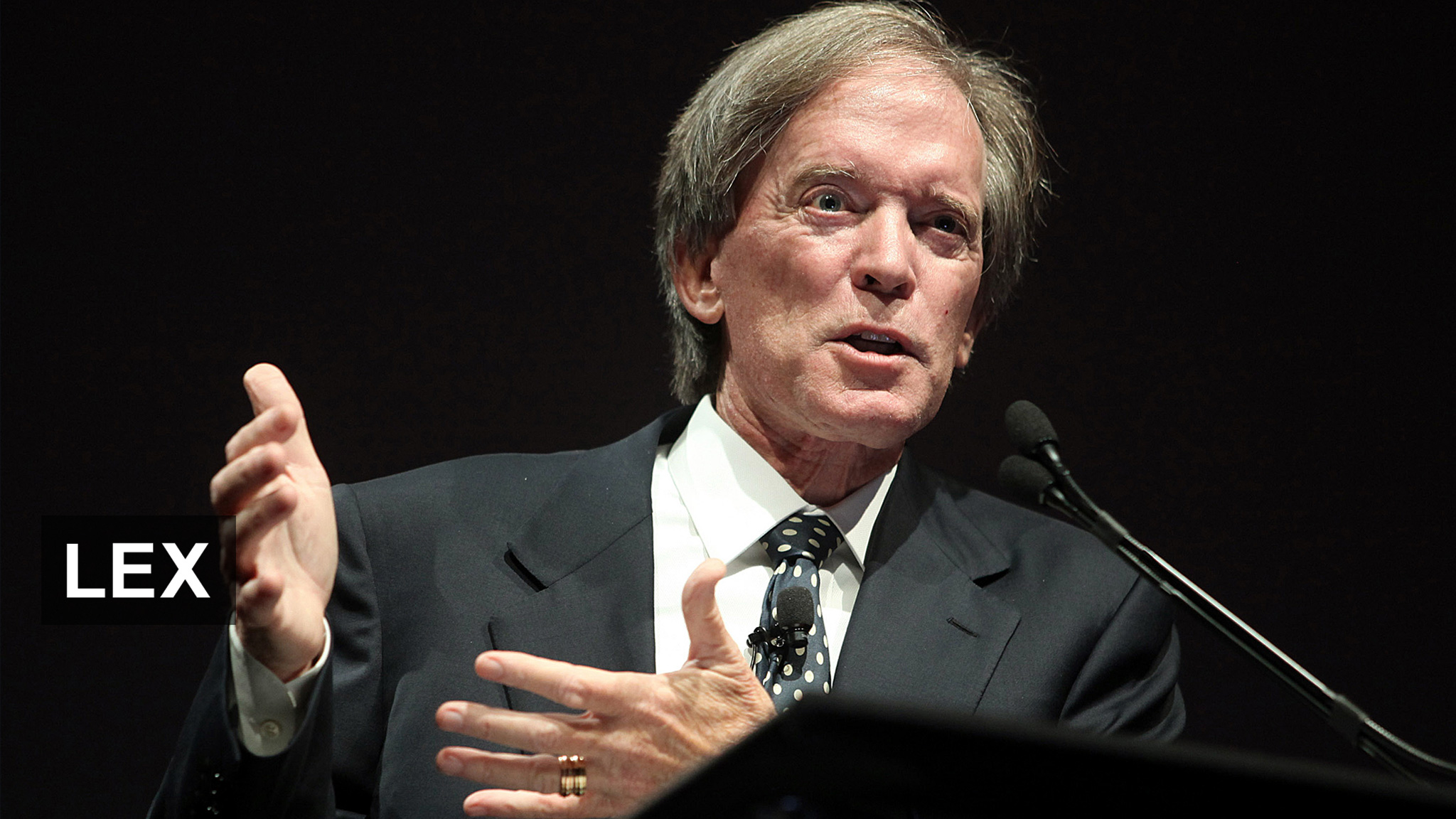
This is Bill Gross. Until 2011 he was a very successful manager with PIMCO, where he headed up their largest fund. Then he made a contrarian prediction about the markets, lost a lot of money and was fired from his fund.

Even when we do get very negative views from portfolio managers, the subtext is still optimism, just for THEIR investment choices. There is never a contrarian market call that doesn’t seem to serve double duty as a marketing plan as well. When Bill Gross famously said that the US was going to tank back in 2011, he was also claiming that his investments wouldn’t and took a contrarian stance that proved to be very costly for his investors. The same is true for Eric Sprott, whose own doubt about the future of stock markets had prompted some very optimistic numbers about the value of gold and junior mining companies.

For the average investor much of this can be quite exasperating as investing shies away from the ways we attempt to establish certainty. Investing is all about educated guesses, and despite many different tweaks the rules for investing remain surprisingly limited: “buy low, sell high” and “diversify”. Professionals have attempted to improve and refine how these two things are done, seeking out the best ways to analyse companies, markets and whole countries, but in the end these two rules still provide the best advice to investment success.
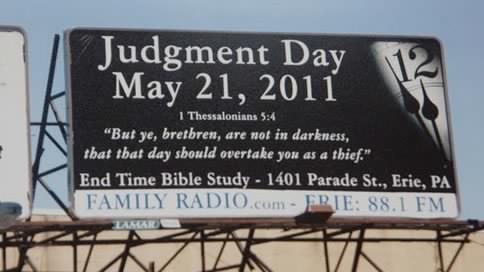
I wish to write to you about a mistake on your billboard...
I wish to write to you about a mistake on your billboard…

But as investment guides go, reveling in the uncertainty of the investments is something that many people don’t want. Instead they would much prefer to hear about what is going to happen in a matter-of-fact manner from an “expert”. This is why there is always a market for doomsayers and contrarian predictions, because of the certainty they seem to offer. It feeds our innate sense that there must be a right and knowable answer about the future that can be revealed to us.

sandwich-board-man-warns-us-of-impending-doomAnd yet like their biblical equivalents, contrarian predictions have all failed to live up to their hype. Just as every “end is nigh” doomsday cult has disappointedly had to move the calendar date for the end of the world, the number of people who have proclaimed loudly the end of traditional investment world is both numerous and filled with failure.

And so, frustratingly, investors are faced with the assuredness of doom-saying predictioners (who are almost certainty wrong), and the cheerfully faced optimistic portfolio managers who routinely remind investors that there is no bad time to invest, that bad markets are “corrections” or “set backs” and that significant price drops are “buying opportunities”.

And yet I doubt we would have it any other way. If we could be absolutely certain about what stocks were going up or down and when there would be no money to make in the markets as companies would always be priced correctly. And whether we realize it or not, it is hugely helpful to remember that there exists no accurate way to divine the future, no Ouija board that can contact the dead, no equation or computer that can process the world’s data to tell us what is happening tomorrow, next week or a decade from now.

I derive great comfort in this, because the optimism that drives the investing world is also a wider optimism about the future. Experts predicted famines wiping out millions in 1970s and 1980s, environmentalists predict the end of all things, and political talking heads bombard us with a daily diet that everything is awful, but our world is healthier, wealthier and kinder than ever before. And unbelievably investors believe in that world, even when they don’t know it.

What The *$#! Is Going On? (And What To Do About It)

Money Worries

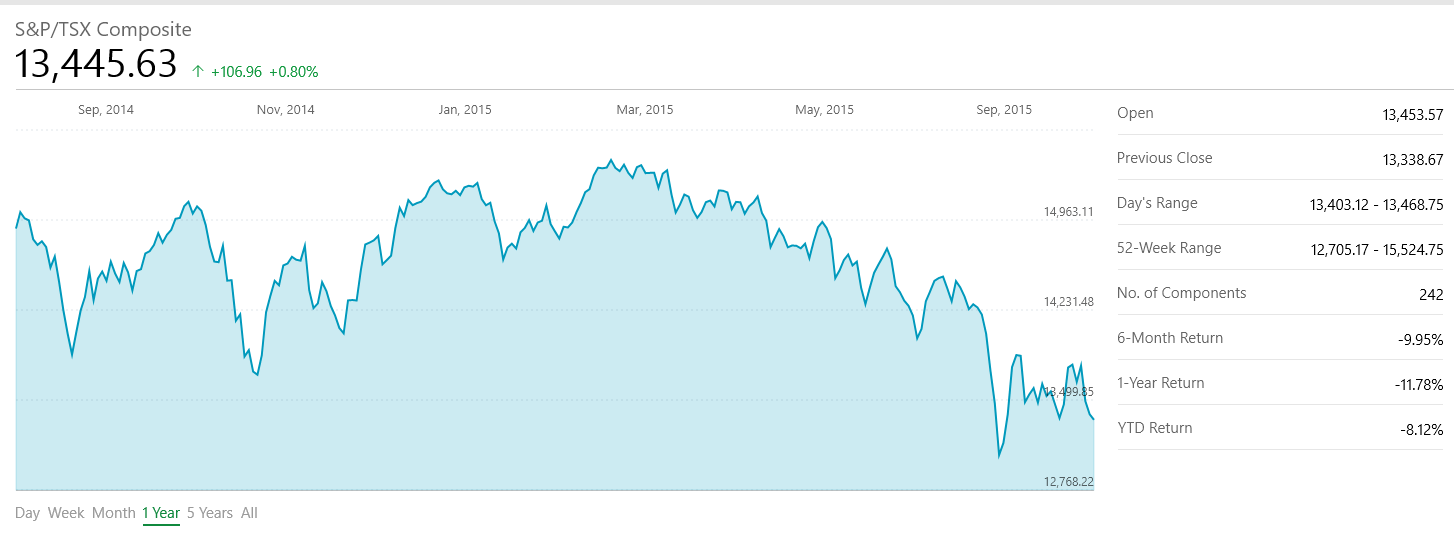
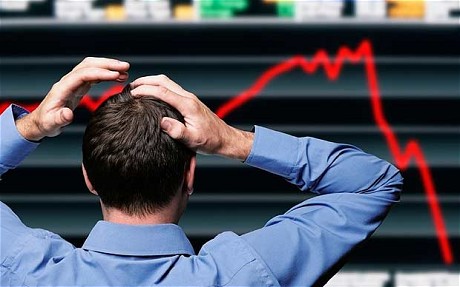
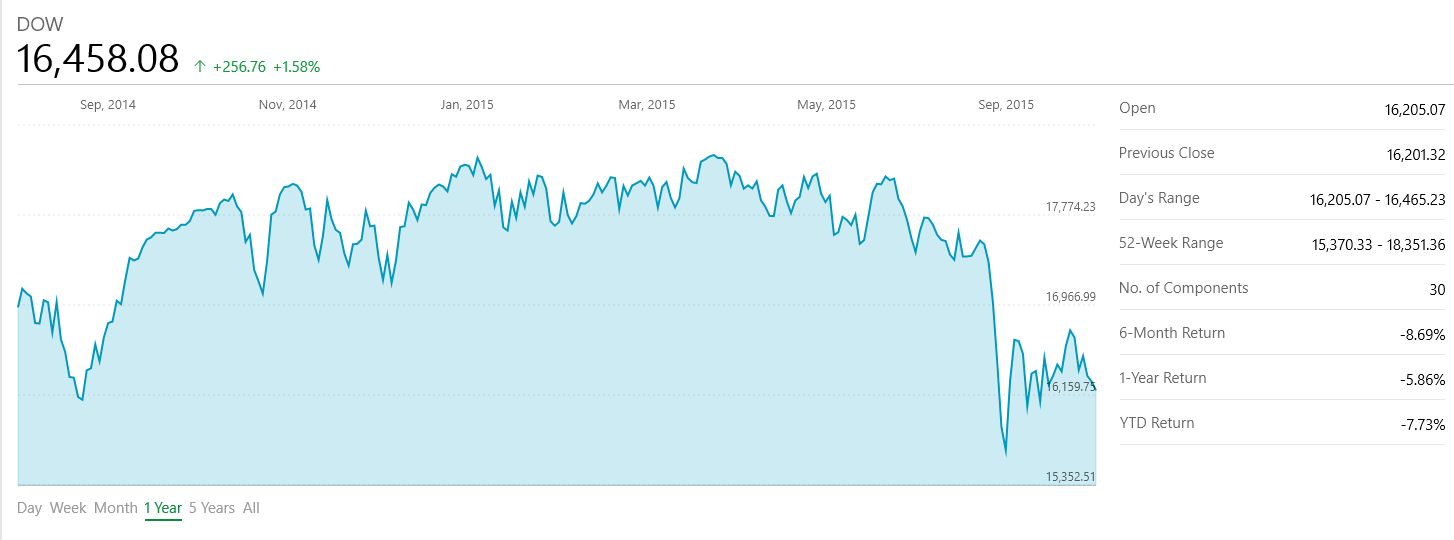
Over the past month it would seem that all hell has broken loose on global markets. A generous explanation might use the phrase “increased volatility” while a more pessimistic reading would say that we are heading for another global recession. Either way, people are nervous and money is being pulled out of the market by investors in droves. Year to date returns off of major indices are all negative. The TSX and the Dow are both -8% for the year while the S&P 500 is -5.5%. So what is happening?

Dow Jones Capture TSX Capture

The earliest threads for the most recent round of economic confusion date back to last year, when the price of oil began to fall. Normally falling oil is a welcome sign but in the economic climate we are in, one desperate to see some inflation, falling oil just meant more deflationary pressure. The plummeting oil price also hit a number of economies quite hard. Resource rich economies like Canada, Russia and Venezuela all took it on the chin. The falling price has been exasperated by the Saudi price war against the burgeoning US shale production.

For many investors a falling oil price also seemed to shine a light on a declining need for oil, not one born of environmental concern, but of a falling global demand. That leads us to the current problem with China. China’s problems are likely vast and not well understood yet. There is secrecy around the Middle Kingdom when it comes to economic matters, but it is likely that the Chinese are not immune to the same kind of avarice, greed and hubris that usually underlies most market bubbles. The Chinese have had a stock market collapse that has been followed by increasingly grim statistics and a revisit of the overbuilding narrative that has followed on the heels of China’s economic success.

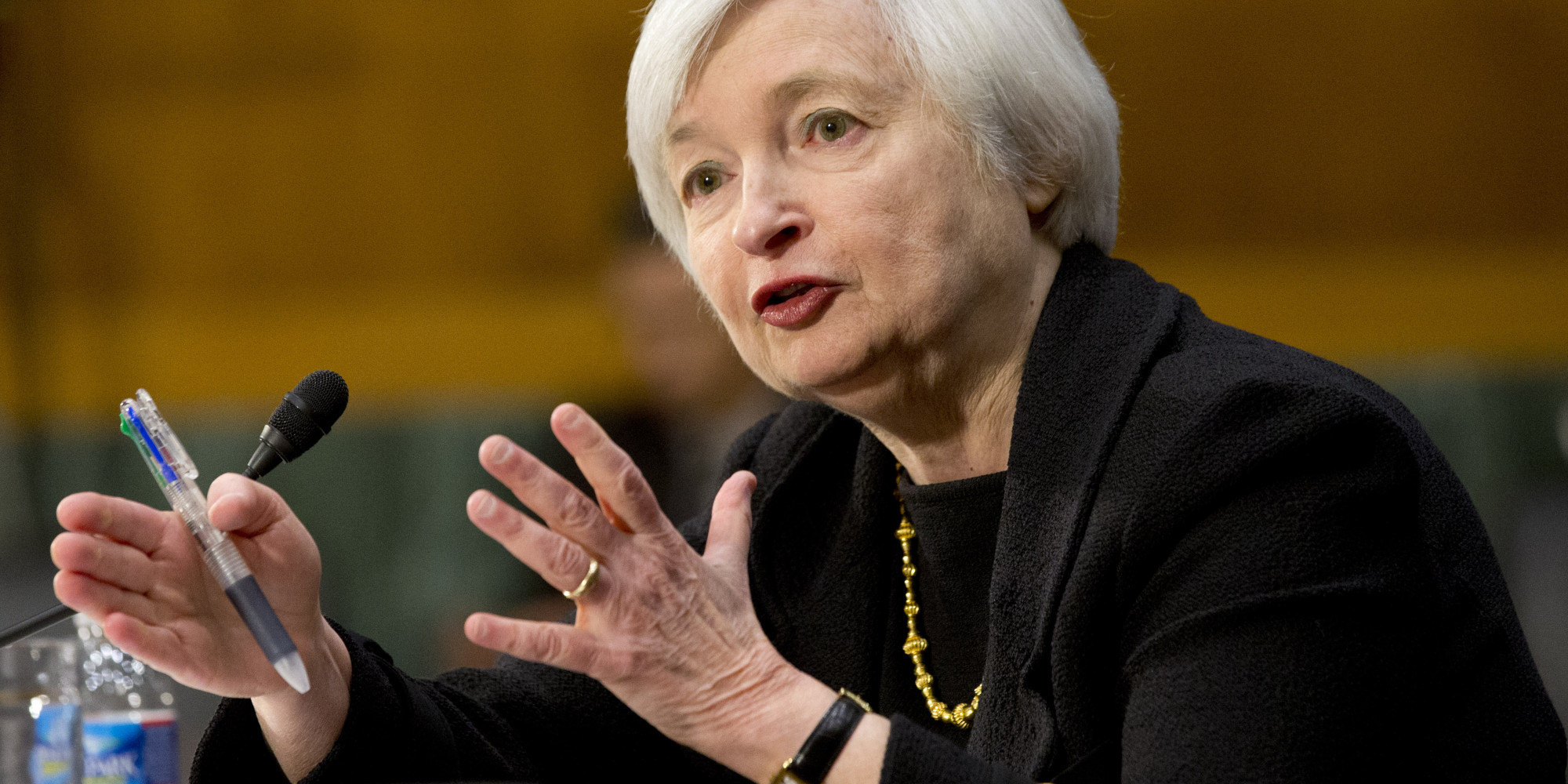
Janet Yellen, of California, President Barack Obama's nominee to become Federal Reserve Board chair, testifies on Capitol Hill in Washington, Thursday Nov. 14, 2013, before the Senate Banking Committee hearing on her nomination to succeed Ben Bernanke. (AP Photo/Jacquelyn Martin)
Janet Yellen, of California, President Barack Obama’s nominee to become Federal Reserve Board chair, testifies on Capitol Hill in Washington, Thursday Nov. 14, 2013, before the Senate Banking Committee hearing on her nomination to succeed Ben Bernanke. (AP Photo/Jacquelyn Martin)

The final piece of this puzzle was the looming interest rate hike from the United States. Interest rates are closely tied to rates of inflation and are important tools for governments in trying to mitigate recessions. Since the United States has had a near 0% interest rate there is some eagerness to push the rate up and give the Fed some options if the market sours. But critics have spent most of the year worried about a rate hike, citing the strengthening dollar and weak inflation rate as reasons not to do it. When the Federal Reserve took that advice though and opted to postpone the rate hike last week, the response of immediate joy was overwhelmed by the sudden realization that perhaps the US economy was not strong enough to withstand a rate hike and the global economic picture was far worse than previously thought.

Whether this means we are actually heading for a recession, it’s too early to say. No one knows what is really going on, but the sentiment, what people believe is going on, is resoundingly negative. Combined with an aging bull market and the highly liquid nature of investing has meant that there is simply more volatility in the markets than before.

Looking over the business news is little more than a guessing game informed by various analysts about what is (or is not) happening. But the best question that investors should be asking themselves is what do they need to have happen to their investments? While no one is looking to lose money, retirees and pre-retirees need to give real thought as to whether their investments suit their financial needs over the coming few years, and what kind of financial storm they could weather.  So the smartest thing you can do regarding your investments is call up your advisor and discuss your investment strategy going forward.

Need Some Help? Give Us A Call To Review Your Investment Strategy!