

I hate to admit it, but I’m stuck.
I have writers block, and not being a professional writer have had no experience to force myself through it.
Time and again I sit down to write something, only to find that the subject has changed, some new development has altered the facts and the effects are so sudden that I have to discard everything that I thought I was going to write and start over.
Its demoralizing.
Take Brexit for instance. Several times I’ve sat down to write something on it, but Brexit is now best explained like a Homeric poem, involving political intrigue, shadowy figures manipulating citizens for their own ends, and battles for leadership. That’s not how this began, but over time a politically mismanaged attempt to lance a populist boil from within the conservative party ranks has metastasized into a full blown crisis. To date Brexit has cost two Prime Minister’s their job, it has left one of the oldest democratic institutions in complete gridlock and has fractured the two leading political parties in Britain.
Currently the Tory party in England is choosing the next head of the party (and next Prime Minister of the country) with high expectations that it will fall to a man who spent the bulk of the Brexit campaign lying about the benefits of a leave vote and who had no intention that his side should actually win.

Meanwhile the core issues surrounding Brexit remain unresolved. So badly has this been handled that the British government has been granted two extensions so they don’t leave the EU without a deal (which would be bad for everybody). However having been granted those extensions Britain remains no closer to resolving the core matters that divide the various camps of various Brexiteers.
I could go on like this for some time, but there are whole books written about Brexit now (I recommend “A Short History of Brexit” by Kevin O’Rourke), covering in far greater detail all of the issues surrounding the attempts to leave the EU, how it has come about as a movement, and why the problems remain intractable and will likely not end well.
What I think we are witnessing is how political issues become political crises, and how it becomes increasingly difficult to predict what happens next. In functioning democracies political disputes resolve in a compromise in which neither group gets precisely what they want but recognize that not reaching a compromise would be worse. Today’s current political climate has become anathema to compromise and various groups would rather risk everything and get nothing than lose some of their standing. Historically this hasn’t been a good sign for countries.
Currently Brexit is scheduled for October 31st. That extension was granted because Theresa May had begun negotiating with Jeremy Corbyn (another populist) and the Labour Party to find votes for her Brexit deal. This negotiation looked to find votes for May’s existing deal with the EU, which would have resolved the issue surrounding the Irish border and kept Britain in the Common Market while also opening the door to a second referendum. Her party balked at this treachery and thus ended her tenure as PM. Boris Johnson, the man currently on track to replace Theresa May has said that he wouldn’t “rule out” proroguing parliament if MPs attempted to block a “No Deal” or “Hard Brexit.” I imagine that the EU wonders why it has invested all the time it has trying to help the UK.
All of this is silly, dangerous and maddening. For investors it means that there continues to be a ticking time bomb on the global stage, and like Donald Trump and his tariffs, anything could happen. And amazingly it continues on unabated, no closer to a compromise and no closer to a solution.
Hopefully this means I’m over my writers block.
“The opinions expressed are those of the author and may not necessarily be those of Aligned Capital Partners Inc (ACPI). ACPI is regulated by the Investment Industry Regulatory Organization of Canada (www.IROC.ca) and member of the Canadian Investor Protection Fund (www.CIPF.ca). This commentary is for general information only and not meant to be personalized investment advice.”

 I wish to inform you about an exciting new profession, currently accepting applicants. Accurate recession prognostication and divination is an up and coming new business that is surging in these turbulent economic times! And now is your chance to get in on the ground floor of this amazing opportunity!






 Donald Trump’s presidency is most generously described as a mixed bag. To his supporters he is the most accomplished president since Regan, maybe ever. To his detractors he is a dangerous demagogue whose flouting of democratic norms and curiously close connections to Russia (which predate his run for the presidency) threaten multiple constitutional crises. Undeniable is that his pursuit of electoral victory has meant that he’s been more than willing to entertain the support of racists and neo-nazis, and even his champions admit he seems oblivious to the importance of the traditional alliances that support the world order. Economists bemoan his understanding of economics, which seems especially dubious when it comes to international trade and tariffs. We’ve yet to discuss his own personal vulgarities.


 To say that Canadians aren’t financially literate may seem a touch unfair, but everywhere you look we find testaments to this unavoidable fact. Credit cards, car loans, mortgage rates and even how returns are calculated are a confusing mess for most people. The math that governs these relationships is often opaque and can feel misleading, and its complexity assures that even if some do understand it, the details will only be retained by a tiny minority.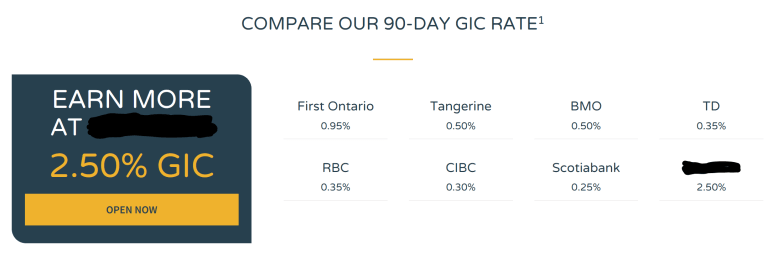


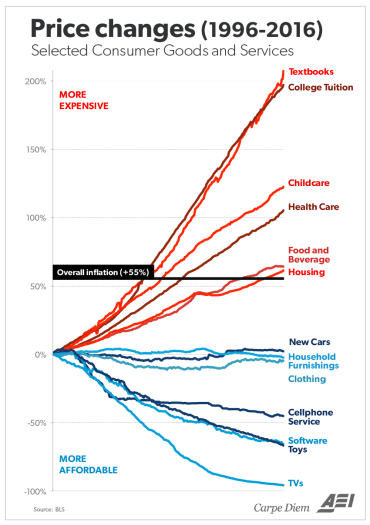 Armed with that info you might feel like the whole project makes sense. In reality, there are lots of questions about inflation that should concern every Canadian. Consider the associated chart from the American Enterprise Institute. Between 1996 – 2016 prices on things like TVs, Cellphones and household furniture all dropped in price. By comparison education, childcare, food, and housing all rose in price. In the case of education, the price was dramatic.
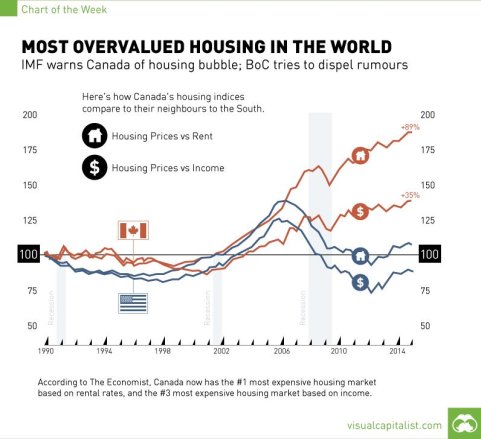 In Ontario the price of food is more expensive, gas is more expensive and houses (and now rents) are also fantastically more expensive. To say that inflation has been low is to miss a larger point about the direction of prices that matter in our daily lives. The essentials have gotten a lot more expensive. TVs, refrigerators and vacuum cleaners are all cheaper. This represents a misalignment between how the economy functions and how we live.
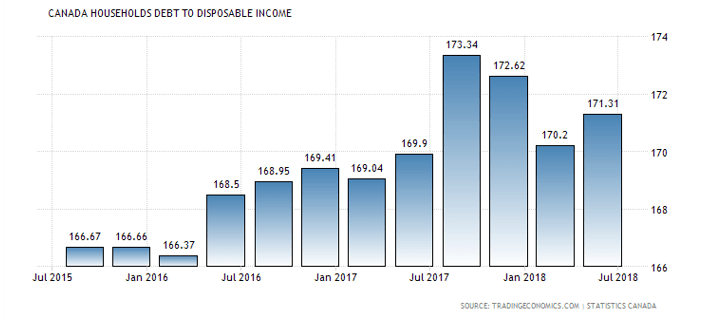
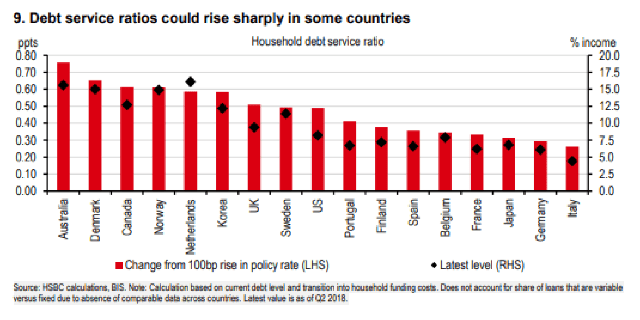
 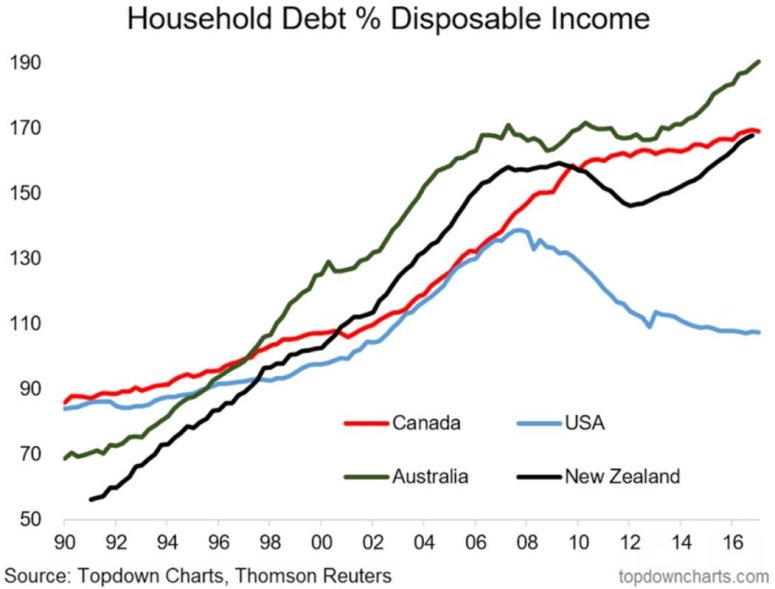 Economic data should be meaningful if it is to be counted as useful. A survey done by BMO Global Asset Management found that more and more Canadians were dipping into their RRSPs. The number one reason was for home buying at 27%, but 64% of respondents had used their RRSPs to pay for emergencies, for living expenses or to pay off debt. These numbers dovetail nicely with the growth in household debt, primarily revolving around mortgages and HELOCs, that make Canadians some of the most indebted people on the planet.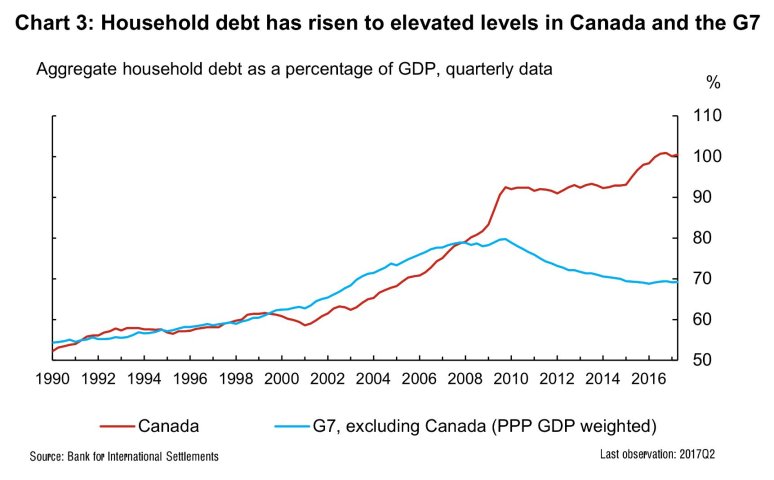
 The Walker Report