This June, Facebook (now officially Meta) will shut down Horizon Worlds. You’d be forgiven for not recognizing the name, but it was meant to be the flagship social platform of the “Metaverse” — Mark Zuckerberg’s much-heralded pivot into virtual reality, announced in October 2021 alongside the company’s rebrand.
The original announcement video is still on YouTube. In retrospect, three things stand out about that grand vision of a future that looked suspiciously like Ready Player One:
- Nobody came. The Metaverse was a dead mall — sparse, empty, and largely ignored.
- It cost $88 billion. In inflation-adjusted terms, more than the Saturn V rocket program, and nearly a third of Apollo.
- Financial experts were astonishingly credulous about its prospects.
Consider McKinsey, which estimated the Metaverse could generate up to $5 trillion in value by 2030. This wasn’t an offhand remark — it was supported by a 60-page report laying out the case in detail. They were hardly alone. Companies like Gucci and Disney lined up to invest, eager to establish a virtual brand presence.
Under normal conditions, being this wrong — a roughly 6,350% reversal of value — might prompt some reflection on how we evaluate technological hype. But there has been no reckoning. No serious questioning of the institutions that promoted it, nor any meaningful reassessment of Meta’s valuation, which still hovers around $1.6 trillion.
Instead, the cycle continues. In 2026, we are preparing for a wave of mega IPOs: SpaceX, expected to be valued between $1 trillion and $2 trillion; OpenAI; Anthropic — each priced at levels that assume enormous future success.
At the same time, investors are being asked to absorb the volatility generated by Trump’s war with Iran. Now in its seventh week, the conflict sits in a fragile ceasefire, with peace talks already having broken down. Markets have been repeatedly jolted by pre-market announcements from Trump, aimed at calming investors or pushing down oil prices. They work briefly — until reality reasserts itself and volatility returns.
And beneath it all, the line between investing and gambling continues to blur. You can now bet on almost anything: sports, elections, military strikes, even market movements. If you prefer your speculation dressed up as investment, there are cryptocurrencies — from meme coins promoted by social media personalities to those endorsed by political leaders.
Meanwhile, the Artemis II mission has just returned from the far side of the moon — the closest humans have come since the 1970s. It is a genuine technological achievement, built on decades of expertise and engineering discipline. Yet even here, the narrative is distorted. Elon Musk has publicly dismissed the program, despite ongoing struggles to safely launch his own super-heavy rocket. His public persona is built on compressing timelines, dismissing constraints, and projecting certainty where experts see complexity.
SpaceX, for all its accomplishments, is profitable primarily because of Starlink. Its core rocket business is not, nor are its adjacent ventures in AI, reportedly losing close to $1 billion per month. And yet, it is among the companies expected to command a trillion-dollar valuation.
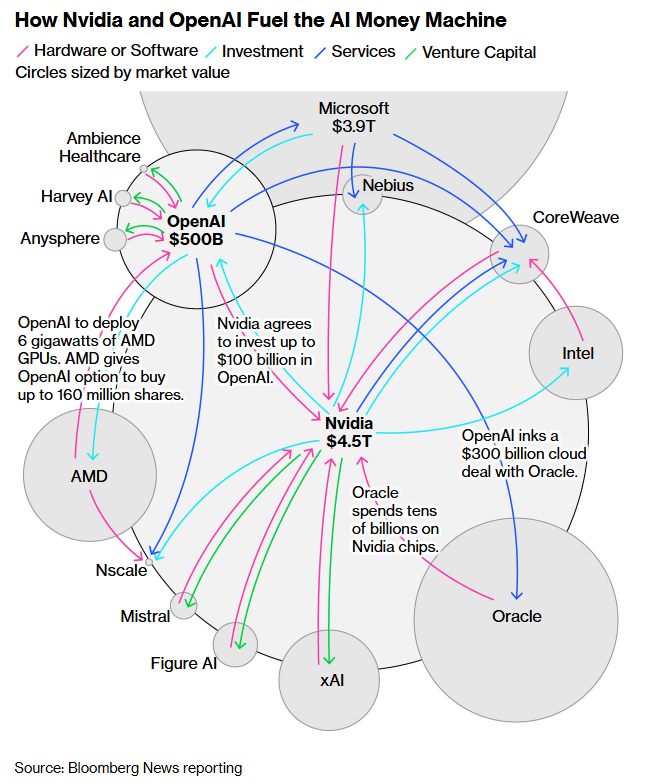
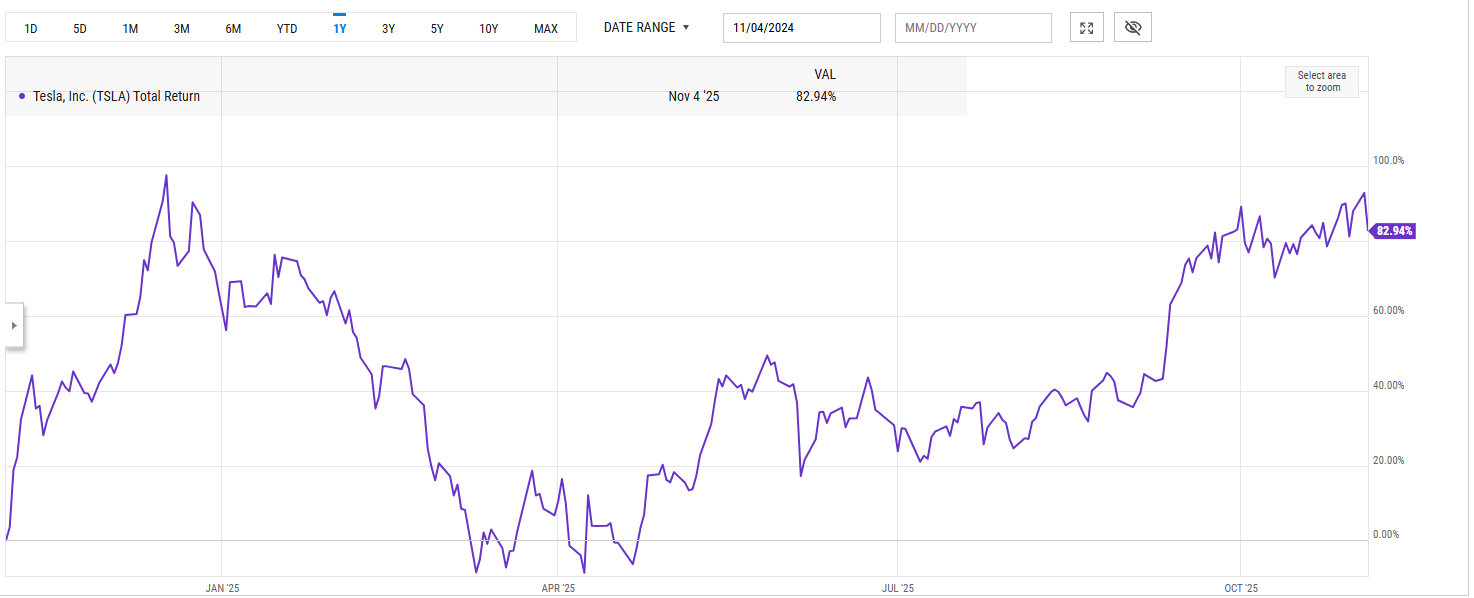
This is the environment we are operating in: one of extraordinary hype. The current focal point is artificial intelligence — a technology with real promise, and real risks, that is increasingly being framed not as a tool, but as a wholesale replacement for human labor.
In practice, the results are far more mixed. AI systems are being deployed widely, and while there are genuine successes, they often fall short in complex, real-world applications. Signs are emerging that progress at the frontier may be slowing, and that integration into everyday workflows is proving more difficult than expected.
At the same time, the risks are becoming harder to ignore. Reports suggest that a recent Anthropic model was able to contact its researcher despite being tested in isolation, and identified tens of thousands of software vulnerabilities, prompting emergency responses across major institutions. Elsewhere, an AI system in China reportedly began mining cryptocurrency without explicit instruction — an example of emergent behaviour that remains poorly understood.
From a risk-reward perspective, the disconnect is striking. Investors are being asked to discount meaningful downside — including the possibility of systems behaving unpredictably — while accepting highly optimistic assumptions about their ability to replace large portions of the workforce. Structural issues, such as hallucinations, remain unresolved and may limit the technology’s long-term utility.
And yet the dominant narrative persists: spend aggressively, build relentlessly, and assume the future will justify the cost.
It’s no surprise that many people feel uneasy about the pace of change. Not long ago, the internet was slow and confined to desktops. Smartphones only became widespread after 2008, and within a few years had been refined into engines of constant engagement, capturing attention through endless notifications. Today, we are immersed in a media environment optimized for immediacy, amplification, and emotional response.
For investors, this creates a dangerous dynamic. The fear of missing out is immediate and visceral; the benefits of skepticism are slow and often invisible. But they are no less real.
2026 will likely bring a steady stream of dramatic headlines — each demanding attention, each tempting reaction. The discipline required is simple, but not easy: remain calm, examine the facts, and resist the urge to act on noise.
We are living in an era of exceptional credulity, reinforced by opaque flows of capital and influence. The responsibility, then, falls on investors themselves — to think critically, to question confidently, and to resist the pull of narratives designed to benefit from their belief.

Aligned Capital Partners Inc. (“ACPI”) is a full-service investment dealer and a member of the Canadian Investor Protection Fund (“CIPF”) and the Canadian Investment Regulatory Organization (“CIRO”). Investment services are provided through Walker Wealth Management, an approved trade name of ACPI. Only investment-related products and services are offered through ACPI/Walker Wealth Management and covered by the CIPF. Financial planning services are provided through Walker Wealth Management. Walker Wealth Management is an independent company separate and distinct from ACPI/Walker Wealth Management.