This One Thing All Young Couples Need…

estateplanningforpetsSince getting married, my wife and I have been ticking all the traditional boxes that couples are meant to do to mark progress in our lives. We’ve bought a house, started a family and make an earnest effort to save money for our retirement. In addition to all the big boxes, we’ve actively tried to tick the small ones as well. We’ve painted rooms, changed fixtures and done both major and minor repairs to our home. We’ve purchased insurance, attempting to balance the twin pulls of simple and easy term insurance against whole life policies. Our growing family seems to incur a regular monthly unexpected cost, and there rarely seems a week when I am not heading to Home Depot to address some nagging issue that has suddenly come up. But with my second child expected within the coming month I realized that there was still something that neither my wife nor I had done; a will.

This is my daughter. Her financial future shouldn't be compromised because I was too lazy to get a will completed.
This is my daughter. Her financial future shouldn’t be compromised because I was too lazy to get a will completed.

My conversations with clients regarding wills and estates are typically initiated with an older generation. It isn’t uncommon to find that people don’t have wills, or if they do, that they are hopelessly out of date. This makes logical sense, the older someone is the closer to death they are, and ensuring that their will reflects their wishes for their family and estate is important. This is especially true for people who have been divorced, have blended families or complicated estates that need tax protection.

Ha ha ha, we've left you literally nothing but debt!
Ha ha ha, we’ve left you literally nothing but debt!

But it is easy to forget that young couples, particularly those with children also need a will. If anything it is more important that a well thought out will is in place for young families, since an unforeseen accident should not mean that your spouse and children aren’t cared for in the manner you would want. But many young families don’t have wills, and they don’t have them for simple but largely stupid reasons.

Like insurance, getting a will done seems both like an enormous chore and an easily delayed one. There are lots of things to consider and a will means putting some real thought into what should happen to you if you were to die. Where are your assets? What should happen to them and who should get them? Who should care for your children? Should a trust be created? Who should be your executor? Does your will require a financial planner for the estate or assets (yes, I know that seems like a plug but I’m being serious)? Beyond simply answering these questions, you need to have this conversation with the people you name inside the will. All of this can seem quite laborious (or expensive), especially when you think you are too young to need such a document.

I scour the internet looking for pictures that are appropriate for our articles. And you know what, there isn't a lot around on wills that isn't stock photography of documents that say "Last Will and Testament" or pictures like this. What is this? Is he meditating on death? Is he about to walk into the water? It's actually pretty grim when you think about it.
I scour the internet looking for pictures that are appropriate for our articles. And you know what, there isn’t a lot around on wills that isn’t stock photography of documents that say “Last Will and Testament” or pictures like this. What is this? Is he meditating on death? Is he about to walk into the water? It’s actually pretty grim when you think about it.

Dying without a will is also far worse than you may care to guess. No will means no say in who should raise your children. You have no way to designate your beneficiaries, no say over the financial future of your kids and your estate may pass to people you hadn’t intended on. More mundanely, you have no chance to improve the tax efficiency of your estate and the government will be setting the rules for what happens to your assets.

A study from 2012 suggests that more than half of adult Canadians don’t have a signed will. That number grows frighteningly when we look at younger Canadians, with 88% of them between the ages of 27-34 lacking a signed will.

The business of planning for a life after you’re gone may seem grim, boring and expensive, but it is a critical element of being a financially responsible adult. Young families owe it to their children, significant others and the legacy of their own hard work to ensure that an accurate and easily accessible will is part of their financial plans.

If you have any questions about wills, or need help getting one established give us a call!

(Also, if reading this made you realize you also need insurance, give us a call about that too.)

What Being Poor Should Mean to a Millennial

Last night I was kindly invited to speak at an event for the “Millennial Generation” hosted by AGF Investments. It was an interesting and fun evening filled with a lot of great questions and great food. But of all the questions sent to the advisors at the front of the room the question that I failed at was “what do you tell a poor client?”

Somehow this became my image of the millennial generation.

This question took me off guard because when I looked in the room I didn’t see any poor people. I saw a lot of young professionals that weren’t yet at their peak earning potential, but that is part of growing up. These people weren’t poor, they just didn’t have a lot of money.

That distinction may seem academic to someone sitting at home on a Friday night who can’t afford to go out. After all, what is it to be poor if a lack of money doesn’t define you? But poverty is about a permanence of state, and not earning enough money can be temporary. Real poverty is about having a lack of options.

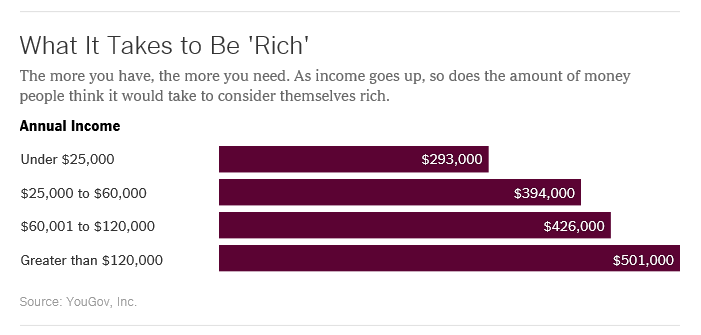
For instance, most Canadians would likely say that don’t have enough money, which isn’t the same as saying they are impoverished. It is simply a reflection of how our wants increase and grow with our incomes. In 2014 the research firm YouGov, Inc. did a survey looking for people to identify how much they needed to earn to be “rich”. Unsurprisingly as people earned more their idea of what constituted “rich” grew with their income bracket, which is why so few people self-identify as being wealthy.

Rich You can read the whole story about that from the New York Times. But for young Canadians who are fresh out of university, the climb up the financial ladder to long term wealth can seem daunting to say the least, and living in big cities can make modest salaries seem virtually impoverishing.

This place is awesome but it costs a fortune!

But that doesn’t make you “poor”.

Poor means a lack of options, or opportunities to change your situation. Well educated young Canadians in junior professional roles have lots of opportunities. But there is also a reason that we say youth is wasted on the young. Because young Canadians who don’t start saving, defer starting RRSPs and TFSAs, find that they are scrambling in their 40s and 50s to save for their retirement. They do have fewer options and are a great deal poorer for it. This isn’t a hypothetical; lots of Canadians are finding themselves in exactly this situation. Saving isn’t just about putting money aside, it’s about keeping options open in the future.

Globe & Mail Senior

The other day the Globe and Mail talked about the growth of debt among seniors, a move that was described as making seniors “Financially Fragile”. The core of investing revolves might be described as revolving around this principle: avoiding fragility. Frequently we represent investing as freeing people to enjoy their retirement on the beaches of Cape Cod, with sweaters draped over shoulders. But investing and saving is about being able to deal with all the rough spots in life.

Is this your retirement? Commercials for retirement planning frequently feature retirement as one of endless vacation.

Unexpected costs like new furnaces or car repairs can undo vacation plans and cottage retreats. Saving early doesn’t just help plan a life of leisure, it insures that your best laid plans aren’t upended by all the other things that life throws at you. It is far easier to be poor in old age once you’ve earned your last dollar than it is when you are younger and millions of opportunities await you.

So if you were one of the young Canadians worried that you don’t make very much, keep in mind that it is temporary. But if you want to avoid being actually poor in the future, start saving today so you aren’t panicking tomorrow.

Don’t want to defer your saving any longer? Drop us a message!

Go back

Your message has been sent

Warning
Warning
Warning

Warning.


4 Reason Why Planning for Retirement is Getting Harder

How expensive is this Big Mac? More expensive than you might think...
How expensive is this Big Mac? More expensive than you might think…

For the enormous wave of Canadians that are on course to retire over the coming few decades, retiring and planning for retirement is getting harder.

Here are the four big reasons why!

1. Inflation

Inflation is the scary monster under the bed when it comes to one’s retirement. People living off of fixed pensions can be crippled by runaway costs of living, and naturally retirees dread the thought that their savings won’t keep pace with the cost of their groceries. But while historic inflation rates have been around 3.2% over the last hundred years, and have been around 2% (and less) over the past few years, inflation has been much higher in all the things that matter. Since the inflation rate is an aggregate number made up of a basket of goods that include big things like computers, fridges and televisions that have been dropping in price over time, those drops offset the rising price of gas, food and home costs. Since you buy food all the time and fridges almost never, the rate of inflation is skewed lower than your pocket book reflects.

You can show this in a simple way by comparing the price of a McDonald’s Big Mac over time. When the Big Mac was first introduced to Canada the price was .45¢, today that price is $5.25. Inflation has fluctuated a great deal since then, but let’s assume the historic rate of 3.2% was an accurate benchmark. If you apply that rate the price of a  Big Mac today would be $1.91, in reality the inflation rate on a Big Mac has been  much closer to 5.5%.

Canadian Inflation Rate from 2008 - 2014
Canadian Inflation Rate from 2008 – 2014

2. Interest Rates

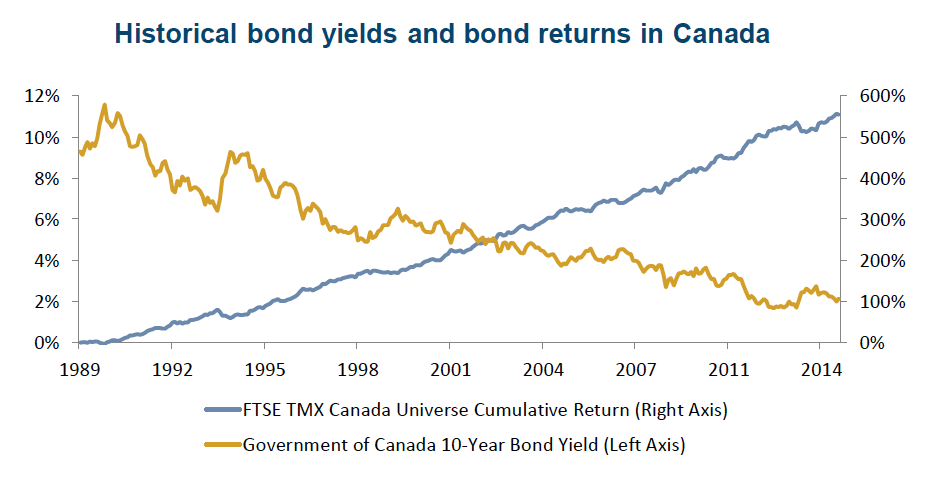
The business of central bankers has gained greater attention since 2008, but for many making the connection between interest rates, the broader economy and their retirement is tenuous at best. The short story is that weak economies means low interest rates to spur borrowing. Borrowing, or fixed income products, have been the typical go-to engine for creating sustainable income in retirement, and low borrowing costs means low fixed income rates. The drying up of low risk investments that pay livable, regular income streams have left many retirees scratching their heads and wondering how they can keep market volatility at bay while still drawing an income. But as rates have stayed low, and will likely do into the future, bonds, GICs and annuities won’t be enough to cover most living costs, forcing retirees into higher risk sectors of the market.

Source: Bloomberg and FTSE TMX Global Debt Capital Markets, monthly data from July 31, 1989 to September 30, 2014, Courtesy of NEI Investments

3. Living Cost Creep

Guess what, the cost of living is going up, not just in real dollars, but because what we consider to be a “normal” number of things in our life keep expanding. Don’t believe me? When your parents retired they probably had a tv and an antenna for it. The cost of their tv was whatever they paid for it, and whatever it might be to replace it if it broke. By comparison most people today have moved into the realm of digital television, PVRs, and digital cable subscriptions. It’s almost unheard of today to not have a smartphone with a data plan and our homes are now filled with a wide assortment of goods and products that would have been inconceivable to a previous generation. The same is true for cars. While cars themselves cost less, prices are kept high by the growing feature creep that have slowly moved into the realm of necessity.

4. You Aren’t Dying Fast Enough

This appointment is wayyyy out in the future...
This appointment is wayyyy out in the future…

Don’t get me wrong, I’m not in a rush or anything; but the reality is that you are going to live a long time, and in good health. Where as retirement was once a brief respite before the angel of death swooped in to grab you maybe a year or two later, living into your 90s is going to be increasingly common, putting a beneficial, but very real strain on retirement plans.

In short, retirement is getting harder and harder to plan. You’re living longer, with higher costs and fewer low risk options to generate a steady income.

What Should You Do?

Currently the market itself has been responding to the low interest rate environment. A host of useful  products have been launched in the past few years that are addressing things like consistent and predictable income for those currently transitioning into retirement. Some of these products are able to reduce risk, while others explore non-traditional investments to generate income. But before you get hung up on what product you should have you should ensure that your retirement plan is meeting your needs and addressing the future. There is no product that can substitute for a comprehensive retirement and savings plan, so call your financial advisor today if you have questions (and yes, that includes us!)

Want to discuss your retirement? Send us an email and we’ll be in touch right away!

Go back

Your message has been sent

Warning
Warning
Warning

Warning.

Forget Scotland, Canada is Playing Its Own Dangerous Economic Game

house-of-cardsIn a few hours we will begin finding out the future of Scotland and the United Kingdom, and we may be witness to one of the most incredible social and economic experiments  in the history of the Western World.

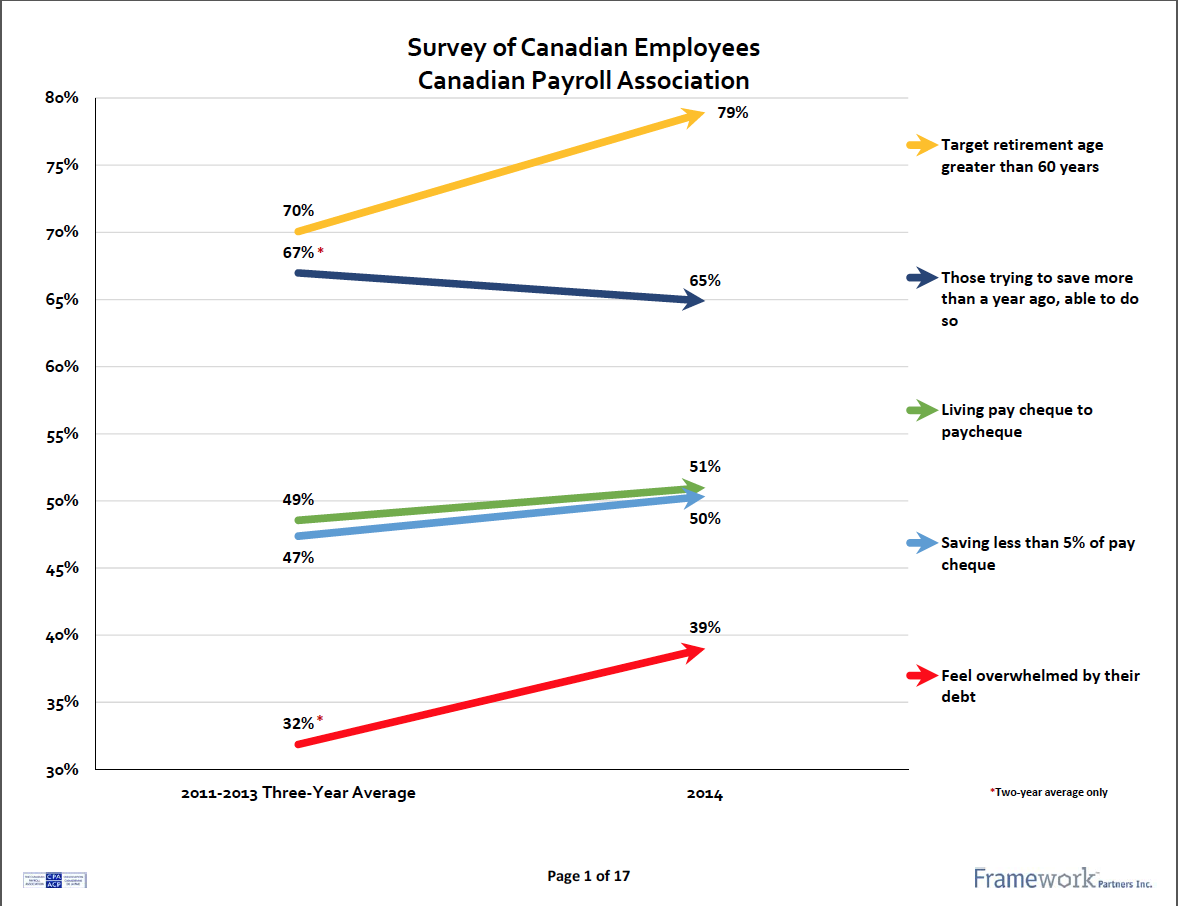
But while many suspect that a yes vote for Scottish independence may cast an uncertain economic future, it shouldn’t be forgotten that as Canadians we are also going through our own uncertain economic experiment. According to a survey conducted by Canadian Payroll Association and released this month, 25% of Canadians are living paycheque to paycheque, with nothing left in their accounts once their bills have been paid for.

Screen Shot 2014-09-18 at 4.57.44 PM

In addition, the majority of Canadians have less than $10,000 set aside for emergencies and these numbers get (unsurprisingly) worse as you look at various age groups. Young Canadians are the worst off, with 63% saying they are living paycheque to paycheque between the ages 18 to 29.

But when it comes to planning for retirement, the numbers are significantly more dire. More and more Canadians are expecting to delay their retirement, citing insufficient funds for their retirement nest egg. Even as people (correctly) assume that they will need more money to last them through retirement, 75% of those surveyed said they had put away less than a quarter of what they will need, and for those Canadians getting closer to retirement (north of 50), 47% had yet to get to even a quarter of their needed savings.

None of this is good news, and it undercuts much of the success of any economic growth that is being reported. While the survey found that people were trying to save more than they had last year it also highlights that many people felt that their debt was overwhelming, that their debt was greater than last year and that mortgages and credit cards by far accounted for the debt that was eating into potential savings.

The report has a few other important points to make and you can read the who thing HERE. But what stands out to me is how economies and markets can look superficially healthy even when the financial health of the population is being eroded. This is a subject we routinely come back to, partly because its so important, and partly because no one seems to be talking about it past the periodic news piece. Our elections focus on jobs, taxes and transit, but often fail to begin addressing the long term financial health of those voting.

Go back

Your message has been sent

Warning
Warning
Warning

Warning.