

Canada’s Economy Still Ticking Along, But Don’t be Fooled

Money CanThis year the Canadian markets have been doing exceptionally well. Where as last year the S&P/TSX had been struggling to get above 2% at this time, this year the markets have soared ahead of most of their global counterparts. In fact the Canadian market triumph is only half of this story, matched equally by the disappointing performance of almost every significant global market. Concerns over China have hurt Emerging Markets. The Ukrainian crisis has hindered Europe, and a difficult winter combined with weaker economic data has put the brakes on the US as well.
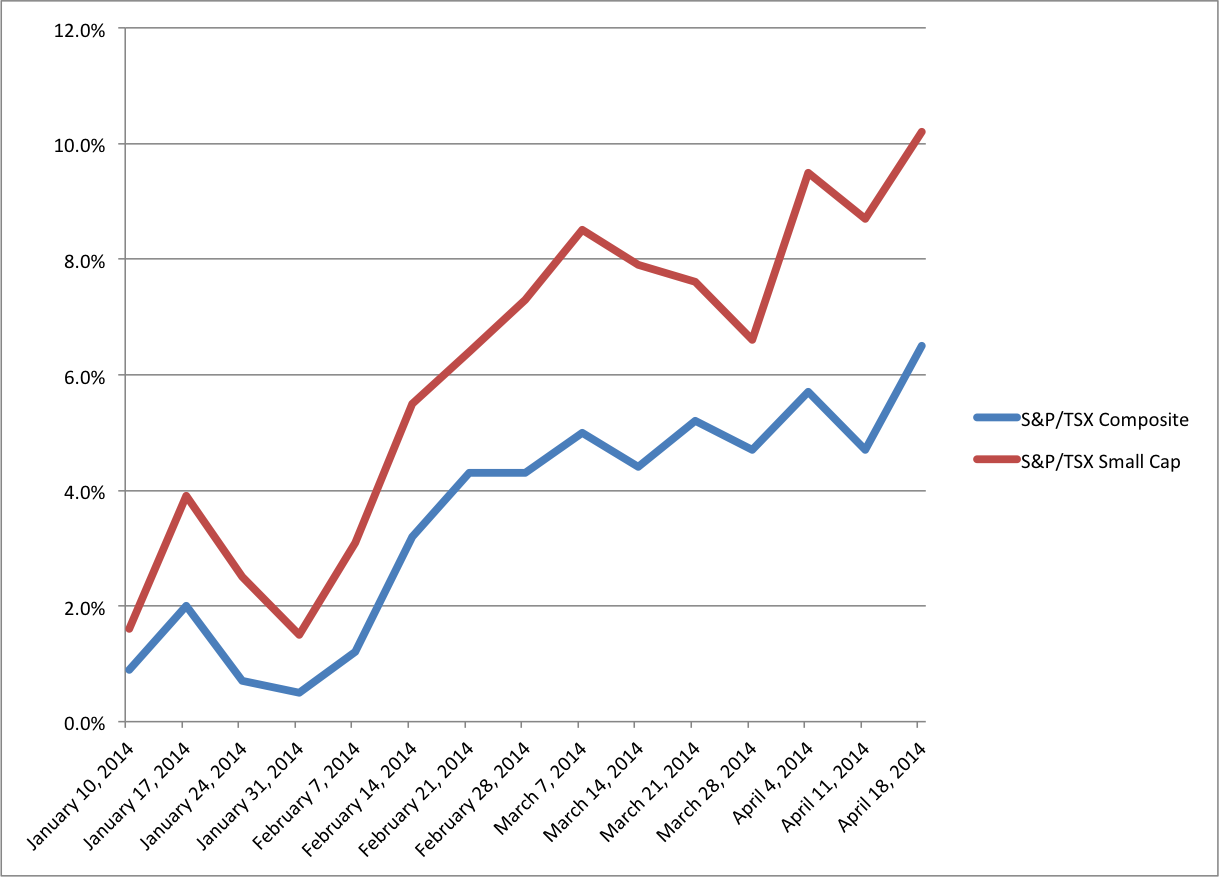
YTD TSX Performance

But this sudden return to form should not fool Canadians. It is a common trope of investing that people over estimate the value of their local economies, and a home bias can prove to be dangerous to a portfolio. Taking a peak under the hood of Canada’s market performance and we see it is largely from the volatile sectors of the economy. In the current year the costs of Oil, Natural Gas and Gold are all up. Utilities have also driven some of the returns, but with the Materials and Energy sector being a full third of the TSX its easy to see what’s really driving market performance. Combined with a declining dollar and improving global economy and Canada looks like an ideal place to invest.
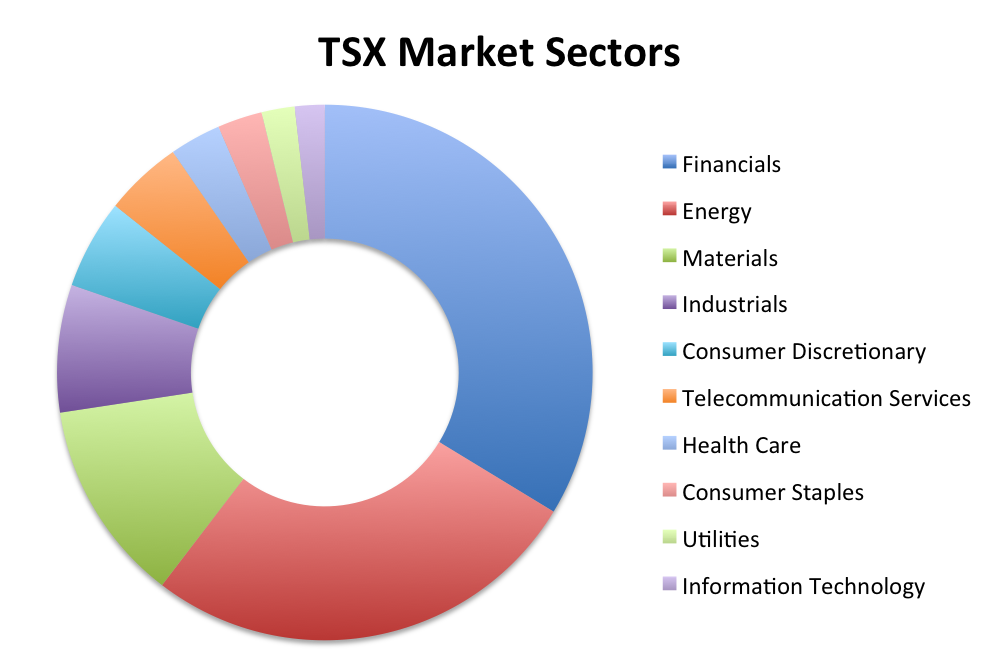
TSX Market Sectors

But the underlying truth of the Canadian market is that it remains unhealthy. Manufacturing is down, although recovering slowly. Jobs growth exists, but its highly anemic. The core dangers to the vast number of Canadians continue to be high debt, expensive real-estate and cheap credit. In short, Canada is beginning to look more like pre-2008 United States rather than the picture of financial health we continue to project. Cheap borrowing rates are keeping the economy afloat, and it isn’t at all clear what the government can do to slow it down without upsetting the apple cart.

For Canadian investors the pull will be to increase exposure to the Canadian market, but they should be wary that even when news reports seem favourable about how well the Canadian economy might do, they are not making a comment about how healthy the economy really is. Instead they are making a prediction about what might happen if trends continue in a certain direction. There are many threats to Canada, both global and domestic, and it should weigh heavily on the minds of investors when they choose where to invest.

 

Canadians Losing the Battle to Save For Retirement

Money WorriesPeople sometimes ask why I seem to be so focused on housing and its costs as a financial advisor, and I think the answer is best summed up declining rates of RRSP contributions. Currently many Canadians seem to be opting out of making a RRSP contribution this year, with both Scotiabank and BMO conducting separate and disheartening surveys about likely RRSP contribution rates. Unsurprisingly the answer most Canadians gave to why they would not be contributing this year was because they “did not have enough money.” These surveys also found that 53% of Canadians did not yet have a TFSA either for similar reasons. The expectation is that by 2018 Canadians will have over a trillion dollars of unused contribution room.

These kinds of surveys invariably lead to a kind of financial “tut-tutting” by investment gurus.

http://youtu.be/1pQJxGIFzdo

As one member of BMO’s executes put it, an “annual contribution of $2,000 to an RRSP… costs less than $6 per day.” which is true but does not really spell out a viable path to a retirement, merely the ability to make a contribution to a RRSP. While there is nothing wrong with the Gail Vaz-Oxlade’s of the world handing out financial advice and directing people to live debt free, Canadians simply do not live in some kind of financial vacuum where all choices boil down to the simple mantra of “can I afford this?” Frequently debts are incurred either because they must be (educational reasons, car troubles, etc.) or because it is not feasible to partake in an economic activity without taking on debt (like buying a house). Similarly it is not practical to assume that every decision be governed exclusively by a simple weighing of financial realities. It’s true it would cost less to live in Guelph, but many people do not wish to live in Guelph and would rather live in Toronto (Nothing personal Guelph!)

What we do have though is a precarious situation where the economy is weak (but maybe improving), which sets government policy through low interest rates. Low interest rates means borrowing for big ticket items like homes in places where supply is limited, like the GTA, or Vancouver or Calgary. This in turn keeps both house prices and debt levels high. It’s telling as well that a growing number of Canadians are beginning to look at their homes as a source of potential income in retirement. All of this seems to be happening while different financial “experts” argue whether the Canadian housing market is actually over valued, or not

This is where I get a chance to make a personal plug for the benefits of my role. While I don’t have much say in government policy, or even directing housing development in big cities, it is rewarding to know that financial advisors like me have a significant impact on the savings rates of those Canadians that work with us. A study called Value of Advice Report 2012 reported that Canadians that had a personal wealth advisor (that’s me) were twice as likely to save for retirement, and that the average net worth of households was significantly higher when they had regular financial advice from an advisor (again, me). The RRSP deadline this year is March 3, so please give me a call if you haven’t yet made your RRSP contribution. 

Go back

Your message has been sent

Warning
Warning
Warning

Warning.

Be the Most Interesting Person at Christmas Dinner

Merry Christmas and Happy Holidays! We’ve been busy over here for the last couple of weeks and unfortunately I haven’t been able to update our blog as often as I would like. However lots of interesting and important things have been happening over the past two weeks and they are worth mentioning. Check them out below!

Bitcoin is maybe not going to survive. Maybe: There is an ongoing fight about whether Bitcoin, the digital currency, is in fact a real currency. Bitcoin has been criticized for being a tool of the criminal underworld, and praised for its inventiveness. But like all fiat currencies there is a lot of speculation about whether it is worth anything. After all, who is backing Bitcoin? There is no government that will guarantee it and not every government is happy with it, and its value fluctuates wildly. And yet Bitcoin persists, at least until today. China has just banned Bitcoin and its largest exchange will not accept any more deposits, sending the value of Bitcoin tumbling.

What’s good for the investor maybe bad for the economy: There is a demographic shift going on in the Western Developed nations. People are getting older. Not just older, but retirement older, and as a result the economy is feeling pressured to respond to needs arising out of this aging baby boomer trend. One of those shifts is towards dividends. Dividends are traditionally issued by companies to their shareholders when the companies have extra money lying around and can’t use it productively. However many companies, especially large ones that generate more cash flow than they can reasonably use issue regular dividends, such as banks and many utilities. This is useful to investors that are looking to retire or are retired already. Regular dividends help provide retirees with regular and predictable income. However dividends may be bad for the economy. CEOs are often rewarded for market performance, and markets tend to like companies that increase their dividends (Microsoft increased its dividend in September). But companies can be far more useful to the economy generally when they invest in growth rather than give money back to shareholders. That would mean hiring new people, building new factories and generally moving money through the economy. But as much of the population ages and looks for dividends this might undermine the both growth in economic terms and affect choices that CEOs make about the future of their companies.

Canadians are at record debt levels, again: This may not come as much of a surprise, but Canadians have record debt levels and nothing seems to be correcting it! This story began regularly occurring in 20102011, 2012, and of course 2013. What is more important about how high the debt of Canadians continues to rise, but what’s driving it. Not surprisingly it’s mortgages. The high cost of Canadian housing has worried the federal government, and many global organizations. But far worse would be a deflationary cycle on Canadian homes, driving down the price while saddling home owners with debts far in excess the value of their houses. Despite a number of efforts to limit the amounts that Canadians are borrowing, the very low interest rate set by the Bank of Canada is keeping Canadian’s interested in buying ever more expensive homes. The reality is that no one is really sure what is to be done, or what the potential fallout might be. What is clear is that this can’t continue forever.

We’re going to be taking next week off, but will be back in January!

It’s Official, Young Canadians Need Financial Help

I thought I had more saved!It must be terribly frustrating to be a twenty-something today. It’s hard to find work; you probably still live with your parents and a whole culture has developed around criticizing your generation. But beyond the superficial criticisms directed at twenty somethings, there are structural shifts going on within the economy that are making paupers of the next generation.

Some of these shifts do extend from things like a lack of good paying jobs in manufacturing and an increasingly reliance on service sector jobs. There are many university graduates that now find themselves in work that they are overqualified for and underpaid in. But some of the changes also come from an increasingly high cost of living that is making it financially untenable to move out of a parents’ home. This phenomenon has been dubbed “boomerang kids”, or “boomerang generation.”

The challenge that the Millennial generation is facing is that costs are rising as a proportion of their income. Consider the cost of a house in Toronto. In November of this year the average cost of a home sold in Toronto was $538,881, up 11.3% from November of last year. Assume you make the minimum downpayment to get a home, 5%, your downpayment would then be $26,944 (roughly).  Your monthly payment on a 25 year fixed rate mortgage would be $3,077 per month, or close to $36,924 per year. If we factor in real-estate tax and an average heating cost, that would bring annual costs to roughly $43,000 a year. That would mean that to qualify for the mortgage with a bank you would need to be earning at least $134,375 before taxes. The average income in Canada is $47,000.

We can quibble about how accurate these numbers are, but it would still amount to the same end. It costs a lot today to be like your parents. Buying a house for the first time is incredibly expensive and forces young people to make different choices about how to spend their money. For many millennials this has meant “postponing” growing up, financially as well as spiritually. But what today’s young generation actually need is a working budget that lets them get a big picture of their spending and allows them to set and reach financial goals. There are free services, like Mint.com (which I am very much in favour of), but even better is that young people should be encouraged to seek out professional financial help. People with a small amount of savings often feel discouraged about seeing a professional, but getting this guidance early on can lead to significantly better financial outcomes, comfort with the markets and wiser tax efficient planning!

Want to discuss your future planning?

Go back

Your message has been sent

Warning
Warning
Warning

Warning.

Economists Worry About Canadian Housing Bubble, Canada Politely Disagrees

real-estate-investingThis week the Financial Times reported that “Canada’s housing market exhibits many of the symptoms that preceded disruptive housing downturns in other developed economies, namely overbuilding, overvaluation and excessive household debt.”

These comments made by economist David Madani have been repeated and echoed by a number of other groups, all of whom cite Canada’s low interest rates and large household debt (now 163% of disposable income according to Statistics Canada) as a source of significant danger to the Canadian economy.

This is not a view shared by Robert Kavic of BMO Nesbitt Burns who believes that the Canadian housing market has long legs, saying “Cue the bubble mongers!”

Since 2008 predicting the fall of housing markets has become a popular spectator sport. Canada seems to have sidestepped most of the downturn, which has only made calls for the failing of Canada’s housing markets greater. But the reality is that our housing markets are very hot, and we do have lots of debt.

So is Canada’s housing market heading for a crash? Maybe. And even if it was its hard to know what to do. Fundamentals in Canada’s housing sector remain strong (and have improved). People also want to live in Canadian cities, with 100,000 people moving annually to Toronto alone. In other words, there is lots of demand. In addition regulations in the Canadian financial sector prevent similar scenarios that were seen in the United States, Spain and Ireland from occurring.

But housing prices can’t go up forever, and the more burdensome Canadian debt becomes the more sensitive the Canadian economy will become to interest rate changes. Meanwhile I have grown far more weary of over confident economists assuring the general public that “nothing can go wrong.” 

The big lesson here is probably that your house is a bad financial investment, but a great place to live. Unless you own your home, a house tends to be the bank’s asset and not yours. In addition your home, like your car, needs constant maintenance to retain its value. So if you wanted to buy a house to live in, good for you. If you want to buy a house as an investment my question to you is, “Is this really expensive investment the best investment in a world of financial opportunities?”

The Rent is Too Damned High: Stop Stopping Condos!

Driving through mid-town the other day I caught a sign that said “Stop the Alaska Condo”. Not knowing anything about it I looked it up and was met with an inspiring, modern design to replace 28 family units with 130 new units of housing around Yonge and Strathgowan.

Image

The Proposed Alaska Condo

Of course there is a neighbourhood association who are protesting its development. Reasons to protest include “safety” (left considerably vague), that it will introduce a number of new people and cars and that it isn’t in keeping with the village’s rustic aesthetic. The Uptown Yonge Neighbourhood Alliance acknowledges the need of urban redevelopment, just not that urban redevelopment.

Cities are more than just crowded places that people live. They are the modern backbone of vibrant economies. Toronto itself accounts for 11% of Canada’s total GDP, and depends on a growing number of people to provide tax revenues, employment and businesses. In his book Triumph of the City, author Edward Glaeser outlines how cities provide networks that spawn a creative class and strengthen our economies.

But far more concerning is how in modern times cities have also become a mess of regulations that are stifling growth. Not economic growth, but residential growth. Urban density helps make neighbourhoods more prosperous and with a wider more successful variety of services. But as is the case with the Alaska Condo, proposals to increase density often face strong resistance. I tend to view this resistance as not only cutting off one’s nose, but as immoral too. Toronto is a bustling city, whose cost of living continues to skyrocket because of lack of housing. In the rush to try and prevent change to our city we are not only choking off our future economic vitality, but punishing people financially with ever increasing home ownership and rental costs, even as more and more of our economy depends on service sector work and less on manufacturing.

I have no doubt that the members of the Uptown Yonge Neighbourhood Alliance feel very passionately about their cause, but I’m afraid it boils down to little more than NIMBY-ism. People need places to live, and the Yonge & Strathgowan area will benefit from some lower cost housing and all the new residents, who will bring money, taxes and businesses to the area.

Further Reading: The Rent is Too Damn High by Matt Yglesias