Separating Fact and Fiction in Investing

Is America’s economy failing? Has Trump undone the American economic empire? Do ports sit empty? Are people being laid off? Have world leaders conspired to control America’s debt?

These are just some of the headlines and subjects floating around the internet. Depending on who you are and where your political allegiances lay, the answers will be self-evident. Trump is either a an economic genius and unparalleled negotiator, or he is a clumsy and indifferent conman masquerading as successful businessman and politician.

For investors this presents a real challenge. These questions aren’t just thought experiments. Depending on the answers they may significantly impact where one chooses to invest, and the more polemical the question the farther we may get from a useful answer, regardless of politics. If our goal is to ask questions to reveal truth, we may find ourselves confused as to why markets have surged back from their lows (as of May 12th the major US indices have almost recovered from their tumble at the beginning of April) even while business reporting warns of a potential for a worsening economy.

One way to make better sense of what’s happening is to put ourselves in the shoes of Donald Trump’s administrative allies. Imagine what someone who believes in what Donald Trump is doing would say about his economic plans. Its not as though they haven’t heard economists and businesses express doubt and worry about the actions of his administration. So how would they defend them?

In my imagining I believe they would argue something like the following:

                The United States is enormously rich but wastes money on cheap goods from China, and while some of these goods don’t need to be made here, America has lost enough manufacturing jobs that its worthwhile experimenting with tariffs to bring jobs back. Over the past 45 years we’ve seen countless evidence that playing by the rules of globalization reduces the ability of governments to help their most vulnerable citizens, and money has become too fluid and too willing to cross borders at the expense of their domestic homes. Regardless of what people fear, America remains the richest country in the world, with the largest consumer base, and that combined with the existing strength of the US economy will be enough to bring industry back to the US in some capacity while tariffs on junk from other countries will help pay for renewed and permanent tax cuts. Market volatility will be temporary while the economy realigns itself, but the combination of lower taxes and existing economic strength will ultimately help lift the markets even higher.

You don’t have to believe in such a claim, or even pretend this was what Donald Trump campaigned on. What I’m putting forth is a set of ideas (picked up through numerous interviews and speeches) that I believe his administration finds largely defensible and recognizable, and would be a better frame of reference for understanding their actions. Let’s start with the recent indication that GDP is contracting. In traditional economic terms, two quarters of back-to-back GDP contractions constitute a recession. We’ve had more than a few of those over the past decade, but few people would say that we’ve had recessions. The reason for this might be best expressed by Jason Furman; an American economist, professor at Harvard, and former deputy director of the US National Economic Council, in a recent editorial in the Financial Times. Outlining the importance of “Core GDP” vs “GDP”, he points out that Core GDP (actually known as Real Final Sales to Private Domestic Purchasers) better reflects consumer spending and private investment while the traditional GDP includes net exports, inventories, and government spending, all things in flux because of Trump’s new administration. So, while the GDP contracted in Q1 of this year, the Core GDP was up in the first three months.

What about rumours of empty ports and empty shelves? Reportedly Trump was shaken following meetings with the heads of three major retailers about shelves being empty if the tariff’s remain at 145% on China. Trump seems to have vacillated a number of times about the size and implementation of the tariffs, but as of today they remain intact. Asked about higher prices and fewer options Trump seemed dismissive of concerns over the Chinese trade war declaring “maybe the children will have two dolls instead of thirty dolls, and maybe those dolls will cost a couple of bucks more.”

Is Trump being dismissive? Yes, but he’s also not worried that shelves will be empty. Though shipping and imports are down as we head into May for cargo coming from China, far from alarmist rumours that docks are sitting empty there is still plenty of ocean-going traffic coming from China.

 Does this mean that there won’t be furloughed dock workers or empty shelves? According to the Port of Los Angeles there has been a 35% drop week over week of expected cargo, and a 14% decline from the previous year. That very well may lead to reduced working hours and fewer options in stores, but the discrepancy between what’s being shared online and what is likely to actually happen is probably enough to gird the loins for Trump’s team to continue their policies.

What about layoffs? Fears about unemployment remain high, but as the most recent jobs report shows hiring remains robust and the unemployment rate, already very low, remains unchanged.

This discrepancy between a popular public impression and the on-the-ground economic reality gives room to Trump’s administration to continue ahead with ideas that remain controversial, as well as opening up investors to making mistakes in their allocations. For the time being, Trump does have a reservoir of economic and political strength to call on. He may be using that reserve up, but may also have guessed with some accuracy that the global economy will keep doing business with America regardless of whatever feathers he ruffles.

But markets may also not be calculating the longer-term direction correctly, mispricing assets and remaining too optimistic. Since Trump’s re-election markets have been shown to be placated by the promise of deferred tariffs, as though deferring them is really the prelude of getting rid of them. Trump doesn’t help this by going back and forth on their implementation, but listening to his words, and following his actions, I feel that it would be a mistake to assume that the tariffs will ultimately be rescinded.

This past week changes to the auto-tariffs were announced, reducing some of the duplication of tariffs on steel and aluminum, but also laid out reimbursements and tariff relief for parts manufacturers need to import. These changes also make clear the groundwork for a longer and more durable tariff regime. Trump himself has been quick to correct any reporting that suggests that he’s backtracking or creating exemptions for specific products, and that some products may end up with different tariff treatment, but will still be subject to tariffs.

This seems best exemplified by the announcement of the US-UK trade deal. Called “a starting point” by the British ambassador, the Trump administration has said the deal is “maxed out”, leaving in place a 10% tariff on British imports, with a reduced tariff on British cars, steel, and aluminum (the deal effectively lowers car and steel duties to the flat 10% rates, down from 27.5%).

Whether deals such as these are anything for the market to get excited about is a question that will be answered with time, like all the unanswered questions that have been introduced this year. What investors must work on is remaining clear eyed about what is happening, and resist submitting to their own partisan preferences. Trump may yet undermine the US economy, and trade deals may turn out to simply be acknowledgements of existing tariff rates, or perhaps the opposite may happen. But recognizing that reality is more mixed and that we do not yet have a clear picture about the future will promote more time tested strategies for sensible investing.

Aligned Capital Partners Inc. (“ACPI”) is a full-service investment dealer and a member of the Canadian Investor Protection Fund (“CIPF”) and the Canadian Investment Regulatory Organization (“CIRO”).  Investment services are provided through Walker Wealth Management, an approved trade name of ACPI.  Only investment-related products and services are offered through ACPI/Walker Wealth Management and covered by the CIPF. Financial planning services are provided through Walker Wealth Management. Walker Wealth Management is an independent company separate and distinct from ACPI/Walker Wealth Management.
Seriously and Literally

In 2016, Donald Trump supporters said that you should take him seriously, but not literally. His first press secretary, Anthony Scaramucci said “don’t take him literally, take him symbolically.” This defense of Trump was meant to highlight that while he may have said incredibly controversial things, much of that was just talk, and it was his message behind the words that you should really pay attention to.

But Trump himself has contradicted this view more than once, frequently saying “I don’t kid” when challenged on policy (the exact comment came about in 2020 over coronavirus testing). In other words, Trump has let people know that you shouldn’t be surprised when he does do things that seemed initially outrageous. For the wider world this has meant that you should take Trump at his word, and that even if some of his rhetoric is just that, rhetoric, you would be foolish to ignore the substance of his messages.

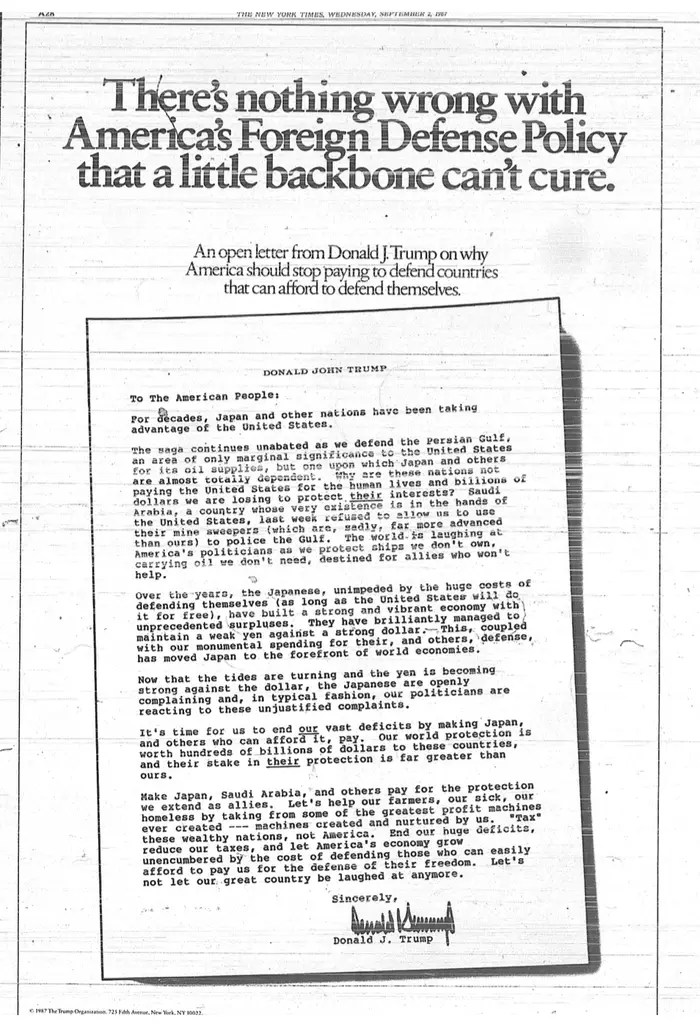
Since his re-election Trump’s focus has been squarely on tariffs, promising them on China (a further 10%), on BRIC nations (100%) and Canada and Mexico (25% each). He’s suggested that some of the tariffs can be avoided for Canada and Mexico over better border controls on drugs and illegal immigrants, but whether this is true is unknown. Political commentators like David Frum have pointed out that Trump’s views on trade have been consistent since his first considered run for the presidency in 1987, that he is hostile to trade and sees it as a zero-sum game.

A close-up of a piece of paper

Description automatically generatedIn 2025 world leaders and policy shapers believe Trump should be taken both seriously and literally. While the current political situation in Canada has been turbulent, the view of the government and provinces is almost unanimous (Quebec and Alberta remain the perennial opponents to joining the band wagon). Doug Ford took the initiative to announce that Ontario could stop energy exports to the US in the event of a trade fight, a position seconded by BC’s premier David Eby.

But in the United States the threat of aggressive and expanding tariffs have also been taken literally, notably by Jerome Powell of the Federal Reserve. On December 18th, in a move that shook markets, Jerome Powell did announce a final rate cut for 2024, but stressed that future cuts were heavily dependent on inflation, which will likely rise if Trump enacts his regime of trading tariffs. Markets were quick to react, and though 2024 will be remembered as a pretty good year for investors, the speed and size of the market sell-off was newsworthy, being the largest since August.

The next morning and markets began on a relatively positive note, continuing a trend of brief panics followed by long yawns as markets simply resume their upward momentum. Little seems to have dissuaded the bull market since 2022 and with the US economy still showing itself to be very strong there’s every chance that the brief panic on December 18th was just that, a moment of panic at the end of 2024. But Trump, like the rest of us, doesn’t live in longer and slower news cycles. Instead market panics live on in social media, and run the risk of coalescing into counter narratives that Trump might hurt the economy more than help it (its notable that the economy has been very strong under Biden, but that didn’t change the perception that Trump had been the better economic steward).

In 2018 Jerome Powell began raising rates to blunt the sharper edges of a hot economy and return interest rates to somewhere near a historic norm. Since 2008 rates had remained at emergency low levels, and there was a genuine concern that markets were becoming addicted to cheap cash. In October of that year Jerome Powell made clear that rate hikes would continue until the Fed felt they’d reached a neutral rate, news not well received by the stock market. From October to the end of the year the S&P 500 lost 18% by December 24th, before rebounding slightly by the New Year. Markets had posted decent returns to the end of September, but wiped out those gains and finished the year -6.24% . During the last months of the year Trump made repeated efforts to pressure Powell to halt or cut rates, often publicly over Twitter.

My opinion is that Trump likes the ambiguity surrounding his pronouncements. Whether he actually intends to implement all the tariffs he’s discussed, whether they are bargaining positions, or whether he can be talked out of them is a grey area that offers him a position of strength. Politicians may be particularly vulnerable to his vagaries since they often wish to protect the status quo while Trump feels free to be a disruptor. But that grey area only works as a negotiating tactic so long as people believe that deals can be reached. If nations come to believe that Trump is serious and literal about tariffs and don’t believe they can be avoided, you are only left with a trade war. Similarly if you are in charge of the Federal Reserve and believe that Trump will do what he says, then you have every reason to pursue positions that curb inflation.

Following Trump’s election Jerome Powell was asked whether he would resign as the Federal Reserve chair, and was clear in his response; he will not, he is not required to leave, and cannot be compelled to. Trump already has a difficult and publicly hostile history with Powell, and its easy to imagine that if Powell is taking Trump seriously, he will move into direct conflict with Trump because of his policies, not in spite of them. Similarly conflict may be around the corner on diplomatic issues for the exact same reason. If Mexico feels it can’t avoid a trade fight with the US, you can assume that Mexico might be less interested in working to curb migrants at the US border. In Canada the same might be true, negotiating with someone who has no intent to make a deal (or honor the one already made) is not likely to build support for concessions.

Today Trump will take office following his inauguration, and he’s expected to sign a number of executive orders kicking off his next term. He has posed as a disruptor, and has nominated a number of other unusual thinkers and people opposed to the status quo to make up his cabinet. Whether they all take those roles and can do what they say they plan too is yet to be seen, but on December 18th we may have gotten some insight into what that future might look like, a future where Donald Trump is taken at his word, both seriously and literally.  

Aligned Capital Partners Inc. (“ACPI”) is a full-service investment dealer and a member of the Canadian Investor Protection Fund (“CIPF”) and the Canadian Investment Regulatory Organization (“CIRO”).  Investment services are provided through Walker Welath Management, an approved trade name of ACPI.  Only investment-related products and services are offered through ACPI/Walker Wealth Management and covered by the CIPF. Financial planning services are provided through Walker Wealth Management. Walker Wealth Management is an independent company seperate and distinct from ACPI/Walker Wealth Management.
Why Can’t Markets Be Calmed?

A series of bad days, a moment of respite, and then more selling. This was the story of 2008, and it lasted for months. The rout lasted until finally investors felt that enough was going to be done to save the economy that people stopped selling. Massive quantitative easing, an interest rate at 0%, aggressive fund transfers, bailouts to whole industries, and the election of a president who seemed to embody the idea of “hyper competence”. That’s what it took to save the economy in 2008. Big money, an unconditional promise to save businesses and people, and the rejection of a political party that oversaw the bungled early handling of a crisis and had lost the public confidence.

I don’t think Donald Trump has never had been viewed as hyper competent. I doubt even his most ardent supporters see him as incredibly clever, but instead a thumb in the eye of “elites” who have never cared to take their concerns seriously, and to an establishment that seemed incapable of making politics work. Trump was a rejection of the status quo and a “disruptor in chief”. A TV game show host who played the role of America’s most sacrosanct character, the self made man, asked now to play the same role in politics.

There’s nothing I need to cover here you don’t already know. A history of bad business dealings, likely foreign collusion to win an election, surrounded by sycophants and yes men with little interest or understanding of the machines they have been put in charge of, and an endless supply of criminal charges. Like a dictator his closest advisors are members of his own family, and perhaps more shockingly he fawns over and publicly admires the dedications of respect other dictators get from their oppressed populations. Never has a person been so naked in their desires and shortfalls as Donald Trump.

Markets have played along with this charade because Trump seemed, if anything, largely harmless to them. Indifference to the larger operation of the government and the laser like focus on reduced regulations and tax cuts made Trump agreeable to the Wall Street set. If he could simply avoid a war and keep the economy humming, Trump was a liveable consequence of “good times”. Until the coronavirus issue, Trump had not done terribly. The economy wasn’t exactly humming. It had a bad limp due to a trade war with China. It had a chest cold because wealth inequality was continuing to worsen despite decreasing unemployment. And its general faculties were diminished as issues around health care, deficit spending, and other aspects of the society began to languish. But as far as unhealthy bodies go, the American economy still had its ever strong beating heart, the American consumer.

Whatever name you prefer; COVID-19, the coronavirus, SARS-CoV-2, or the #Chinesevirus (as Trump is now busy trying to get it renamed) has exposed the fault lines in the administration and the danger of such blinkered thinking by Wall Street. Having spent the last few weeks downplaying the severity of the outbreak and hoping China would be able to contain it, until finally, grudgingly, acknowledging its seriousness. Markets have suddenly come face to face with a problem that bluster and bravado can’t fix. Trump is a political liability for markets, and his leadership style, which is heavy on cashing in on good times with little management for rainy days, means that markets may not really have any faith that he can properly address these problems.

Other efforts to calm markets, largely through the federal reserve, have not reassured anyone. Two emergency rate cuts are not going to fix the economy but did spook investors globally (it did signal to banks that they should take loans to cover potential shortfalls). The promise of a massive set of repo loans to provide liquidity will keep markets open and lubricated, but again won’t save jobs and won’t prop up the physical economy. What will fix markets is an end to the pandemic, a problem with the very blunt solutions of “social distancing”, “self isolation” and the distant hope of a vaccine.

What investors are facing are three big problems. First, that we don’t know when the virus will be contained. Optimistically it could be a month. Realistically it could be three. Pessimistically people are talking about the rest of the year. Even under the best conditions we are also likely facing a recession in most parts of the globe, and even then stimulus spending and financial help won’t be as effective until people can leave their homes and partake in the wider market (postponing tax filings and allowing deferrals on mortgages are good policies for right now, but at some point we need to spend money on things). But the last problem is one of politics. The Trump administration is uniquely incompetent, has shown little interest in the mechanisms of government, and in a particularly vicious form of having something come back to bite you, dismantled the CDC’s pandemic response team.

The best news came last week, when it seemed a switch had been flicked and the general population suddenly grasped the urgency of the situation and people began self isolating and limiting social engagements (I am now discounting Florida from this statement). Those measures have only been strengthened by government action over the last few days. Similarly, while I write this, Trudeau has announced a comprehensive financial package to come to the aid of small businesses and Canadian families. All this is welcome news, and I expect to see more like this over the coming weeks as Western governments take a more robust and wide ranging response to the crisis. So there is just one issue still unaddressed. The political mess in Washington.

I can’t say that markets will improve if Trump is voted out of office, but its hard to imagine that they could be made worse by his exit. Markets, and the investors that drive them, are emotional and it is confidence, the belief that things will be better tomorrow, that allow people to invest. Trump promised a return to “good times”, to Make America Great Again, and it is his unique failings that have left it, if anything, poorer.

Information in this commentary is for informational purposes only and not meant to be personalized investment advice. The content has been prepared by Adrian Walker from sources believed to be accurate. The opinions expressed are of the author and do not necessarily represent those of ACPI.

When Only One Thing Matters

iStock-968895338.jpg

In my head is the vague memory of some political talking head who predicted economic ruin under Obama. He had once worked for the US Government in the 80s and had predicted a recession using only three economic indicators. His call that a recession was imminent led to much derision and he was ultimately let go from his job, left presumably to wander the earth seeking out a second life as political commentator making outlandish claims. I forget his name and, so far, Google hasn’t been much help.

I bring this half-formed memory up because we live in a world that seems focused on ONE BIG THING. The ONE BIG THING is so big that it clouds out the wider picture, limiting conversation and making it hard to plan for the future. That ONE BIG THING is Trump’s trade war.

I get all kinds of financial reports sent to me, some better than others, and lately they’ve all started to share a common thread. In short, while they highlight the relative strength of the US markets, the softening of some global markets, and changes in monetary policy from various central banks they all conclude with the same caveat. That the trade war seems to matter more and things could get better or worse based on what actions Trump and Xi Jinping take in the immediate future.

Donald-Trump-Xi-Jinping-1127037

Now, I have a history of criticizing economists for making predictions that are rosier than they should be, that predictions tend towards being little more than guesses and that smart investors should be mindful of risks that they can’t afford. I think this situation is no different, and it is concerning how much one issue has become the “x-factor” in reading the markets, at the expense of literally everything else.

What this should mean for investors is two-fold. That analysts are increasingly making more useless predictions since “the x-factor” leaves analysts shrugging their shoulders, admitting that they can’t properly predict what’s coming because a tweet from the president could derail their models. The second is that as ONE BIG THING dominates the discussion investors increasingly feel threatened by it and myopic about it.

This may seem obvious, but being a smart investor is about distance and strategy. The more focused we become about a problem the more we can’t see anything but that problem. In the case of the trade war the conversation is increasingly one that dominates all conversation. And while the trade war represents a serious issue on the global stage, so too does Brexit, as does India’s occupation of Kashmir (more on that another day) , the imminent crackdown by the Chinese on Hong Kong (more on that another day), the declining number of liberal democracies and the fraying of the Liberal International order.

This may not feel like I’m painting a better picture here, but my point is that things are always going wrong. They are never not going wrong and that had we waited until there were only proverbial sunny days for our investing picnic, we’d never get out the door. What this means is not that you should ignore or be blasé about the various crises afflicting the world, but that they should be put into a better historical context: things are going wrong because things are always going wrong. If investing is a picnic, you shouldn’t ignore the rain, but bring an umbrella.

181025-Tani-Republican-Party-Press-tease_zr23lf

The trade war represents an issue that people can easily grasp and is close to home. Trump’s own brand of semi-authoritarian populism controls news cycles and demands attention. Its hard to “look away”. It demands our attention, and demands we respond in a dynamic way. But its dominance makes people feel that we are on the cusp of another great crash. The potential for things to be wiped out, for savings to be obliterated, for Trump to be the worst possible version of what he is. And so I caution readers and investors that as much as we find Trump’s antics unsettling and worrying, we should not let his brash twitter feuds panic us nor guide us. He is but one of many issues swirling around and its incumbent on us to look at the big picture and act accordingly. That we live in a complex world, that things are frequently going wrong and the most successful strategy is one that resists letting ONE BIG THING decide our actions. Don’t be like my half-remembered man, myopic and predicting gloom.

Information in this commentary is for informational purposes only and not meant to be personalized investment advice. The content has been prepared by Adrian Walker from sources believed to be accurate. The opinions expressed are of the author and do not necessarily represent those of ACPI.

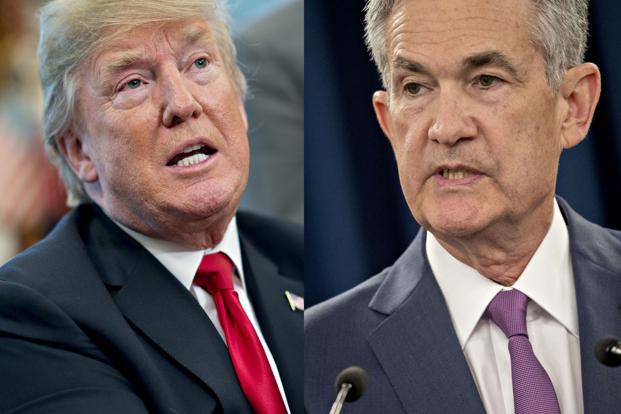
Donald Trump & The Federal Reserve

trump-powell1-kMGE--621x414@LiveMint

In conversations the number one concern I’m asked to address is the effect of Donald Trump on markets. This isn’t surprising. He looms over everything. He dominates news cycles. His tweets can move markets. He is omnipresent in our lives, and yet curiously much of what he has done has left no lasting impression. His tweets about trade and tariffs cause short term market blips, but after a time, things normalize. In all the ways that Donald Trump seems to be in our face, his impact is felt there the least.

Trump’s real, and more concerning impact is in the slow grind he directs at public institutions that are meant to be independent and non-partisan. He’s placed people in charge of departments whose chief qualification is their loyalty to Trump, some of them no nothings and buffoons, others with disastrous conflicts of interest, with only a passing understanding of the enormous responsibility they’ve taken on. But where Trump hasn’t been able to overcome the independence of an institution, he wages tireless and relentless war against their heads. I’m talking about Trump’s yearlong obsession with the Federal Reserve and his desire for a rate cut.

The Fed, you may recall, is America’s central bank. It sets the key interest rate and uses it to constrain or ease monetary supply, the goal of which is to rein in inflation or stimulate it depending on the economic health of the nation (and world, it turns out). The Fed meets regularly and sends signals to the market whether it thinks it needs to raise or lower rates, and markets respond in kind. If the markets and federal reserve are on the same page, markets may respond positively to what is said. If markets and the fed disagree, well…

Last year the Fed was expected to raise rates to stave off inflation and hopefully begin normalizing interest rates to pre-2008 levels. Rates have been very low for the better part of a decade and with inflation starting to show itself through wages and a tightening of the labor market, the Federal reserve Chairman, Jerome Powell, was expected to make up to 4 rate hikes in 2018, which would add (about) 1% to borrowing costs. But then things started to get a bit “wibbly wobbly”.

generate-L-duuE7C

By the fourth quarter the overnight lending rate was between 2.25% and 2.5% following a rate hike in late December. That triggered a massive sell-off following a year of already disappointing market returns.  The Fed was seen to be to hawkish, and the market didn’t believe the economy was strong enough to support the higher lending rate. By January the Fed had relented, saying that it the case for higher rates was no longer as strong and that its outlook would be tempered. By March the consensus view was that there would be no rate hikes in 2019 at all.

By April things had turned around. US economic data, while mixed, was generally strong. Unemployment remained historically low, and wage inflation was positive. And then Trump said this:

Trump Tweets April 30

May was an interesting month in politics and markets. After four months of a resurgent bull market the breaks were put on in May following renewed concerns about the US and China and a trade war. By the end of May Trump was tweeting about using tariffs against Mexico to get results at the border. At this point markets had started to get nervous. The Dow Jones had shed about 2000 points, and the rumblings from Wall Street were getting pretty loud. Trump, who sees his popularity reflected in the value of the stock market, started to make noises that things were once again progressing with China and the tariff threat against Mexico was quickly put to bed. As is now typical in 2019, markets were assuaged by further tweets from the president, assuring that solutions had been found or that negotiations would begin again.

June saw a resumption of the bull run, with May’s dip largely being erased. But Trump still wanted his rate cut and increasingly so does the market. Where markets were satisfied by the promise of no new hikes earlier in the year, by June pressure was building to see an actual cut. This quarter markets have remained extremely sensitive to any news that might prompt looser monetary policy and have jumped every time its hinted that it might happen. On June 7th a weak jobs report got the market excited since it gave weight to the need for a rate cut. This past week the Fed has now signaled it may indeed cut rates as soon as this summer.

There are, of course, real concerns about the global economy. The IMF believes that if the various trade fights continue on unabated a full 0.5% of global growth could be wiped out (roughly ½ trillion dollars). That’s already on top of signs of slowing growth from Europe and Asia and at a time when markets are at all time highs when it comes to valuations. Trump is effectively saying that markets should be allowed to creep higher on the backs of cheap credit rather than on the back of real economic growth. It’s a bit like saying that you could be so much richer if you could easily borrow more money from the bank.

People with longer memories may recall that Trump, during the 2016 election campaign, had argued against the low rates of the Fed, and believed they should be much higher. Today its quite the opposite. But Trump’s chief issue is that his own pick for the Fed has continued to exert a significant amount of independence. Trump’s response, beyond merely bullying Jerome Powell over twitter has been to try and appoint more dovish members to the Fed, including a woman who used to advocate a return to the gold standard, but is now an avowed Trump supporter and of easier money.

                “Any increase at all will be a very, very small increase because they want to keep the market up so Obama goes out and let the new guy … raise interest rates … and watch what happens in the stock market.”

  • Donald Trump

As with all things Trump, there is always some normal rational behind the terrible ideas being pursued. Trump’s tariffs, arguably a poorly executed attempt to punish China, is hurting US farmers and is a tax on the US citizenry. Its also done nothing to change the trade deficit, which is the highest its ever been. But nobody is under the illusion that China is a fair operator in global trade that respects IP or doesn’t manipulate currency.

There is also a very secular case to be made for a rate cut. Global markets are weakening and that traditionally does call for an easing of monetary policy, and globally many central banks have reversed course on hiking rates, returning to lower rates. For the United States there is a legitimate case that a rate cut serves as a defense if the trade fight with China draws on, and can be reversed if it is brought to a speedy conclusion.

Trump tweet 2

Those points run defense for Trump’s politicization of a critical institution within the economy, and we shouldn’t forget that. Underlying whatever argument is made for cutting rates is Trump’s own goals of seeing the stock market higher for political gain, regardless of the long term impact to the health of the economy. We should be doubly worried about a politics that has abandoned its critical eye when it comes to cheap money and Wall Street greed. Individually Wall Street insiders may think that too much cheap money is a bad thing, but in aggregate they act like a drunk that’s been left in charge of the wine cellar.

Lastly, we should remember that after Trump is gone, his damage may be more permanent than we would like. Structural damage to institutions does not recover on its own, but takes a concerted effort to undo. Does the current political landscape look like one that will find the bipartisan fortitude post-Trump to rectify this damage? I’d argue not.

All this leaves investors with some important questions. How should they approach bull markets when you know that it may be increasingly be built on sand? What is the likely long term impact of a less independent Federal reserve, and what impact does it have on global markets as well? Finally, how much money should you be risking to meet your retirement goals? They are important questions the answers should be reflected in your portfolio.

The next Federal Reserve meeting is on July 30th, where the expectation is that a 25bps rate cut will be announced.

As always, call or send a note if you’d like to discuss your investments or have questions about this article.

The Catalonia Effect

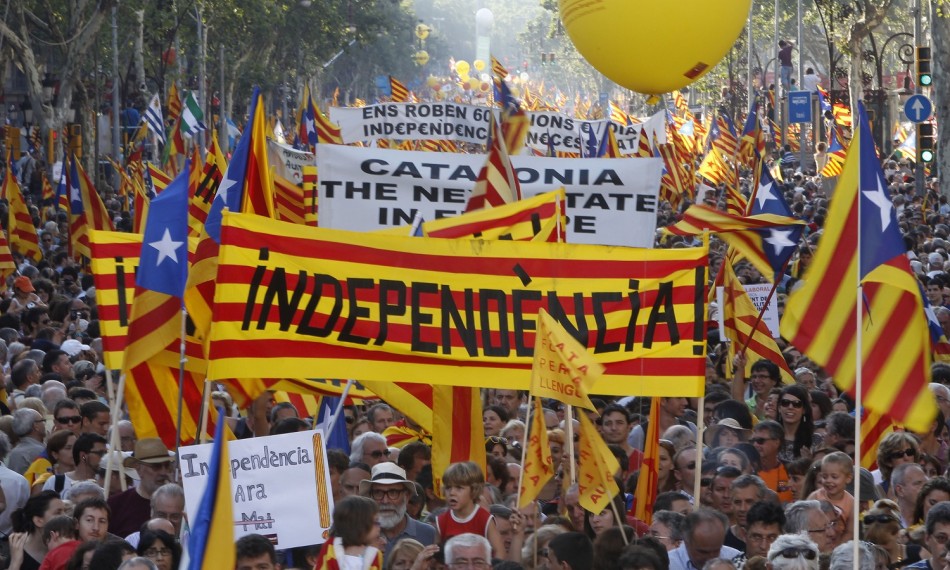
03-catalonia1

Years ago I walked the Camino De Santiago, a holy pilgrimage across Spain that dates back to the 9th century. Not being Catholic I’m sure that a number of religious aspects of my month-long trek were lost on me, but what I did take away was a cursory understanding of Spain’s curious political instability. Everywhere I went there was graffiti calling for the independence of Catalonia, a movement that I had been completely ignorant of. In fact, other than the Basque region, it had never occurred to me to even question the essential makeup of the nation of Spain.

Last week Catalonia held a highly contentious referendum on its independence. Like Scotland and Wales, Catalonia has a devolved parliament and is a region with its own language and history distinct from (and forever tied to) Spain. Leading up to the referendum was a fair amount of heavy handedness from the government in Madrid that only made things worse. Strictly speaking the referendum is likely illegal, and the Spanish constitution does not recognize Catalonia’s decision to simply walk itself out the door on a whim. More puzzling has been the outcome of the vote, with the Catolinian government refusing to categorically claim independence. A deadline set for this Monday was meant to clarify Catalonia’s declaration of independence, but it seems to have lapsed without clarification.

In the universe of investing events like this seem poised to throw everything into chaos, and yet markets have shown themselves to be surprisingly resilient in the face of big political upheavals. Last year included a surprise win for the Brexit vote, which initially began with a market panic, but morphed into a prolonged rally for the British markets. The US too has had a surprising run in the Dow and S&P500 despite numerous concerns about the stability of the US government and its inability to pass any of it objectives.

So how should investors react when political chaos erupts? Is it a sign that we should hunt for safer shores, or should we simply brave the chaos?

One thing to consider is that we probably over estimate the importance of events as they unfold and assume that things that are bad in the real world are equally bad in the markets. War is bad objectively, but it isn’t necessarily bad for business. Protracted wars in Afghanistan and Iraq have been damaging to those involved but they haven’t slowed market rallies much, a depressing but necessary distinction.

Antifragile-bookOn the other hand chronic instability has a way of building in systems. One of the reasons that serious conflicts, political instability and angry populism haven’t done much to negate market optimism is because the nature of Western Liberal democracies is to be able to absorb a surprising amount of negative events. Our institutions and financial systems have been built (and re-built) precisely to be resilient and not fragile. Where as in the past bad news might have shut down lending practices or hamstrung the economy, we have endeavored to make our systems flexible and allow for our economies to continue even under difficult circumstances.

However there are limits. In isolation its easy to deal with large negative events, but over time institutions can be pushed to their breaking point. There are compelling arguments that the wave of reactionary populism that has captured elections over the past three years is a sign of how far stretched our institutions are. Central banks, democratic governments and the welfare state have been so badly stretched by a combination of forces; from a war on terror, a global financial crisis and extended economic malaise, that we shouldn’t find it surprising that 1 in 4 Austrians, 1 in 3 French and 1 in 8 Germans have all voted for a far right candidate in recent elections.

Equally we can see the presumed effects of Climate Change as large parts of the US have suffered under multiple hurricanes, torrential downpours, or raging forest fires. For how many years can a community or nation deal with the repeated destruction of a city before the economy or government can’t cope?

In this reading, markets have simply not caught up yet with the scope of the problems that we face and are too focused on corporate minutia to see the proverbial iceberg in our path.

While I believe there is some truth in such a view, I think we have to concede that it is us as citizens that are too focused on the minutia. The market tends to focus on things like earning reports, sales predictions and analyst takes on various companies before it considers major events in the valuation of stocks.

Consider, for instance, the election of Donald Trump. Trump rode a wave of dissatisfaction with free trade and promised to shake up the trade deals the US had with other nations. Superficially this threatens the future earnings of multinational firms that depend on trade deals like NAFTA. But how many people didn’t go and buy a car they had been intending to buy over the last year? As is often the case the immediacy of political craziness obscures the time it will take for those issues to become reality. Trump may end up canceling NAFTA, but that could be years away and has little impact on the price of companies now. That applies to events like Brexit and even the Catalonian vote. Yes, they create problems, but those problems are unlikely to be very immediate.

keepcalm

The lesson for investors is to remain calm and conduct regular reviews of your portfolio with your financial advisor (if you don’t have a financial advisor you should give me a call), to ensure that the logic behind the investment decisions still makes sense. Nothing will be more likely to keep you on track with your investment goals and sidestepping bad decisions than making sure you and your investment advisor remain on the same page.

The Sentry Scandal & Unethical Sales Practices

For the past week I’ve been tinkering with a piece around the allegations that TD’s high pressure sales tactics had driven some staff to disregard the needs of their clients and encourage financial advisers in their employ to push for unsuitable products, and in some instances drove employees to break the law.

Screen Shot 2017-04-07 at 2.35.55 PM
The drop in the value of TD shares following the allegations reported by CBC (from Google Finance)

My general point was that the financial advising industry depends on trust to function, and runs into problems when those that we employ for those jobs serve more than one master. The sales goals of the big banks are only in line with the individual investor needs so long as investor needs serve the banks. In other words, clients of the banks frequently find that their interests run second to the profit and management goals of Canada’s big five.

Yet I was having a hard time getting the article together. Something about the message was too easy; too obvious. No one who read the reports from the CBC was in any doubt about the ethical dubiousness of TD’s position, and forgetting the accusations of illegality, I doubt most people were surprised to find out that banks put their corporate needs ahead of their average Canadian clients.

But then yesterday something truly shocking happened. One of Canada’s larger independent mutual fund companies had to pay a $1.5 million settlement to the OSC for “non-compliant sales practices” (you can read the actual ruling by the OSC HERE). Effectively the OSC was reprimanding a company for giving excessively large non-monetary gifts to financial advisers, rewarding them for being “top producers”.

For the uninitiated, Canada’s mutual fund industry can seem a little confusing, so let me see if I can both explain why a mutual fund company would do what it did, and how you can avoid it.

First, there are several different kinds of mutual fund companies:

  1. There are companies like those of the banks, that provide both the service of financial advice and the mutual funds to invest in. This includes the five big banks and advice received within a branch.
  2. There are also independent mutual fund companies that also own a separate investing arm that operate independently. Companies like CI Investments own the financial firm Assante, IA Clarington owns FundEx, and the banks all have an independent brokerage (for example TD has Waterhouse, RBC owns Dominion Securities and BMO owns Nesbitt Burns).
  3. Lastly, there are a series of completely independent mutual fund companies with no investment wing. Companies like Franklin Templeton, Fidelity Investments, AGF Investments and Sentry Investments all fall into that category.

The real landscape is more complicated than this. There are lots of companies, and many are owned by yet other companies, so it can get muddy quickly. But for practical purposes, this is a fair picture for the Canadian market.

In theory, any independent financial adviser (either with a bank-owned brokerage, or an independent brokerage, like Aligned Capital) can buy any and all of these investments for our clients. And so, the pressure is on for mutual fund companies to get financial advisers to pay attention to them. If you are CI Investments, in addition to trying to win over other advisers, you also have your own financial adviser team that you can develop. But if you are a company like Sentry, you have no guarantee that anyone will pay attention to you. So how do you get business?

Sentry is a relatively new company. Firms like Fidelity and Franklin Templeton have been around for more than half a century. Banks have deep reserves to tap into if they want to create (out of nothing) a new mutual fund company. By comparison, Sentry has been around for just 20 years, and has had to survive through two serious financial downturns, first in 2000 and then 2008, as an independent firm. By all accounts, they’ve actually been quite successful, especially post 2009. You may have even seen some of their advertisements around.


600_319143892
Over the past few years independent mutual fund companies have increasingly turned to public advertising to try and encourage individual investors to bug their advisers about their funds.


But while Sentry has had some fairly good performance in some important sectors (from a business standpoint, it is more important to have a strong core of conservative equity products than high flying emerging market or commodity investments) it has also had some practices that have made me uncomfortable.

For a long time, Sentry Investments paid financial advisers more than most other mutual fund companies. For every dollar paid to an adviser normally, Sentry would pay an additional $0.25. That may not sound like much, but across enough assets thats a noticeable chunk of money. And while there is nothing illegal about this, it is precisely the kind of activity that makes regulators suspicious about the motives of financial advisers and the relationships they have with investment providers. Its no surprise that about a year ago Sentry scaled back their trailer to advisers to be more like the rest of the industry.

The fact is, though, that Sentry is in trouble because of their success. No matter how much Sentry was willing to pay advisers, no-one has a business without solid performance, and Sentry had that. The company grew quickly following 2008 and has been one of the few Canadian mutual fund companies that attracted new assets consistently following the financial meltdown. When times are good, it’s easy for companies to look past their own bottom line and share their wealth. That Sentry chose to have a Due Diligence conference in Beverly Hills and shower gifts on their attending advisers was a reflection of their success more than anything else.

And yet, from an ethical standpoint, it is deeply troubling. I have always been wary of companies that offer to pay more than the going market rate for fear that the motives of my decision could be questioned or maligned. Being seen to be ethical is frequently about not simply following the law, but doing everything in your power to avoid conflicts of interest (Donald Trump: take notice). The financial advisers attending the due diligence (who would have paid for their own air travel and hotel accommodation) probably had no reason to believe that the gifts they were receiving exceeded the annual contribution limit. But now those gifts cast them too in the shadow of dubious behaviour.

10-donald-trump-debate-w750-h560-2x
This is a man who has a hard time creating the impression that he is above ethical conflicts.

So how can you protect yourself from worries that your adviser is acting unethically, or being swayed to make decisions not in your interest? First, insist that your adviser at least offers the option of a fee for service arrangement. While the difference between an embedded trail and a transparent fee may be nominal, a fee-for-service agreement means that you have complete transparency in costs and full disclosure about where your advisers interests lie.

Second, if an embedded trail is still the best option, ask your adviser what the rationale was behind the selection of each of the funds in your portfolio, and what the trail commission was for each of those investments. This is information that you are entitled to, and you shouldn’t be shy about asking for.

Lastly, ask what mutual funds have given your adviser, but be open to the answer. Gifts to advisers are meant to fall into the category of “trinkets and trash”, mostly disposable items that are visibly branded by the company providing them, though gifts can be moderately more expensive. The difference between receiving cufflinks from Tiffany’s and cufflinks that bare the logo of a mutual fund firm is the difference between ethically dubious and openly transparent.

Regulators in Canada are pushing the industry towards a Fiduciary Responsibility for financial advisers. While that may clarify some of the grey areas, it will certainly create its own series of problems. Until then though, investors should not hesitate to question the investments they have, and why they have them. It may be unfair to expect the average Canadian to remember all the details about the types of investments that they have, but you should absolutely expect your financial adviser to be able to transparently and comprehensively explain the rationale and selection method behind the investments that you own.

If you would like an independent review of your current portfolio, please don’t hesitate to give us a call. 416-960-5995.


The Trump Effect

Over the weekend investors got a chance to read the fine print on the faustian bargain they had with President Donald Trump. Since Trump’s election night win, markets had jumped significantly. The promise of stimulus spending, tax cuts and a renewed focus on deregulation had given investors a “sugar rush”, and eclipsed the more basic concerns about Trump’s general lack of suitability to be president.

dow-jones-since-election

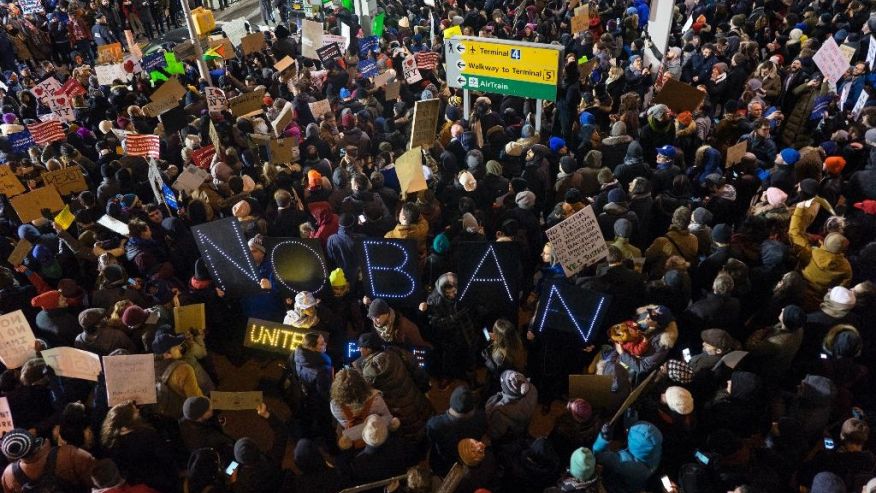
But with the stroke of a pen investors were being reminded about how quickly Trump’s essential character and the presidency he promised could bring chaos and confusion. On Friday Trump signed an executive order to temporarily restrict accepting refugees from seven predominantly muslim countries. The order was vague, poorly thought out, badly executed and quite possibly illegal. Confusion reigned and initially the order was applied to people with legal immigrant status in the United States, including those with green cards.

The weekend was filled with protests at airports, backtracking by members of the administration, and out and out insurrection by members of the government who believed that the order was unconstitutional. Very quickly the official story has descended into the kind of decontextualized factual minutia that has come to characterize attempts to grapple with the truth in the age of the internet. Did Obama do something similar? Is this a Muslim ban or something more restrained? Is it more or less reasonable than it was presented? Accusations or partisan hackery and racism powered the internet and every conversation everyone had over the weekend and well into today.

The answers to these questions are largely immaterial. Trump is a populist and is likely going to do exactly what he said he would do on the campaign trail. That his cabinet is a group of people with little understanding of the nuances of government and that he may in fact be heading up an administration that is kleptocratic on par with a South American government is part of his current appeal. This weekend won’t be the last time controversial and vague (or illegal) orders are issued by this president and it won’t be the last time that they are met with organized resistance.

airport-protest

2016 was a year in which great changes to the status quo were made without many of those changes having an impact. Investors may have come to believe that the rising tide of angry populism won’t have any negative repercussions, or may even be positive. But this weekend brought investors face to face with the reality of unpredictable populist outsiders calling the shots. Volatility is in the cards, and even if (as many believe) that Trump will be good for the economy, his style is not slow and deliberate, but fast and reckless. Investing in the US, which has a strong economy, is unlikely to be smooth even if the trajectory is up.

trumps-executive-order-on-immigration-includes-a-plan-to-publish-a-weekly-list-of-crimes-committed-by-aliens

That’s the problem with Faustian bargains. You get what you want but what you sacrifice has typically been undervalued. The future for the American markets still looks good; but NAFTA talks loom, there are threats of trade wars, and a stable and predictable government seems unlikely. Investors should take note; its day 11 and there are another 4 years ahead. Even if we can’t predict tomorrow, we should acknowledge that tomorrow’s unpredictability may be the thing that investors have to make peace with.

2017 – The Year Ahead

dad-jump-2

Many of you won’t know this, but my father used to sky dive. He’d stopped by the time I was born (reportedly because my mom had a natural aversion to life threatening hobbies) but in many ways his hobby would be a reoccurring source of guidance for life lessons.

For instance, whenever I was nervous about doing some BIG THING, my dad would let me know that once you were doing THE BIG THING, your anxiety would drop considerably. Sky divers know this, as they are only nervous until they jump out of the plane, and then get very calm. The fear is in the anticipation, not the actual doing.

2016 had a lot of anticipation, but not an actual lot of doing. Brexit happened, but hasn’t really happened. Donald Trump has been elected, but hasn’t been sworn in. The Canadian housing market continued its horrific upward trend and news stories began to abound about the looming robot job-pocalypse. 2016 was full of anticipation, but little action.

donald-twitterbot2017 will begin to rectify some of these issues. Next week we will see the arrival of President Donald Twitterbot™, finally ending speculation about what kind of president Donald Trump will be and seeing what he actually does. So far markets have been reasonably calm in the face of the enormous uncertainty that Trump represents, but his pro-business posture seems to have got traders eager for a more unregulated market with greater earnings for the future. Right now bets are that Trump might really jump start the economy, but there are real questions as to what that might mean. Unemployment is already very low and inflation looks like it is actually beginning to creep up. Housing prices (amazingly) are back to 2007 levels and the economy seems to be moving into the later stages of a growth cycle.
2017 will likely not be the year that the Canadian housing bubble/debt situation comes crashing down, but its also unlikely to be the year that the situation improves. Economically the short term outlook for Canada is already kind of bad. The oil patch is already running second to a more robust energy story from the United States. Canadian financials had a very healthy year last year, but as we’ve previously written while the TSX was the best returning developed market over 2016, in a longer view it has only recently caught up with its previous high from 2014.

2017 may be the year that automation starts being a real issue in the economy. Already much of Donald Trump’s anger towards globalisation is being challenged by analysis that shows its not Mexico that steals jobs, but robots. But as robots continue to be more adept at handling more complicated tasks there is simply less need for humans to do much of that work. Case in point is Amazon’s new store Amazon Go, currently being opened in Seattle.

While many point to this as Amazon’s foray into the world of groceries (and a better shopping experience) Amazon’s real business is in supply management. The algorithms they use and the new technology they’ve developed are not designed to be one offs, but ways to handle high volumes of business traffic with as few people, and as low a cost as possible. Combined with driverless cars (currently being tested in multiple cities & countries)and our growing app economy, we will be pushing more people out of steady work across multiple sectors of the economy in coming years.

brexit

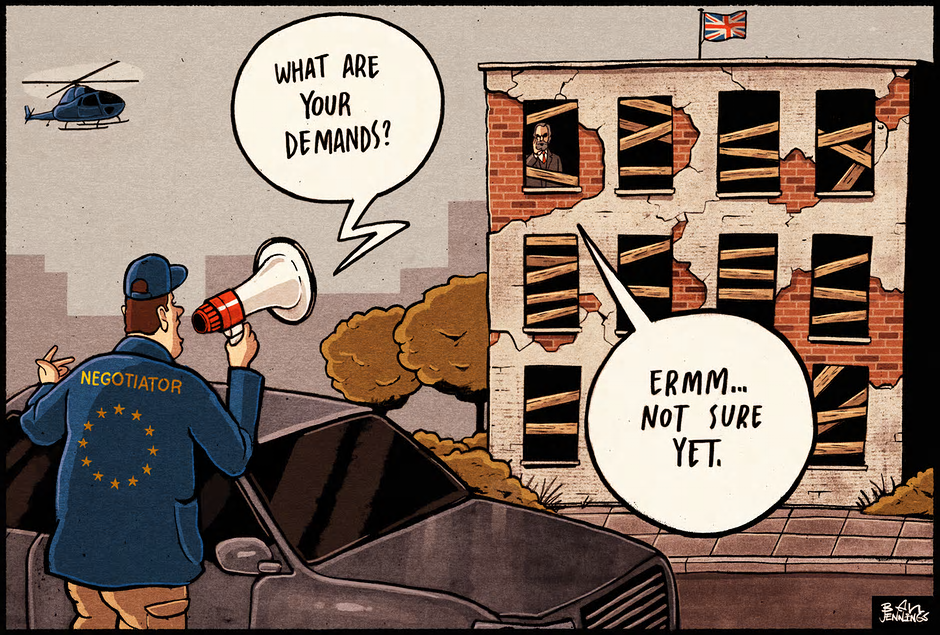
2017 will also be the year that Brexit will begin, though it will be two years before it is complete. Many people will be watching on how Teresa May’s government handles the Brexit negotiations, how confident England looks on its position, and how hostile or open Europe seems to be to conceding to Britain’s views. Either way it should provide lots of turbulence as it unfolds over the coming years.

But despite all this, there is a kind of calm in the markets. We’ve crossed the line on these issues and there’s nothing to do but continue ahead. Trump will be President Donald Twitterbot™, Brexit will happen, regardless of how many people remain opposed and markets will either go up or down as a response. Perhaps the new normal is a great deal more similar to the old normal than we all thought.

Then again…


Mass Extinctions, Hedgehogs & Trump

fox

Donald Trump is president elect, and only Russia is happy. That, and of course millions of Americans. And Donald Trump.

There are many things I want to say about his election. One is that we had correctly read the sentiment last year and this year regarding citizen dissatisfaction and the likelihood of surprising or disappointing results in big electoral decisions. The other is to talk about the failure of “experts” and their inability to get much right, from big economies to statistical outcomes in elections.

10-donald-trump-debate-w750-h560-2x

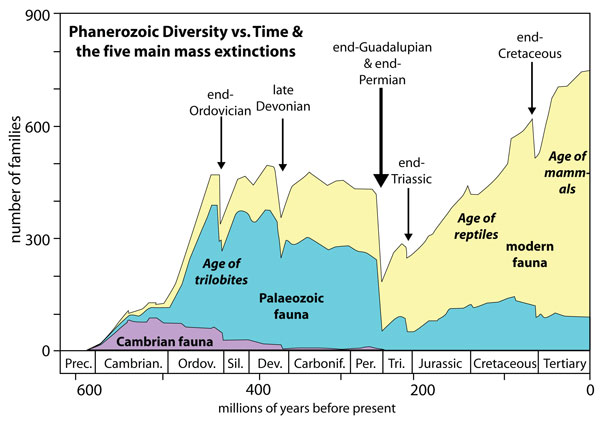
Instead I want to turn my attention to a recent lecture I attended at the ROM that discussed evolution and mass extinctions. In case you don’t know we may be living through a sixth mass extinction (insert Trump joke here), but aside from that the previous mass extinctions are not what we think. In fact every subsequent mass extinction has led to an increase in the bio diversity after it, and our lecturer concluded that mass extinctions help the planet cut down the time on evolutionary development, removing 50 million years of grinding it out overnight. Mass extinctions are big events but they aren’t the end of things, they are the beginning of far more.


extinct
Yup, this is a graph of mass extinctions.


There could be something to this with Trump’s election. There are a lot of angry people out there who “cant believe this is happened” and are talking about it like it’s the end of the world. That’s obviously not the case. So what could it be the beginning of?

There is much right now to not be pleased about. While economic news for the United States is certainly better than most other countries, most people would hardly call it robust. Threats to middle class security loom large. The rust belt is a genuine and persistent problem for millions of Americans.  It also threatens to spread to more places with increasing automation. Many Americans, even if they are doing fine financially don’t feel like they can likely afford retirement. Globally the news is actually worse. Brexit wasn’t a great idea given the details of what it involved, but it wasn’t a crazy response given the total failure of the EU to manage itself or improve the economic situation for many of its members.

Other articles about Trump:

Donald Trump is my pick for Republican Nominee

Burning it all down: The Rise of Trump’s Conservatism

The Age of Breakable Things

But What if He Wins?

At some point in the last 20 years the term “technocrat” came into common usage, and refers to technical experts. Economists are technocrats. Nate Silver is a technocrat. Janet Yellen is a technocrat. The EU is a technocratic organization. It’s not a condemnation, but an acknowledgement that we have come to live in a technocratic society, one in which the levels of complexity keep rising, requiring experts with ever more refined skills to manage. 21st century complexity has seemingly killed the renaissance man, as subjects are far to varied and nuanced to be well understood. The 21st century seems to favour those of us that can know one big thing.

hedgehog

But given the failure of technocrats to fix the problems they’ve made, we might ask ourselves what we’re getting wrong. The answer I think lays in the ancient Greek saying that “a fox knows many things, the hedgehog one big thing.” Technocrats are hedgehogs. They know one big thing, and they tend to assume that they are right so long as their one big thing continues to provide positive results. But the minute they are wrong they are without a clue as to what happened.

The 21st century may require more foxes, generalists that better understand the many things tugging at the world rather than the narrow and parochial focus of experts. And Trump, for all his sins (and I believe there will be many) may hurry up that need. His promise to take a sledgehammer to things like NAFTA, challenge the supremacy of persistent low interest rates and bring some realism to organizations like NATO, while terrifying, represent the mass extinction of a series of ideas that are too confident in their own self worth, too precious to be tested and too fragile to survive. Whether we come out the other side of this better off has yet to be seen but its a possibility we shouldn’t dismiss.