Will COVID-19 Make Real Estate Sick?

TSX Friday march 27

Markets have been bullish the last few days, moving off the most recent lows and easing the strain on investors who have watched their savings tumble by up to 35% since the beginning of the year. Any enthusiasm that this will be a sustained recovery should be tempered by the sheer scope of the economic disruption that we are facing, how early into the problem we currently are, or the potential for a pandemic disaster in the United States, which now has officially more cases than China ever did.
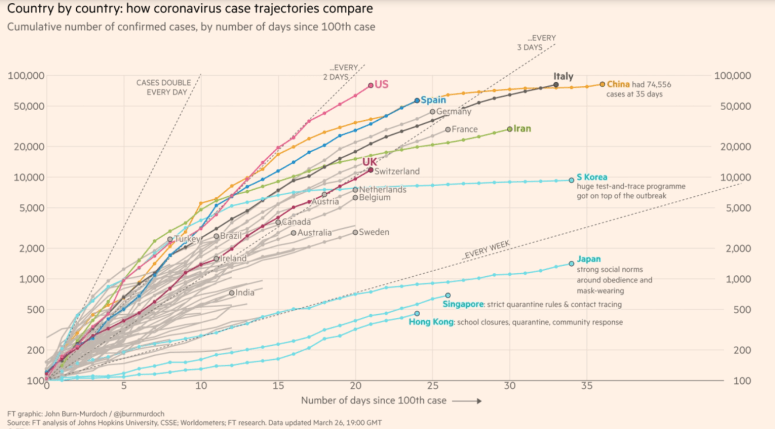
FT Capture

While I remain grateful for the respite we’ve seen, however fleeting, the problem that sticks out in my mind is that of the tangled web of Canadian debt, growing insolvencies, and hundreds of empty condos in downtown Toronto.

Problems rarely exist in isolation, and a problem’s ability to fester, grow and become malignant to the health of the wider body requires an interconnected set of resources to allow its most pernicious aspects to be deferred. In Canada the problem has been long known about, a high level of personal debt that has grown unabated since we missed the worst of 2008. What has allowed this problem to become wide ranging is a banking system more than happy to continue to finance home ownership, a real estate industry convinced that real estate can not fail, and a political class that has been prepared to look the other way on multiple issues including short term rental accommodation, in favour of rising property values to offset stagnant wages.

G&M Canada's Household Debt Burden

Recently I was at a round table event on Toronto real estate shortly after the COVID-19 situation started to gain real traction in late February. Benjamin Tal, Deputy Chief Economist for CIBC Capital Markets, described the Canadian real estate scene as “having 9 lives”, every time it seems like house prices can go no higher, something happens to prop up the market. At that moment it was the likely cut in interest rates and an easing of the stress test for mortgages which might breathe more life into the over heated housing market. But that was before international travel dropped off, before national states of emergency, before social distancing, before borders were closed, before essential services, before #lockdowns and #quarantinelife. Tal may not have been wrong conceptually, he simply hadn’t considered that the world might close for business.

Economist Cover

Canadian debt has been kept afloat because nothing could conceivably undermine it. And now, in downtown Toronto, condos sit empty. Airbnb hosts have no customers. Costs are mounting and there is no immediate end in sight to the pandemic, no end date that people can bank on. This week 3.3 million Americans filed for EI. In Canada the number was around 1 million. Even the most generous stimulus packages are unlikely to fix a debt problem as big as Canada’s.

True, there is some hope in mortgage deferrals, but scuttlebutt is that banks aren’t very liberal on this matter, telling many that they don’t qualify regardless of political pronouncements. This problem isn’t limited to Toronto. In Dublin rental accommodation jumped by 64% as COVID-19 became a crisis and people began looking for long term tenants to replace the short term ones. Short term thinking by investors, banks, and politicians has facilitated a serious economic problem. But to its enablers it seemed unlikely that there was a scenario that could conceivably expose its flaws.

It is becoming ever clearer that the focus for citizens in the 21st century should be on resilience. Expedience and an assumption that the stability of the recent past is prologue is now a dangerous and toxic combination, creating risks and magnifying bad decisions. Whether the coronavirus ushers in a fiscal reckoning for Canadians, or somehow we sidestep the worst of the crisis through quick action and nimble minds remains to be seen. But how much easier would life be for all had politicians adopted a more hostile stance to Airbnb pushing into the traditional rental markets? Had investors not eagerly dumped savings into condo developments, and had banks been more willing to question the wisdom of lending into what most acknowledged was a real estate bubble.

In December I wrote that the Canadian insolvency rate was the highest it had been in a decade. The city of Toronto recently took action to curb the growth of payday advance loan businesses, as though the problem was the businesses and not people in general need of credit to make ends meet. Whatever is coming in the wake of the COVID-19 shutdown, the issue long predates it. And if insolvencies go up and, for the first time in a long time, a portion of the Canadian real estate sector comes under real pressure there will be a lot of finger pointing at the individuals who have over extended themselves with an illiquid pool of investments. But the truth will be that this problem will have had many facilitators; enablers that were happy to ignore the problem, even help grow it, because they didn’t want to believe that things could go wrong or didn’t see it was their responsibility curb its malignancy.

Information in this commentary is for informational purposes only and not meant to be personalized investment advice. The content has been prepared by Adrian Walker from sources believed to be accurate. The opinions expressed are of the author and do not necessarily represent those of ACPI.
Canada’s Housing Bubble Will Burst & We’re Not Ready

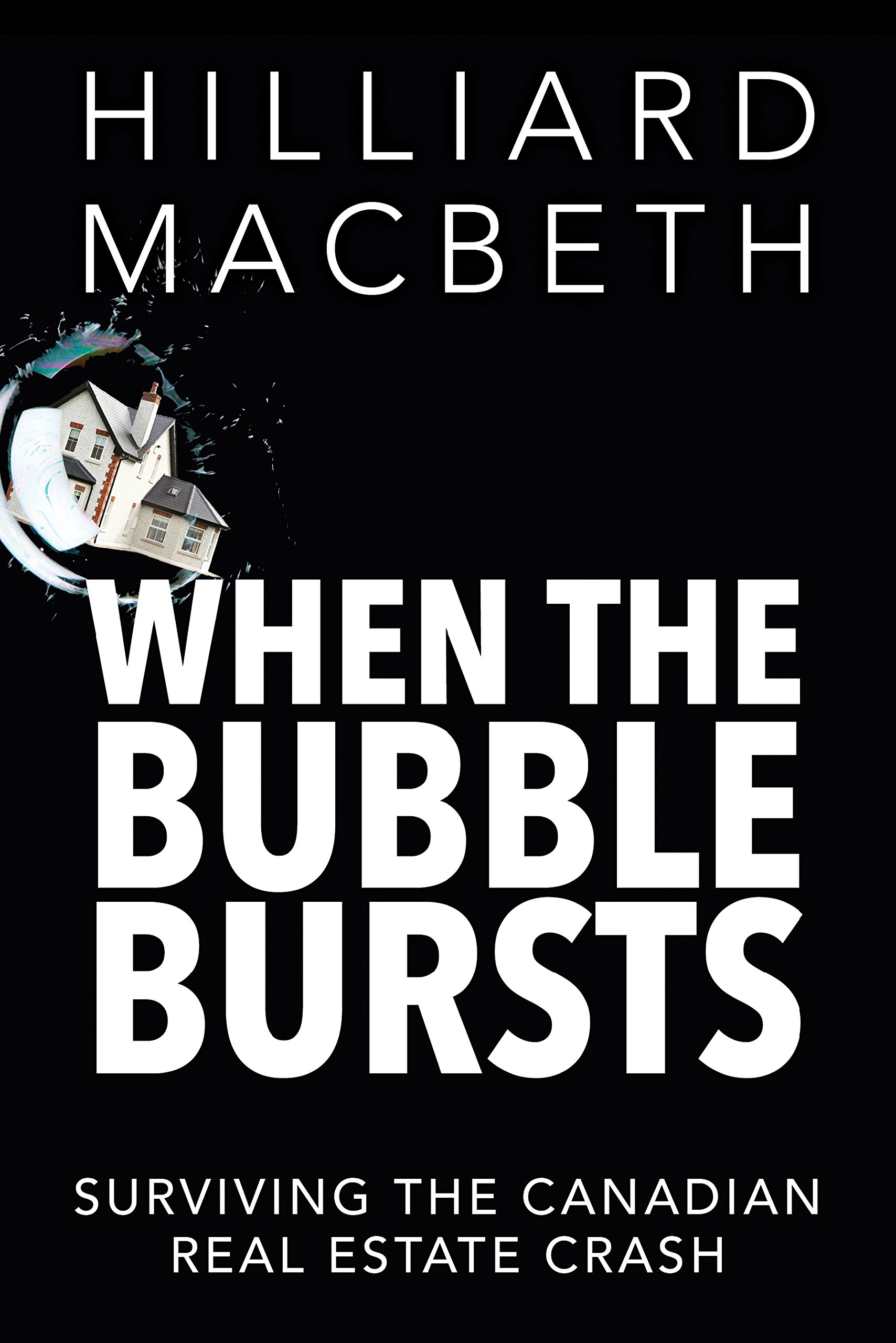
On Saturday a small book was released nation wide that made a big claim, Canadian housing prices are poised to drop between 40% to 50%. Written by a financial advisor in Edmonton, Hilliard MacBeth, When the Bubble Bursts is a grim and insightful polemic about both our obsession with housing and the danger such high valuations pose to our economy. I’ve been negative about Canada for a long time, particularly about Canada’s improbable and endless real estate boom, but what the author has done in his book is attach some actual numbers around how serious our housing problem is.

81lYobbkTmLI picked the book up on Saturday and it is terrifying. His insights are troubling and his points are all backed with reputable sources. Like all serious financial problems it is the interconnectedness of the our financial lives that magnifies the impact of any bubble. Hilliard’s chief accomplishment is to show just how interconnected these issues are. The real estate bubble eats into the middle class need of disposable income, encourages people to view their home as the primary source of savings while banks profit off the increasingly indebted backs of hard working Canadians. Government insurance on mortgages (which protects banks, not you) also ties the public coffers to the inevitable need of bank bailouts, while governments themselves worsen the situation by helping boost the homeowners’ market.

In Hilliard’s view we have sold ourselves on a dream, that our homes can increase in value forever (above the non-existent rate of inflation), that we can use our home equity lines of credit to fuel our lifestyles and that as Canadians we are somehow immune from the normal problems that affect other economies. We aren’t and we aren’t ready for the financial collapse that is coming. I’m sympathetic to this view.

HMcB
Click on the picture to see the article and interview

But since I live in Toronto, and our author lives in Edmonton I think it is important to note some financial nuances that should be considered. For instance, not every market is built equally. Bubbles are as much a product of oversupply as they are speculation (which fuels the supply). But in the last 30 years we have become an increasingly urban society. When it comes to value in homes it is frequently the land that we find valuable, not the building (the building is a depreciating asset, like your car). Desirable land is in short supply, and that explains why our urban world is more often than not a suburban world. Look at this expected growth in population around the GTA from now until 2031.

First printed in the Toronto Star, Friday Feb 27, 2015 http://www.thestar.com/news/insight/2015/02/27/ontario-farmland-under-threat-as-demand-for-housing-grows.html

Notice that there isn’t expected to be substantial growth within the core city of Toronto. But as we look to the suburbs, where land is cheaper and desirability for homes will be lower but more affordable we find our source for significant speculation. In short the insurance against significant losses on your home has everything to do with desirability of the land.

This held true particularly in the United States in their own housing bubble. Cities like Phoenix and their accompanying suburbs proved to be the most susceptible to the market downturn. New York on the other hand was far less severely impacted, and I would imagine even less so if we had numbers for Manhattan.

CaseShillerCitiesJuly2013
The above chart shows three numbers regarding several American cities using the year 2000 as a baseline; from the peak of the housing market, the lowest point in that market, and where they stood five years later (2013). In Phoenix, house prices had jumped 127% from where they had been in 2000. They then dropped back to their 2000 values in the correction, and had recovered by 37% by 2013. In New York however, prices had risen 116% from their values in 2000, but only lost 40% of those gains in 2008 and were valued at 67% above their 2000 price five years after the correction. Dallas and Denver were both above their bubble highs by 2013, while Los Vegas was still off 110% of their previous market high.

This should seem obvious. The old line on real estate is “location, location, location”, and it is location that locks in value. There is no hidden land to be developed in Leaside, no undiscovered country in Rosedale or Lawrence Park. On the other hand Vaughan, Pickering, Ajax and Mississauga are all areas to be concerned about, both because they attract younger buyers with lower savings and it is where we see the most growth in new homes. It’s logical to assume that the worst impacts of a correction will be felt there.

https://twitter.com/Walker_Report/status/580048068688678912

But the truth is, when the Canadian housing market corrects it will cause us all a problem. It will magnify the effects of a recession, put pressure on the federal budget and worsen our prospects internationally for investment. That some neighborhoods will be less affected than others is of small consequence. It will affect those with no savings far worse, disproportionately affect the younger (and more financially vulnerable) while hitting those baby boomers depending on their home sale for retirement very hard.

https://twitter.com/Walker_Report/status/580036170056269824

Since no one knows when this will happen the best thing for prospective home owners to do is have a conversation about the choices they are making now, to save more, reduce debt and rethink whether big home purchases or significant renovations are the best use of our money. Corrections are inevitable. Bubbles burst. Whether we are prepared or not can determine your financial future.

Nervous? Don’t be! Set up a meeting to talk about your financial future instead:

Go back

Your message has been sent

Warning
Warning
Warning

Warning.

Further Readings About the Housing Market:

Canada’s Problems Are More Severe Than You Realize (December 16, 2014)

Forget Scotland, Canada is Playing It’s Own Dangerous Economic Game (September 18, 2014)

Ninjutsu Economics – Watch The Empty Hand (June 20, 2014)

By The Numbers, What Canadian Investors Should Know About Canada (May 1, 2014)

Canada’s Economy Still Ticking Along, But Don’t Be Fooled (April 24, 2014)

Toronto Has A Real Estate Problem (April 11, 2014)

Canadians Losing Battle to Save For Retirement (February 19, 2014)

It’s Official, Young Canadians Need Financial Help (December 4, 2013)

Economists Worry About Canadian Housing Bubble, Canada Politely Disagrees (November 12, 2013)