
What The *$#! Is Going On? (And What To Do About It)

Money Worries

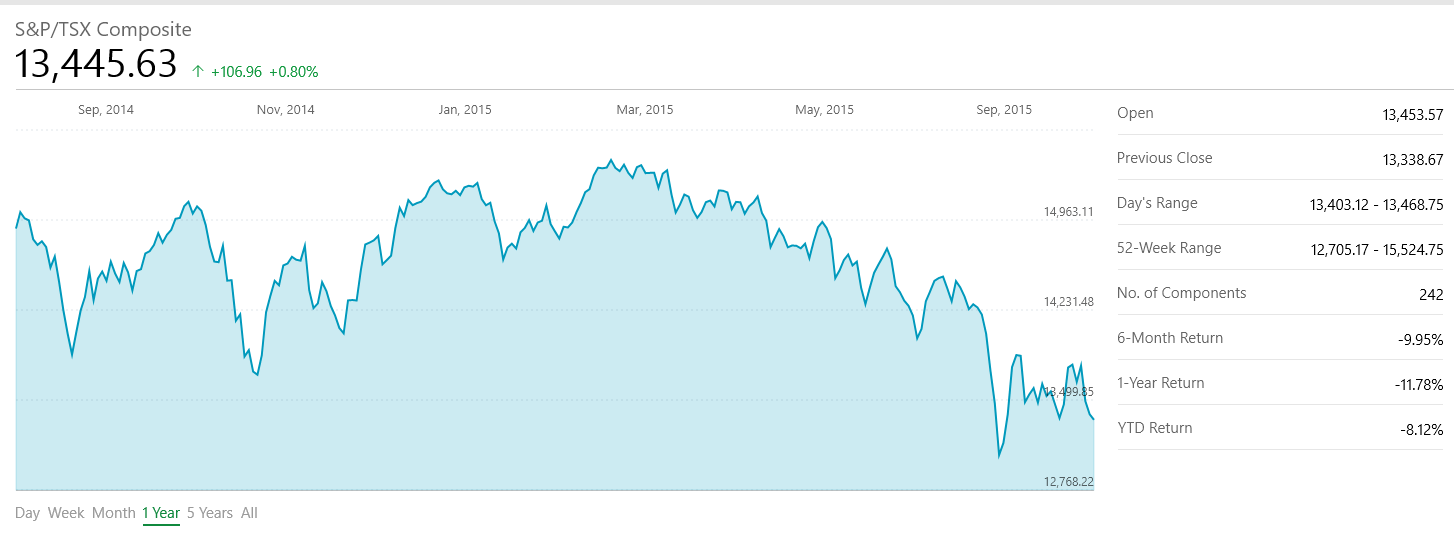
Over the past month it would seem that all hell has broken loose on global markets. A generous explanation might use the phrase “increased volatility” while a more pessimistic reading would say that we are heading for another global recession. Either way, people are nervous and money is being pulled out of the market by investors in droves. Year to date returns off of major indices are all negative. The TSX and the Dow are both -8% for the year while the S&P 500 is -5.5%. So what is happening?
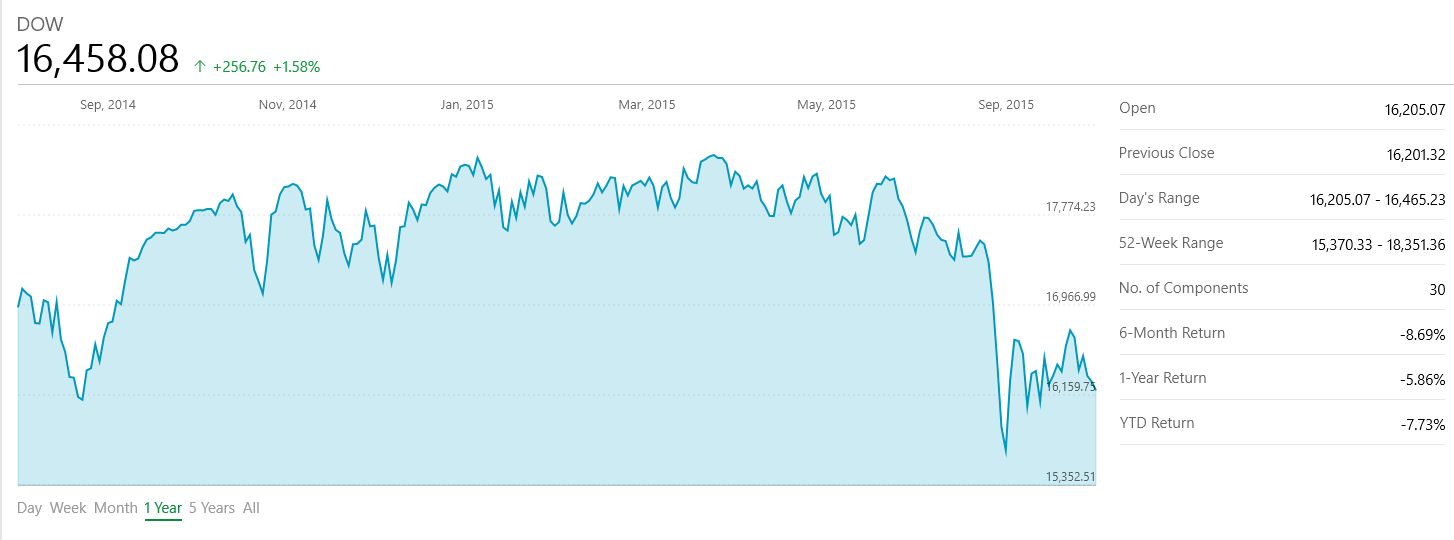
Dow Jones Capture TSX Capture

The earliest threads for the most recent round of economic confusion date back to last year, when the price of oil began to fall. Normally falling oil is a welcome sign but in the economic climate we are in, one desperate to see some inflation, falling oil just meant more deflationary pressure. The plummeting oil price also hit a number of economies quite hard. Resource rich economies like Canada, Russia and Venezuela all took it on the chin. The falling price has been exasperated by the Saudi price war against the burgeoning US shale production.

For many investors a falling oil price also seemed to shine a light on a declining need for oil, not one born of environmental concern, but of a falling global demand. That leads us to the current problem with China. China’s problems are likely vast and not well understood yet. There is secrecy around the Middle Kingdom when it comes to economic matters, but it is likely that the Chinese are not immune to the same kind of avarice, greed and hubris that usually underlies most market bubbles. The Chinese have had a stock market collapse that has been followed by increasingly grim statistics and a revisit of the overbuilding narrative that has followed on the heels of China’s economic success.
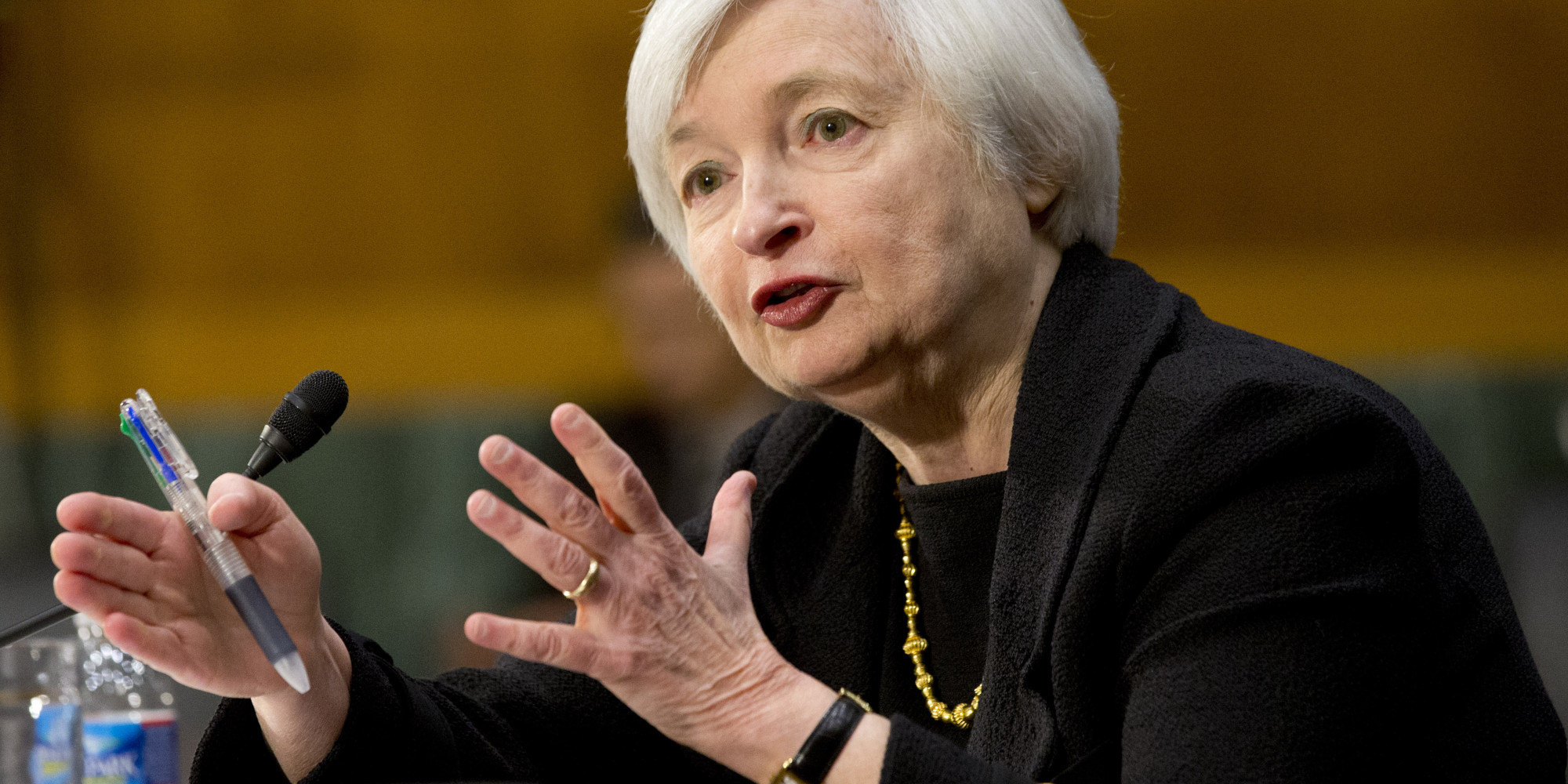
Janet Yellen, of California, President Barack Obama's nominee to become Federal Reserve Board chair, testifies on Capitol Hill in Washington, Thursday Nov. 14, 2013, before the Senate Banking Committee hearing on her nomination to succeed Ben Bernanke. (AP Photo/Jacquelyn Martin)
Janet Yellen, of California, President Barack Obama’s nominee to become Federal Reserve Board chair, testifies on Capitol Hill in Washington, Thursday Nov. 14, 2013, before the Senate Banking Committee hearing on her nomination to succeed Ben Bernanke. (AP Photo/Jacquelyn Martin)

The final piece of this puzzle was the looming interest rate hike from the United States. Interest rates are closely tied to rates of inflation and are important tools for governments in trying to mitigate recessions. Since the United States has had a near 0% interest rate there is some eagerness to push the rate up and give the Fed some options if the market sours. But critics have spent most of the year worried about a rate hike, citing the strengthening dollar and weak inflation rate as reasons not to do it. When the Federal Reserve took that advice though and opted to postpone the rate hike last week, the response of immediate joy was overwhelmed by the sudden realization that perhaps the US economy was not strong enough to withstand a rate hike and the global economic picture was far worse than previously thought.

Whether this means we are actually heading for a recession, it’s too early to say. No one knows what is really going on, but the sentiment, what people believe is going on, is resoundingly negative. Combined with an aging bull market and the highly liquid nature of investing has meant that there is simply more volatility in the markets than before.

Looking over the business news is little more than a guessing game informed by various analysts about what is (or is not) happening. But the best question that investors should be asking themselves is what do they need to have happen to their investments? While no one is looking to lose money, retirees and pre-retirees need to give real thought as to whether their investments suit their financial needs over the coming few years, and what kind of financial storm they could weather.  So the smartest thing you can do regarding your investments is call up your advisor and discuss your investment strategy going forward.

Need Some Help? Give Us A Call To Review Your Investment Strategy!

Beware False Prophets

Screen Shot 2015-08-27 at 4.38.40 PM
I have shamelessly grabbed this image from The Economist and their article “The Great Fall of China” which I recommend you read.

Investors endured an indignity Monday as global markets reeled from further bad news from China. Overnight (for us, not China) the Shanghai market saw it’s single biggest day decline, now dubbed “Black Monday” which set off sellers worldwide. The TSX dropped 420 points, the Dow Jones was down over 500 points, a drop in excess of 3.5%. The FTSE had its biggest drop in two years and brought it to its lowest since February 2014. In short, it was a bad way to begin a week.

Since then China has cut interest rates, which has encouraged global investors that doom may not be close at hand and markets have bounced up from Monday’s lows, most notably in the United States. But the news from China isn’t good. A toxic mix of investor debt, a bursting market bubble, falling exports, rumored slowdowns and a depreciating Reminbi have scared global investors. China is the world’s second largest economy, and though it isn’t integrated into the global economy like the United States, it’s impossible to conceive of a Chinese slowdown that won’t be felt the world over.

Investors should be cautious. There is a lot of speculation and it is still too early to truly know the full extent of both the problems in China and the fallout for global markets. But the threat of a global recession is real and when China’s problems are added to the abundant weaknesses found in many economies there are solid reasons to be concerned.

Big events like China’s shifting economy typically bring professional talking heads out of the woodwork to speculate about what the future might be like for investors as a result of the changing economic fortunes for the Middle Kingdom. These predictions usually over reach, though the seers behind them are intelligent, well meaning, knowledgeable and very sincere. It should be remembered too that there is great demand for experts who will take the hodgepodge of various financial data and attempt to turn it into a roadmap to understanding the future. Historically these predictions, and their adherents often don’t do well over the long term.

A name many will be familiar with illustrates my point. Canada’s own Eric Sprott, the founder of Sprott Asset Management, saw his success over the years brought to heel through his conviction in gold. Convinced that the vast printing of capital to combat the 2008 financial crisis would undermine currencies and the only safe investment was gold, Sprott ended up losing vast amounts of money by not just betting on gold’s future but by choosing the riskiest way to invest in it. Why did he do that? Backed by considerable data, a lot of analysis and his own success he was sure that he was making the right call. At the last event I attended for Sprott I sat bewildered as conspiracy theories were tossed around to explain the continued decline in gold’s price rather than face facts that they were simply wrong.

The shock of this event was largely not predicted. Afterwards predictions about American's economic future also proved incorrect.
The shock of this event was largely not predicted. Afterwards predictions about American’s economic future also proved incorrect.

There is enormous comfort in predictions. They give a sense of control and suggest an ordered universe that one can make sense of. But successful investors long ago realized that winning meant dealing with risk rather than predicting the future. Any event or scenario that seems to place countries, economies or people on a set destiny that cannot be broken is only ever superficial. Regardless of the seriousness of the situation invariably people will take action to change their fate, often with unexpected consequences. Whether it is a financial catastrophe like 2008, a price war over oil, or the sudden reversal of fortunes for the next anointed economic power, these situations are all temporary and the correct response from investors should be guarded opportunism and not confident certainty about future events.

A BRIC You Can’t Build With, A Ship That Won’t Sink

The month of August has so far been a repeated drumming for global markets. Falling oil prices, the devalued yuan and a collapsing Chinese stock market have people running scared, and if we’re totally honest it’s probably too soon to know what it really happening as easily panicked sellers jump the gun.

bricInstead I’d like to take a moment to reflect on the fall of the BRICs, the supposed new economies of the developing world. Back  in 2003, two Goldman Sachs analysts wrote a paper called “Dreaming With BRICs: The Path to 2050” which made a convincing case that Brazil, Russia, India and China would grow substantially over the next half century. For a while that seemed true, and the few BRIC mutual funds available returned solid results to investors who bought the BRIC story.

Today much of that story sits in tatters. Russia is more regional gangster than growing economic power, a victim of its own pointless efforts to reestablish hegemonic influence and maybe even undo NATO. Brazil is a longer story, but financial mismanagement has largely undermined Brazil’s early 21st century economic kick start, leaving interest rates too high and an economy on a path to recession. India is perhaps the only country that sits separate from this mess, but as a democracy (one mired in corruption no less) it’s own worst enemy is often protectionist populism that threatens to undo it’s own promise.

Yes, I have managed to shoehorn this image into my article. Have you watched this movie recently? Me neither. I haven't missed it either.
Yes, I have managed to shoehorn this image into my article. Have you watched this movie recently? Me neither. I haven’t missed it either.

But with the Chinese economy heading for what looks to be a potentially prolonged slow down (or worse) it seems safe to say that we’ve lost the path to 2050 and aren’t in danger of finding it anytime soon. This is a useful reminder that predictions about the futures of markets, no matter how grounded in math they may be, are in fact almost always misguided. That may seem obvious with much of the recent history a testament to predictions gone wrong, but it is surprisingly easy to be sold on investment ideas that seem to be an inevitable certainty.

There are a multitude of reasons for this, not the least of which is the human defect to see patterns in randomness. Attempts to control and manage huge events; to understand, tame and control random elements of nature is the underpinning of almost every story of hubristic arrogance that leads to tragedy, both literary and literal. Whether we are watching a history of the Titanic, or Alan Greenspan testifying to the benefits of derivative markets, there is always an iceberg somewhere threatening to make a mockery of our certainty.

This is what travelling the ocean was frequently like in history. Had we waited until we had an unsinkable boat we would never have sailed anywhere.

I’m of the opinion that there may be somethings simply to complex to be fully understood. That shouldn’t mean we shy away from complicated markets, rather we should be mindful about the risks of participating. After all, the Titanic sunk largely as a result of the assumption it could not. But people had been sailing across the ocean for centuries with considerably greater danger. That’s a useful reminder about investing. Good investment strategies don’t seek out perfect investments, ones that cannot be undone by bad markets, instead they assume that markets are filled with risks and aim to navigate the dangers.

Oil’s Cheap, So Now What?

mugato oil
Yes. I know I’m using the meme incorrectly. Please don’t email me about this.

The price of oil continues to fall, and it won’t be long before investors and the media will be asking whether it’s time to load up on energy within portfolios. Right now the primary focus is on how low the price can get, with current estimates suggesting that $30/barrel is not out of the question, and some predictions claiming it could go even lower. So when is the right time to buy, and how much of a portfolio should be allocated to energy?

These are good questions, but not for the reasons you might expect. Answering those questions mindfully should help any investor better understand the underlying assumptions that go into making smart investment decisions. For instance, why should a $30 barrel of crude be an attractive price to buy? Superficially we assume that it’s a bargain: the price was $100, now its $30, so you should buy some. But what should matter to an investor is not the new price but whether that price is inherently flawed. The sudden drop in the price of oil may lead us to believe that oil is too cheap, but if so what should the proper price be? Determining what a fair market price should be can be challenging, one matched only by trying to figure out when the price has actually bottomed and won’t go any lower.

Capture

But say you feel comfortable that the price of oil has reached its final low and is significantly undervalued, you’ve still yet to figure out the best way to participate in the rebound. For instance, are you going to invest in individual oil companies, or will you purchase a mutual fund that buys a basket of various energy firms? If the former, what kind of companies do you want? Big energy firms like Shell and BP, or some of the very small producers? Will you be buying into shale oil, tar sands, or investing in energy production farther afield?

If that feels too complicated a set of questions to answer you could always buy an exchange traded fund (ETF). ETFs have become quite common today as a method to passively have your investments mirror various indices, but they were initially a way to simplify investing in commodity markets. So rather than focus on the companies that will extract the oil, you’d rather invest in the price of the barrel itself. That has the advantage of removing any extensive analysis that may be needed to be done on a company (profitability, type of oil investment, liabilities), but carries the down side of significant volatility.

MI-CH372_OILfro_DV_20150119163357Getting over all those hurdles leaves only the question of how much of a portfolio should be allocated to the energy sector. The answer here is as frustrating as all the rest, it will depend on how much volatility you can stomach. If you are encroaching on retirement, a good rule of thumb would be not too much (if at all). If you are very young and aren’t intending to use your investments for sometime you can presumably accommodate quite a bit more.

After all that the only thing left is to have the price rise. What could stand in the way of that? Perhaps a prolonged battle for market share that sees a continued lowering of the price, or even nations not sticking to their assigned production targets. Maybe an international treaty that could see a former energy producing nation reenter the market place, flooding it with cheap oil. An extended slowdown in a significant economy might also reduce global demand, prolonging the lowered valuation. Even the arrival of new technology could displace a portion of the market driving down future oil requirements. Or the simple knowledge that proven reserves are abundant can remove market concern of future shortages. In other words, lots of things can still prevent a rapid rebound in the price of oil.

The point here isn’t so much about oil but about more clearly seeing the risks that underlie “sure thing” opportunities. There is no easy money to be made in investing. Opportunities, no matter how superficially guaranteed they may seem still come with dangers that shouldn’t be ignored. Cheap buying opportunities can be good, and if they make sense should be pursued. But all investing comes with risks and not being aware of those risks can lead to serious mistakes in the management of a portfolio. More than one competent investor has been badly burned over-estimating the likelihood of a significant rebound. The lesson is don’t let your lust for opportunity crowd out sound investing strategies.

Donald Trump Is My Pick For Republican Nominee

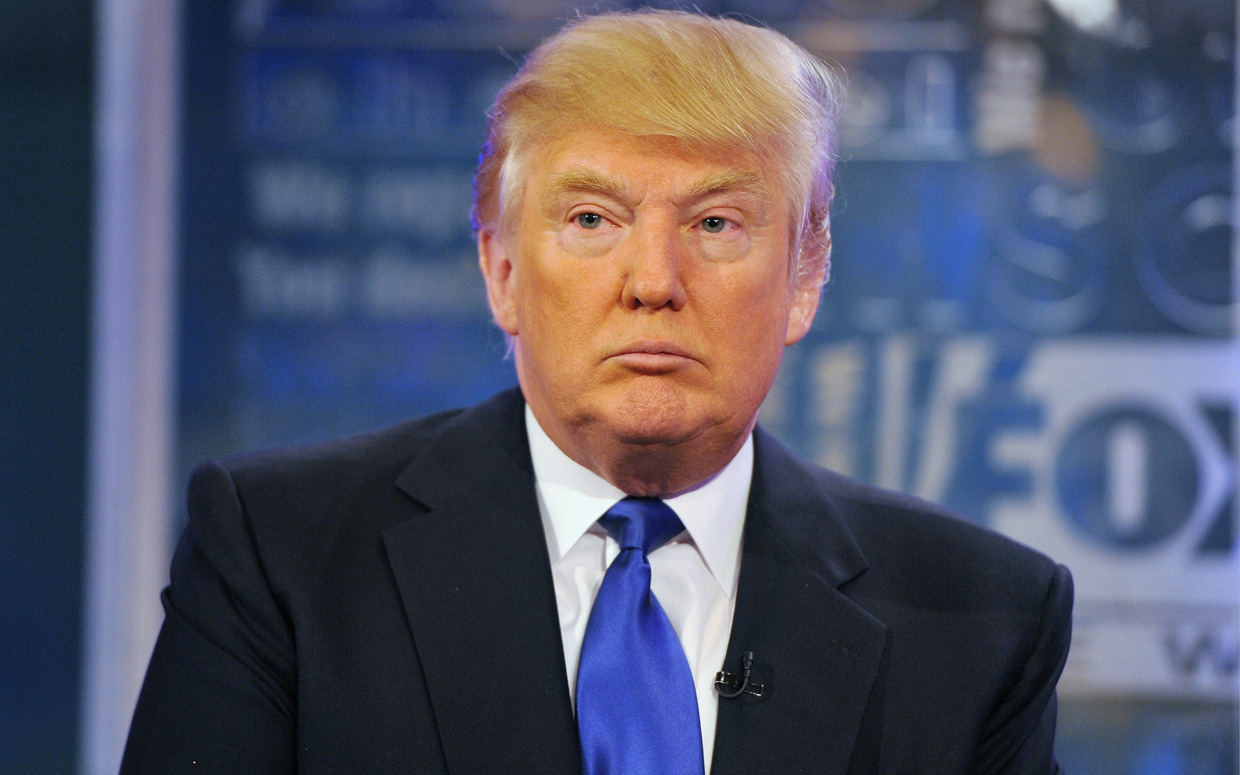
Look at this guy. What color is that? Orange? Has he got orange hair? Remember when Lloyd Robertson had orange hair? I remember when Lloyd Robertson had orange hair.

The arrival of Donald Trump to the Republican primaries has been greeted with mock and outrage by much of the media. There he is, an unapologetic billionaire blowhard with something akin to hair on top of his head, now best known for telling celebrities that they are fired. He was an immediate subject of derision, an unserious pretend candidate who says offense things regularly and calls people he doesn’t like “dummy.” To Democrats he has been a welcome addition to the Republican lineup. For Republicans he’s nothing but a headache. And if one thing is clear it’s that nobody thinks he should be the nominee. Except me. I think he will be a great nominee, and importantly I think he may be able to change some fundamentally terrible aspects of the Republican Party.

Talking heads and professional media types tend to disparage people who they don’t think look or act like a politician should. Donald Trump talks at a grade 4 level. He says impolite things and doesn’t seem to care what people say about him. He talks about himself incessantly and, again, the hair. Stubbornly “the Donald” continues to do well in the polls despite this.

But it shouldn’t have escaped anyone’s attention that the Republican Party has been in a holding pattern for the last few elections. Winning the nomination has usually meant a grueling process of ratcheting up the rhetoric around a few hot button issues, important to a dwindling number of older voters and rural Americans and out of touch with the growing urban class that is increasingly defining the voter base of general elections. By the time a winner of the primaries is declared, the candidate now looks to be stuck in an Orwellian, “Shooting an Elephant” conundrum, theoretically in charge of the mob, while totally beholden to its will.

This has been good news for Democrats, who have been happy to have the Republican nominee become an ugly caricature of cruel populism; out of touch with a modern electorate, thumping a bible and alienating moderate conservatives who don’t believe they can trust their own party to lower taxes without forcing women to carry children to term, poor people to die without medicine, and science textbooks to be re-written in ways largely defined as “stupid.” Good for Democrats, but bad for a healthy democracy. One party shouldn’t be electable, while the other crazy.

There is a museum in Kentucky where this isn't a parody.
There is a museum in Kentucky where this isn’t a parody.

But “The Donald” has the power to change that. Unlike other politicians that try and position themselves as outsiders, Trump really is an outsider. He may not have impressed anyone with his talk about Mexican illegals, but on other issues he has had the ability to surprise. On campaign finance he has denounced the system as broken, highlighting his own political contributions in exchange for favours. He’s called Jeb Bush (the presumed nominee) beholden to his donors. He may not win points from Rosie O’Donnell, but he’s broken the traditional Republican line on Planned Parenthood. Fundamentally, Donald Trump is different from other Republican candidates, in no rush to distance himself from his urban roots, unapologetic about his more liberal leanings, but credible in the eyes of many on business and economy related issues.

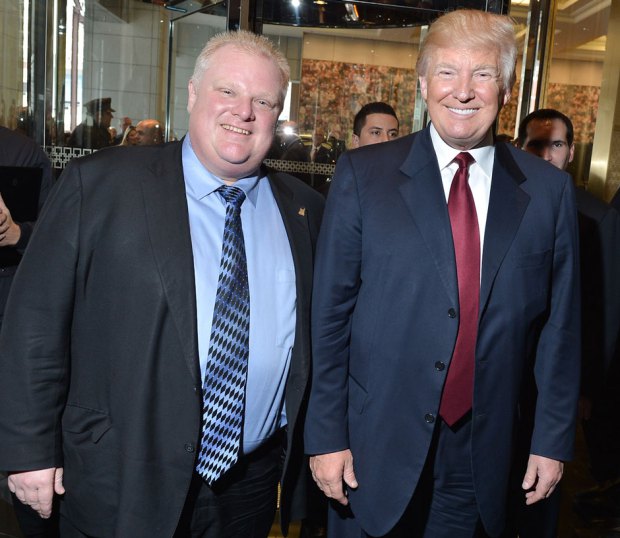
As if to make my point, these two helpfully posed for a photo together.

Trump’s current lead reminds me of Rob Ford, another unapologetic, shameless, larger than life character who seemed to exist in spite of condemnation from the media and the established political class (I found this article after I wrote this piece, but it explains my thoughts well on the two). Yet the sincerity of Rob Ford’s belief that only he would fight for tax payers won many over, even in the face of more polite, more polished and more traditional politicians. You don’t have to love people like Rob Ford or Donald Trump, but their ability to change the political terrain, to question traditional assumptions about the electorate and undo the laziness of identity politics (the ultimately abusive and anti-democratic idea that these are “my voters” and those are “your voters”) is healthy for a democracy, even when you don’t like the messenger (I think the same might be said for Bernie Sanders).

So, whether Donald Trump wins, or implodes dramatically before the July 2016 Republican nomination, he’s my pick to be the next nominee. And he’s going to be big. Big. Uuuuuuuuuge.

Canada’s Bad Week (Or The Best Recession Ever)

boc

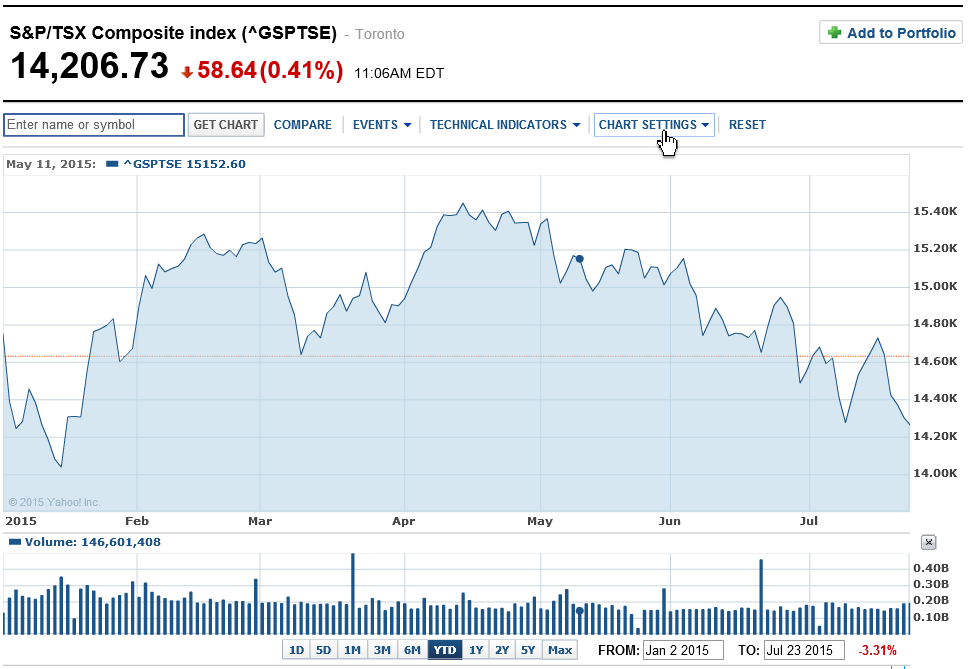
Perennial pessimists like myself have been waiting for something to go wrong with the Canadian economy for some time. But years have passed and the economy continues to defy logic. Despite abundant consumer debt and a housing bubble of record proportions, and an economy dependent on volatile material and natural resource markets, disaster has forever loomed but never struck. And while the TSX hasn’t always been the strongest performer, the Canadian stock market has proven to be quite resilient over the past few years.

TSX performance YTD, July 24, 2015. Yahoo Finance

That may be coming to an end however. The TSX has had five negative days in a row, following a sudden cut in Canada’s key interest rate. This is the second unexpected cut this year, dropping the lending rate from 1% to 0.5%. Energy prices remain quite low, off 50% from their high last year, and severely stunting Alberta’s economic engine. The Bank of Canada (BoC) was reportedly taken by surprise by the negative GDP numbers for April, marking four consecutive months of GDP contraction and edging us closer to an “official” recession of two consecutive negative quarters. Just this week the BoC predicted a $1 Billion deficit, challenging the Federal Government’s expectation that they would have a $1.4 Billion surplus.

Joe Oliver flees reports after refusing to take questions
The price of West Texas Crude, over the past 18 months. From NASDAQ

The optimism that surrounds Canada’s economic future is an unspoken assumption that a reviving US economy floats all boats, just maybe not this time. As the United States economy continues to improve, the Federal Reserve continues to remain optimistic about raising the lending rate, a sign of burgeoning economic strength. Canada is going the other direction, and for now it seems, the two economies are diverging.

Things could still turn around; the Canadian economy has shown surprising resilience so far, and our falling dollar could very well help super charge the Ontario manufacturing engine, or the price of oil could begin a steep rise (it has in the past) and restart the Alberta economy. But the challenges faced are fairly enormous. 

But if I’m concerned about one thing, it seems to be the general Canadian obliviousness to the problems we are facing. The National Post called this the “Best Recession Ever”, because of how little has changed despite the worsening GDP. The BoC’s June Financial Service Review highlighted that the biggest threats to the Canadian market would be “some event” that would make it difficult for Canadians to service their ballooning debt, but that such an event was “very unlikely”. That was despite the collapsing oil price and the sudden need for two interest rate cuts.

 Optimism can easily become denial as “experts” twist themselves into knots attempting to explain how risks are really benefits, danger is really safety and hurricanes are only storms in teacups. And while business news thrives off of both controversy and hyperbole, there is also a vested interest in making things seem like they are under control. The news should be exciting, but never give the impression that the experts don’t know what is going on. Thus, everything is explainable and only in hindsight do we acknowledge just how out of control it seemed to be. Whether this is the case for Canada right now is hard to say. But the risks associated with Canada have been large for some time, and they have been ignored, dismissed or marginalized regularly by experts within the media. Being a smart investor means facing those risks honestly and acting accordingly.

The Three Most Dangerous Things This Morning

This week three big issues are defining the financial landscape

Greece Isn’t Done Yet!

mas_oxi-placard

Despite a no vote in Greece over the weekend, the EU still believes it is within the collected interest within the Eurozone to stop Greece from imploding. Strong resistence seems to be coming from Greece on this issue as the Greek Prime Minister, Alexis Tsipras, swanned into Brussels with Cheshire cat grin and nothing in hand to negotiate with. Greece has five days to work out a plan with its creditors before being declared in default. While the Greek situation seems to be playing out at a glacial pace, the fact is that these tactics can only go on for so long, and eventually (presumably by the end of the week) a point of no return will be passed and negotiations will be moot. The stakes are high as a Greek default, while not insurmountable by European leaders, risks creating problems in other member states. That contagion is at the heart of German reluctance to cut Greece any slack and it is the real concern that is adding volatility to the market. Markets would like to see a sensible conclusion to the Greek problem since it will reassure everyone that the larger plan for Europe is still in place. A chaotic Greek exit from the euro could simply make matters worse.

China: Start Panicking and Throw Things!

GettyImages-479619564_0

Ghost CitiesFor years people have scratched their heads at the curious case of China. China’s economy is huge and somewhat a mystery. Like most big economies, the government makes predictions about the future of economic growth. Unlike most big economies those predictions are always right and never need any revision. In addition to China’s always correct economic growth numbers, China has embarked on massive infrastructure projects. So massive that they’ve built entire cities where no one lives. This combination of big spending and highly suspect numbers has made many people wonder whether there is a looming problem within China that has yet to rear its head.

That problem may have arrived this month. The Chinese stock market has lost close to 40% over the last month and the government has had to step in to try and stop the collapse. So far that hasn’t worked. Prices in China have surged over the last few years as many smaller investors have not just placed money in the market, but borrowed to do it as well. While there were rules to stop “leveraged market mania” within the Chinese market, like all rules they were both weakened over time and people have found ways around them (you can read more about that in this May report: Credit Suisse Report on Chinese Leverage).

China has a market bubble and it’s in the process of deflating. Just this spring 20 million people opened stock accounts, while whole towns have given up farming so that they can play the markets. The Chinese government isn’t oblivious to this problem, and has taken extreme action to try an prop up the market, but whether that will work has yet to be seen. Meanwhile concerns that the market is collapsing is driving many investors to sell, exacerbating the situation.

Canada in Recession? What’s a Recession?

bocCanada’s economic situation is…unclear. At least, that’s the best case scenario. The regular reports from the Bank of Canada, The Financial Systems Review, which details risks within the Canadian market and has regularly highlighted that the indebtedness of Canadians poses the single greatest risk to the economy. If the economy were to change in any way that made servicing those debts impossible the effect would be serious. Since the December report, the Bank of Canada had made an unexpected rate cut to help prop up the economy which was being affected by the falling price of oil. The June FSR (which you can read HERE) stated the same thing, but hoped that an improving American economy would also float Canada’s economic boat. But shortly after publishing several things went wrong. It was revealed that the Canadian economy had contracted four months in a row, with the last month coming as a complete surprise to the BoC. Today, news got worse that Canada has had a record trade deficit, and combined with other bad news gives weight to the likelihood that Canada is already in recession. While this will add pressure for a rate cut, the real message here is that the Canadian market is far more dangerous and volatile than many investors think. That’s something that Canadians reviewing their portfolios should be highly aware of as they consider their retirement nest eggs.

I’m So Tired of Europe

hu·bris

noun
  • excessive pride or self-confidence.
  • (in Greek tragedy) excessive pride toward or defiance of the gods, leading to nemesis
Who doesn't want to love this place? AMIRITE?
Who doesn’t want to love this place? AMIRITE?

I love Europe. I love it’s culture, its cities and architecture and the pace of life. I think in many ways Europe seems more usefully progressive, with things like public transportation and even energy. But god I am tired of hearing about Europe. Since the beginning of the financial crisis Europe has become the wounded, but never dying, member of some ill fated expedition. Every time the expedition seems likely to escape their fate, Europe goes and breaks an ankle…or something.

gdp-growth-in-eurozone-japan-and-us-2008q1-to-2014q31

From an investment standpoint Europe makes a lot of sense. It’s the largest economy on the planet. It’s highly industrialized and very productive. It has created one of the largest economies by knocking down trade and exchange barriers between nations. It has many multi-national firms, advanced R&D, and exports much to the rest of the world. And yet it constantly represents a problem for investors.

I believe the source of that problem may be hubris. There’s not a lot of science around that statement, there is no Hubris Index to track (although that would be neat!), nor is there some ratio to calculate. But there is a pattern of behavior that seems to lend itself to such an analysis.

Caricature_gillray_plumpuddingWe should be clear though, you need hubris to do great things. Name a nation that has attempted to reach beyond it’s grasp and risen to great military and economic might and you will uncover a great deal of pride and arrogance. But something must temper that pride or what could have been great becomes the next Greek crisis.

Europe’s problem is that it seems to have little regard for the inner voice that advises caution. The Euro Zone, initially an economic endeavour to improve financial and diplomatic ties (the belief is that trading partners don’t go to war with each other) has spilled out into a messy, difficult and byzantine organization that has had a difficult time following it’s own rules. It has rapidly expanded into new markets, making it’s non-EU neighbors (like Russia) nervous about it’s intentions. It has turned countries with no business being part of the EU into powder-kegs ready to disrupt the whole experiment.

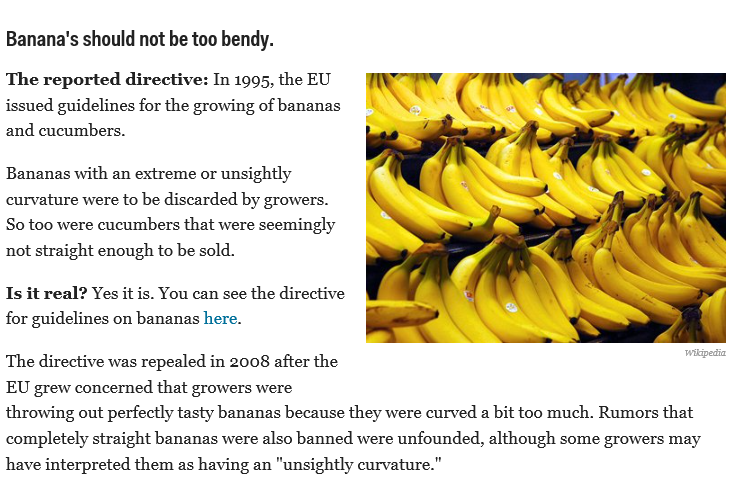
Ya, this isn't a joke. This is a real law that real people spent real time making.
Ya, this isn’t a joke. This is a real law that real people spent real time making.

Europe has lots of problems, but almost all of them are their own making. Greece may have borrowed the money that exploded their debt, but French and German banks lent them that money. Concerns that a Greek exit from the Euro could trigger a domino effect as deeply indebted nations choose default over austerity is also the  result of hubristic action. Countries like Spain and Ireland were hit with austerity because the government bailed out the banks, not because the government had mismanaged their finances.

Dumb EU 2

Europe’s desire to expand the mandate of the EU from economic integration into integration has also eroded a great deal of natural support. Exhausting, silly and pointless rules have caused nothing but ire within member states, and attempts to push through a new constitution within Europe were met with such local resistance, the whole things has been on hold.

All of this reeks of arrogance and overreach. But Europe has done this to itself, and the more we continue to hit regular road bumps on the road to financial well being, the more it looks like Europe is undoing it’s own purpose. It’s no surprise then that the economy that has recovered the quickest from 2008 has been the one supposedly worse hit. The United States has remained the foremost place for investors, safer, faster growing and more profitable than Europe. Europe, who is still dealing with the same problems of five years ago.

I’m so tired of Europe.

Greece’s End Game; Unravelling The #Grexit

111700_600
Tom Janssen / The Netherlands, PoliticalCartoons.com

On Friday, the Greek Prime Minister Alexis Tsipras, after months of fruitless negotiations, asked for a referendum on whether Greece should accept further austerity in exchange for continued bailout support from the IMF, or whether it should reject creditor demands, a decision which would mean defaulting on its sovereign debt obligations and effectively leaving the Euro.

If this is meant to terrify Greece’s creditors, they seem ready to call the bluff. The deadline for Greece’s current payment to the IMF (1.5 billion) is June 30th, the proposed referendum is to be on July 5th. This means that Greece will default before it’s had a chance to decide on whether they should default. If this seems like a grim picture for Greece, you have no idea how bad it is about to get.

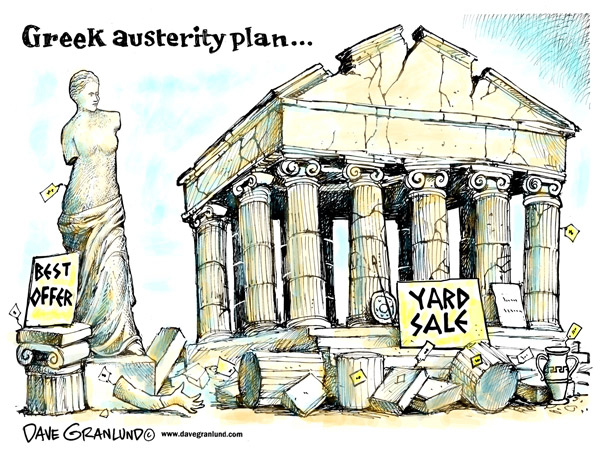
color-greece-austerity-web

Since 2008 Greece has limped along, periodically looking as though it is going to default on its massive and unmanageable debt. In 2010, when it seemed like a default was inevitable a bailout was organized that mandated strict and painful austerity in exchange for the financial aid needed to keep Greece within the EU. That austerity has left the Greek economy in shambles. Unemployment sits at around 25%, while pensions have withered, as have government jobs and a shrinking healthcare budget. Greece lost nearly 25% of its GDP from the pre-crash high, a rate unmatched by any other heavily indebted Euro country facing similar austerity measures.

Screen Shot 2015-06-28 at 10.26.56 PM

Hindsight being what it is, that bailout was probably a mistake. At the time however, following the collapse of the American banking system, sidestepping a default likely seemed the best idea for every party. But several years on the Greek people were desperate for anyone that could change the fate of Greece within the Eurozone. The seeming saviors for Greece came from the leftist coalition Syriza, which promised to end the tyranny of austerity while retaining Greece’s place within the Euro.

Greece’s history with finances is checkered, if we are being generous. Greece has defaulted on its sovereign debt obligations five times since independence, and has been in default for nearly 50% of its time since gaining independence. Greece’s financial problems are also largely of their own making, having borrowed extravagantly at low interest rates and greatly expanded its government services while ignoring taxes has not earned it many sympathetic allies within the Eurozone.

This guy is Alexis Tsipras and he is the PM of Greece. He is not going to be remembered the way I think he wanted to be remembered.

But Greece’s situation is now quite dire. Greece produces little, has only a modest economy and owes far more money than it can ever reasonably expect to pay. Its economic prospects are slim and to retain any economic stability means adhering to austerity measures that gut and change pension obligations, raise taxes, reduce government sizes and heavily restrict benefits. That may be necessary tough love but it is also deepens Greece’s depression and throws into chaos the future of many Greeks, who only a few years ago thought they knew when they could retire and with how much money.

Syriza’s attempt to win concessions from Greek creditors and ease the austerity it was facing have largely backfired. Incorrectly assuming that a default would produce more pain for Europe than Germany and the ECB would willingly endure was a miscalculation that has left Greece in an even worse situation. With no cards to play the only options now facing Greece are more austerity within Europe, or even greater austerity outside of it.

Choosing austerity within the euro would at least mean keeping some of the economics on track, and would allow the government to access in excess of 15 billion in continued bailout funding. But the path now set by Tsipras, seeking a referendum five days after the deadline seems to have set in motion an even worse set of events.

From The Economist. Greece remains an outlier within Europe, even amongst other heavily indebted nations.

The continued uncertainty in the negotiations through June has been putting considerable strain on an already taxed banking system. As negotiations have dragged on, Greek citizenry have been making significant withdrawals and transfers at their banks. To avoid a run the banking system it has been propped up by the ECB with Emergency Liquidity Assistance. But after yesterday’s referendum announcement the pressure on banks reached a breaking point. Thousands lined up at ATMs to get their hands on as many Euros as possible. In response the government has suspended banking for the next week and promised new capital controls to restrict transfers and withdrawals. That’s only the beginning of Greece’s banking woes.

imagesizer
Rick McKee / Augusta Chronicle

The ECB has said that if Greece defaults the emergency liquidity assistance will end, which means also a collapse of the Greek banking system. And while there is no official requirement for this ECB position, the unofficial reasons are obvious. Default cannot seem like a viable path for the austerity stricken countries, and financial markets need to be reassured that EU members won’t willingly walk away from their financial obligations to satisfy voters.

This means that a Greek exit will be worse than accepting continued austerity. It will mean more unemployment, poverty, government cutbacks and shrinking services. There is still time for a deal. The government can accept the creditor demands, institute further austerity, avoid a banking collapse and continue to use the Euro. But that may only postpone a fate we all know is coming. Greece’s debt is still too large, its economy too small, its creditors too stubborn and its options too limited to change the course it is on. Greece was always destined to fail, and sometimes we must come to learn that not all problems have solutions, only outcomes.


Is Liquidity Worth the Price?

LiquidityLiquidity is a sacred cow among the investing professional class and the importance of being able to sell and redeem an investment at a moment’s notice is a cornerstone of presumed investor safety and a hallmark of modern investing. In fact, improving liquidity has been a goal of markets and it’s a major achievement that there isn’t a commonly held mutual fund, ETF or stock that can’t be sold at the drop of a hat.

But in the same way that we can overemphasize the benefits of some health trends to the point of excluding other good for you foods, (I’m looking at you gluten free diet) the assumed exclusive positive benefits of liquidity can crowd out some very reasonable reasons to seek investments with low or limited liquidity.

Why would you choose an investment that can’t be sold easily? It’s worth pointing out all the ways that liquidity make investing worse. Volatility is increased by liquidity. High frequency trading, ETFs and trading platforms that let novice investors monitor the ups and downs of the market provide liquidity while magnifying risk. Sudden events best ignored become focal points for sell-offs. Liquidity is almost always the enemy of cooler heads.

HFT

Liquidity also costs money. For investments that are traditionally illiquid, like some bonds and GICs, redeemable options often trade at a discount. According to RBC’s own website the difference between a redeemable and non-redeemable GIC is 25 bps ( a quarter of 1%), which doesn’t sound like much, but when rates are as low as 1.5% for a five year GIC that is a 16% reduction in return.

Picture of the early Dutch stock market

The principle of investing has been that buying and holding something over a period of time would result in returns in greater excess than the rate of inflation. That rate of return is based on the associated risk of the enterprise and how long the investment should be held for. But into this mix we have also come to value (greatly) the ease with which we can walk away from an investment. It is the underpinning of a stock market that your commitment to a corporate venture need not be you, but that your financial role can be assumed by someone else for a price (your share).But that feature has come to dominate much of what we both value and hate about investing. Canadians are relieved to know that can sell their investments on short notice, protecting them from bad markets or freeing up cash for personal needs. But by extension things like High Frequency Trading use that same liquidity to undermine fair dealings within markets.

Are there reasons to not choose a liquid investment (aside from your house)? I think the answer is yes. For one thing we may put an unnatural value on liquidity. We pay for its privilege but we rarely use it wisely. The moment we are tempted to use liquidity to our advantage we usually make the wrong choice. Selling low and buying high are the enemy of smart investing, but all too often that is exactly what happens. Every year DALBAR, a research firm, publishes a report detailing investor behavior and its results are sobering to say the least.

Poor investor decisions have led to chronic underperformance by “average investors”. The inability to separate emotions from investing, and the ease with which changes can be made have led to meager returns. In the 2014 study showed that the “average investor” 10 year return was a paltry 2.6%, nothing compared to the return of most indices. That return got surprisingly worse over time, with a 2.5% annualized return over 20yrs and 1.9% over 30. Reduced liquidity could inadvertently improve returns for investors by simply removing the temptation to sell in poor markets; in those moments when our doubt and emotions tell us to “run”.

This is from the 2014 DALBAR QIAB, or Quantitative Analysis of Investor Behavior.

So what types of investments are typically “illiquid”? Such products are normally reserved for “accredited investors”, or investors that have higher earnings or larger net savings. These deals are traditionally considered riskier and would be unsuitable for a novice investor (unfamiliar with the risks) or ill-suited to someone who might need to depend on their savings on short notice. That makes a lot of sense and any manager worth their salt would tell you that you shouldn’t tie up your savings if you might need them. But it is worth considering whether we have let our obsession with the convenience of liquidity undermine our goals as investors. Something to consider next time the urge to sell in bad markets comes upon you.