
The future is already here – It’s just not very evenly distributed
–William Gibson
Back in August of 2015 McDonald’s started rolling out self serve kiosks into it’s “restaurants”. McDonald’s was quick to point out that the arrival of the touch screen ordering stations would not endanger jobs, and that McDonald’s as you know it will continue on; producing sub-par food that you will regret eating 20 minutes after you’ve finished.
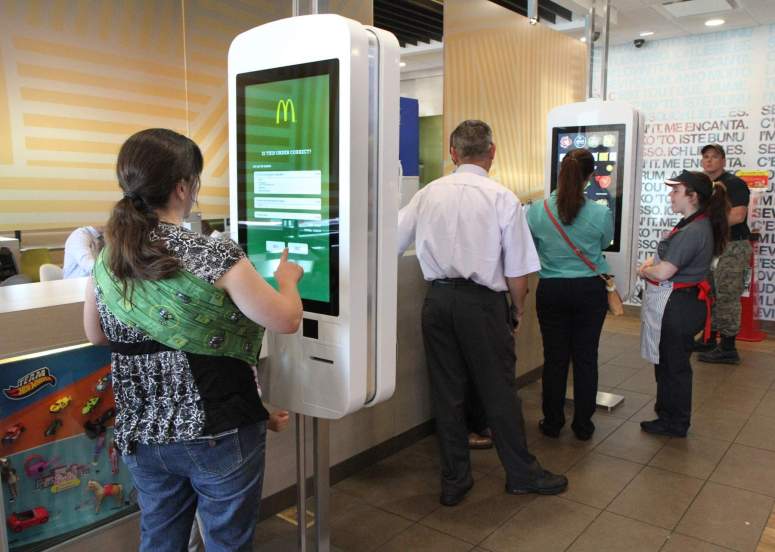
This is patently false (not the food bit, but the employment bit), but that doesn’t mean McDonald’s is lying. They too may think that speeding up ordering won’t impact jobs. But this is what the robot revolution looks like. Not a mass movement to unemployment, but a gradual reduction in the number of jobs available.
Typically when people think about job loss they tend to think of blue collar, formerly middle class factory work that has been outsourced to overseas production. That makes sense because it is one of the most visible forms of improved productivity. But people didn’t move factories to China because they had the most advanced robotics. They moved to China because they (initially) had the cheapest labour. The productivity increase was not one of improved output through advanced manufacturing, but a much older standard of fundamentally cheap human labour.
Factories that have stayed in North America and Europe have largely been the beneficiary of more robotic improvements. But these robots, despite improving consistency, wiped out thousands of jobs. In towns like Flint Michigan, where GM once employed 80,000 people in 1980, they employed fewer than 8000 by 2010. But the scars left by yanking thousands of jobs from a community are hard to shake and they may have sculpted our modern thoughts on what the robot revolution will look like. But it is wrong.
If you want to see what the revolution will actually look like, look no further than the airline industry. Around the same time that General Motors was starting to outsource suppliers or introduce new robotics to the factory floor a subtle shift in technology effectively began to eliminate 1/3 of the jobs from airlines. Because starting in the 1980s airplanes no longer needed a flight engineer.
People don’t often think of a flight engineer, but as once the third person in a cockpit on most commercial jets his job was made obsolete by better computers. Today, out of fleets and fleets of aircrafts there are no flight engineers, but nobody is launching into long winded speeches in congress about it, no protests have been scheduled and Michael Moore has yet to make a movie about their job loss. The reason for this it is obvious, flight engineers were phased out as new technology was brought in, not let go on mass. Over time there were simply fewer jobs until there were none. Students didn’t study to become them because they knew the job was unlikely to exist, and pilots, while the loss of the flight engineer might have been initially unnerving, became attuned to more computers handling stuff in the cockpit. While new pilots didn’t miss what had never been there.
How many flight engineers do we not have? That’s a hard number to come up with, but assuming that an FE was necessary person in all airplanes means that American Airlines employs roughly 7000 fewer people than it would have needed to otherwise. If you are looking at the number of flights per day globally, including all the cargo and travel flights, that’s 100,000 flights. Assuming that a crew only does one flight a day (shut-up, I know that’s not accurate) that’s 100,000 fewer people who don’t hold a job because it doesn’t exist.
In the retail space then, we won’t see people laid-off, so much as we will simply see fewer people hired. As minimum wages continue to creep up in a vain effort to try and improve living standards (and yes it is in vain and I don’t have time to explain why in this article) the value in adding a robot that can fold t-shirts becomes far more appealing. It won’t mean firing every person who works in the GAP, but it will likely mean that each GAP store employs fewer people over the long term.

That’s what the robot revolution looks like. A gradual, but persistent reduction in the needed number of people to fulfill a set job. It’s why when Bernie Sanders or Donald Trump talk about unfair trade practices they really can’t undo what has already been done. Even as “good paying factory jobs” return to the United States, fewer and fewer of them reach the shore. Tesla’s Gigafactory 1, the largest building by area on the planet, will only employ 6500 people. By comparison, the Packard Factory in Detroit (the world’s largest abandoned factory) employed 40,000 people at it’s peak. The robot revolution promises to do this to every job, over time as more and more menial aspects of work can be reliably handed over to more complex bots.
So when McDonald’s says that it’s new self-serving terminals won’t threaten jobs, they may mean it but we should know that they are wrong. McDonald’s pioneered standardization in the food industry. They made people into robots long before robots were common. They should know above all, that new cheaper and versatile robotics will in the long term reduce their number of employees, a reality that will speed up as minimum wages continue to rise.





 Markets have reached six or seven week highs, (HIGHS I say!) and questions are arising as to whether this represents a sustained recovery.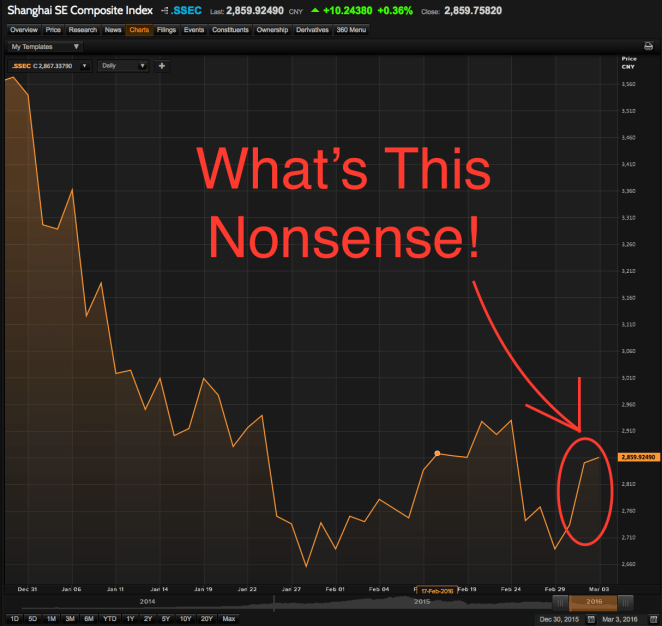


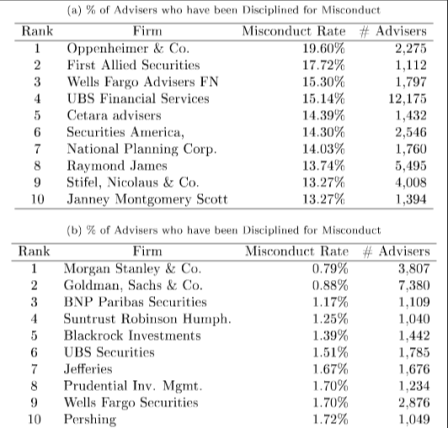 One move, cited in the article, is to move to a fiduciary model to rectify outstanding issues around fees in particular. There is a persistent fear that advisors might choose high fee-low returning investments when cheaper and better performing options exist. Curiously, in Canada at least, there is not much evidence to suggest that this happens. But even if this avenue resolves such a problem many within the industry fear that “high fee/low return” will not be apparent until well after the fact, opening up practitioners to hindsight litigation.



 ‘ve just had a chance to watch the movie The Big Short, based on the


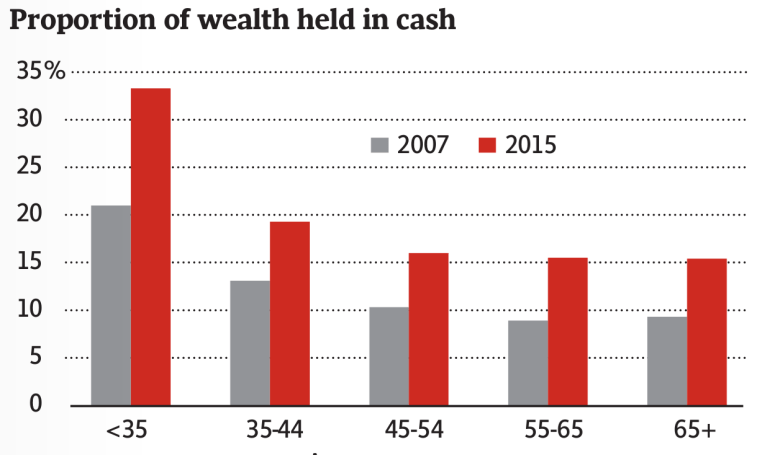


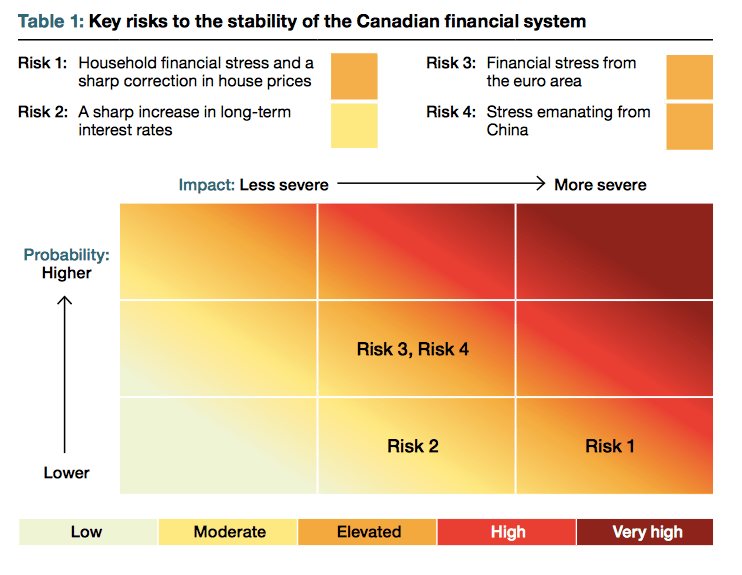


 The first (and so far only) good day in the markets for 2016 shouldn’t go by without instilling some hope in us investors. The latter half of 2015 and the first weeks of 2016 have many convinced that the market bull is thoroughly dead, having exited stage left pursued by a bear (appropriate for January). The toll taken by worsening news out of China, falling oil, and the rising US dollar have left markets totally exhausted and despondent. But is the bull dead, or just mostly dead? Because there’s a big difference between all dead and mostly dead. In other words, is there a case to be made for a resurgence?



 The Walker Report