Why Malcolm Gladwell and TED Talks are a Terrible Way to Understand the Economy

The last few years have seen a slew of books that explore ideas about how nature governs far more of our lives than we might care to admit. Books like Stumbling On Happiness by Dan Gilbert and The Righteous Mind by Jonathon Haidt both explore the way that the subconscious mind governs many aspects of our lives. Meanwhile a number of other books like Malcom Gladwell’s Blink and Steven Levvitt and Stehpen Dubner’s book Freakonomics are working to explain the secret rules of economics in our lives. Book’s like this tend to distill highly complicated ideas down to bite sized stories, simplifying complex data into snippets of wit and good storytelling and removing the scientific uncertainty that may accompany many of the findings the books claim to show.

What’s far more interesting is how useless much of this data is. Take for instance this video from Vox.com about the statistical benefits of being good looking.

While much of the data seems interesting it isn’t exactly helpful, especially when we consider that this is in aggregate and doesn’t likely reflect your reality.

In fact many of these theories don’t reflect reality the way they hope. Freakonomics co-author and economist Steven D. Levitt found this out when they attempted to bribe students to improve their grades. While they did get some positive results, the reality was it was far from a resounding success. Even with an opportunity to earn $200 a week if the children continued to improve their grades many simply didn’t take the opportunity.

http://youtu.be/kS7DmQ3380s?t=1h20m

You may have never heard of Hernando DeSoto, but the Peruvian economist is sought after around the world for his insights about poverty and property rights. His book (which I love) outlines some of the most convincing connections between lack of property and the ability to improve one’s standard of living. His argument was that if squatters were given ownership over their home they would have collateral to borrow against and could start or improve their businesses. However, when in 2004 the World Bank carried out a program in Peru to test DeSoto’s theory that land titles would lead to more lending by banks. In actuality it failed in its entirety, with bankers unwilling to lend against the only asset of an impoverished family.

An actual simple truth is that life is unbelievably complicated and its hard to understand and know what governs many of the elements of our lives. Whether the question is nature of nurture, economics or social sciences in the end we seem to know very little about what drives some of the biggest events in our lives. In spite of the number of times these theories prove to be wrong, our media has come to speak more and more in absolutes. It is getting to be so that you can’t get on television or in government unless you claim to know all the answers without doubt.

http://youtu.be/QTuMLeeap2c

Meanwhile there seems to be an actual deficit in useful information that the media ignores. For instance, a more intriguing statistic is that in a recent poll by Gallup, less than 25% of Americans were able to correctly identify what has been the most successful type of investment (You can do the quiz here). Over a third of Americans haven’t taken any steps towards planning their retirement and I’m sure that number is similar for Canadians. There is a knowledge gap opening up, where knowledgable investors will be able to save on average 25% more than less prepared and less knowledgable people, a reality that could be addressed by the news, but is being perpetuated through bad journalism.


Correlation: Or How I Learned to Stop Worrying About the Market and Love Diversification

140617strangelove
The look of a nervous investor who needs more diversification

This year has seen further gains in the stock market both in Canada and the United States. But after five straight years of gains (the US is having its third longest period without a 10% drop) many are calling for an end to the party.

Calling for a correction in the markets isn’t unheard of, especially after such a long run of good performance. The question is what should investors do about it? Most financial advisors and responsible journalists will tell you to hold tight until it 1. happens, and 2. passes. But for investors, especially post 2008, such advice seems difficult to follow. Most Canadians with any significant savings aren’t just five years closer to retiring than they were in 2008, they are also likely considering retirement within the next 10 years. Another significant correction in the market could drastically change their retirement plans.

Complicating matters is that the investing world has yet to return to “normal”. Interest rates are at all time lows, reducing the returns from holding fixed income and creating a long term threat to bond values. The economy is still quite sluggish, and while labour numbers are still slack, labour participation will likely never return to previous highs as more and more people start retiring. Meanwhile corporations are still sitting on mountains of cash and haven’t really done much in the way of revenue growth, but share prices continue to rise making market watchers nervous about unsustainable valuations.

In short, it’s a confusing mess.

My answer to this is to stay true to principles of diversification. Diversification has to be the most boring and un-fun elements of being invested and it runs counter to our natural instincts to maximize our returns by holding investments that may not perform consistently. Diversification is like driving in a race with your brakes on. And yet it’s still the single most effective way to minimize the impacts of a market correction. It’s the insurance of the investing world.

This is not you, please do not use him as your investing inspiration.

The challenge for Canadians when it comes to diversifying is to understand the difference between problems that are systemic and those that are unique. The idea is explained well by Joseph Heath in his book Filthy Lucre. Using hunters trying to avoid starvation he notes that “10 hunters agree to share with one another, so that those who were lucky had a good day give some of their catch to those who were unlucky and had a bad day…the result will be a decrease in variance.” This type of risk pooling is premised off the idea “that one hunter’s chances of coming home empty handed must be unrelated to any other hunter’s chances of coming home empty handed.”  Systemic risk is when “something happens that simultaneously reduces everyone’s chances of catching some game.” This is why it is unhelpful to have more than one Canadian equity mutual fund in a portfolio, and to be cognizant of high correlation between funds.

The question investors should be asking is about the correlation between their investments. That information isn’t usually available except to people (like myself) who pay for services to provide that kind of data. But a financial advisor should be able to give you insight into not just the historic volatility of your investments, but also how closely they correlate with the rest of the portfolio.

Sadly I have no insights as to whether the market might have a correction this year, nor what the magnitude of such a correction could be. For my portfolio, and all the portfolios I manage the goal will be to continue to seek returns from the markets while at the same time finding protection through a diversified set of holdings.


Why Apple is a Good Lesson on Investing

Over the last few years some elements of the stock market have seemed fairly crazy. Tech stocks, often belonging to social networking sites like Twitter, have had an unbelievable run. Meanwhile Apple Computers (a favourite of mine) have frequently been heavily criticized for declining revenue growth and slowing sales numbers. Business commentators like to point to the growth in Google’s Android phone platform and its large share of the mobile phone market as proof that Apple’s days as a global leader are past.

However with Apple’s most recent earnings report out there are some important things to take note of. The chief reason that we invest in companies is because they make money, and Apple is currently one of the most profitable companies around. How profitable? Take these statistics published today in Slate.com.

If Apple’s iPhone was it’s own company it would be larger than 474 companies on the S&P 500 index and would have revenues in excess of Amazon, Coca-Cola, McDonalds, Google and E-bay. iphone.png.CROP.promovar-mediumlargeThat’s just its phone division. The iPad, whose sales numbers are definitely plateauing if not declining is still a valuable business netting $5.9 billion in revenues, greater than Facebook, Twitter, Yahoo, Groupon, and Tesla combined. ipad_1.png.CROP.promovar-mediumlargeMac Computers, which earned less than the iPad division, still garnered an impressive $5.5 billion. Even the iPod, now almost totally forgotten in the midst of smartphones and iPads still earned an impressive $442 million, 77% than Twitter’s $250 million in quarterly revenues.

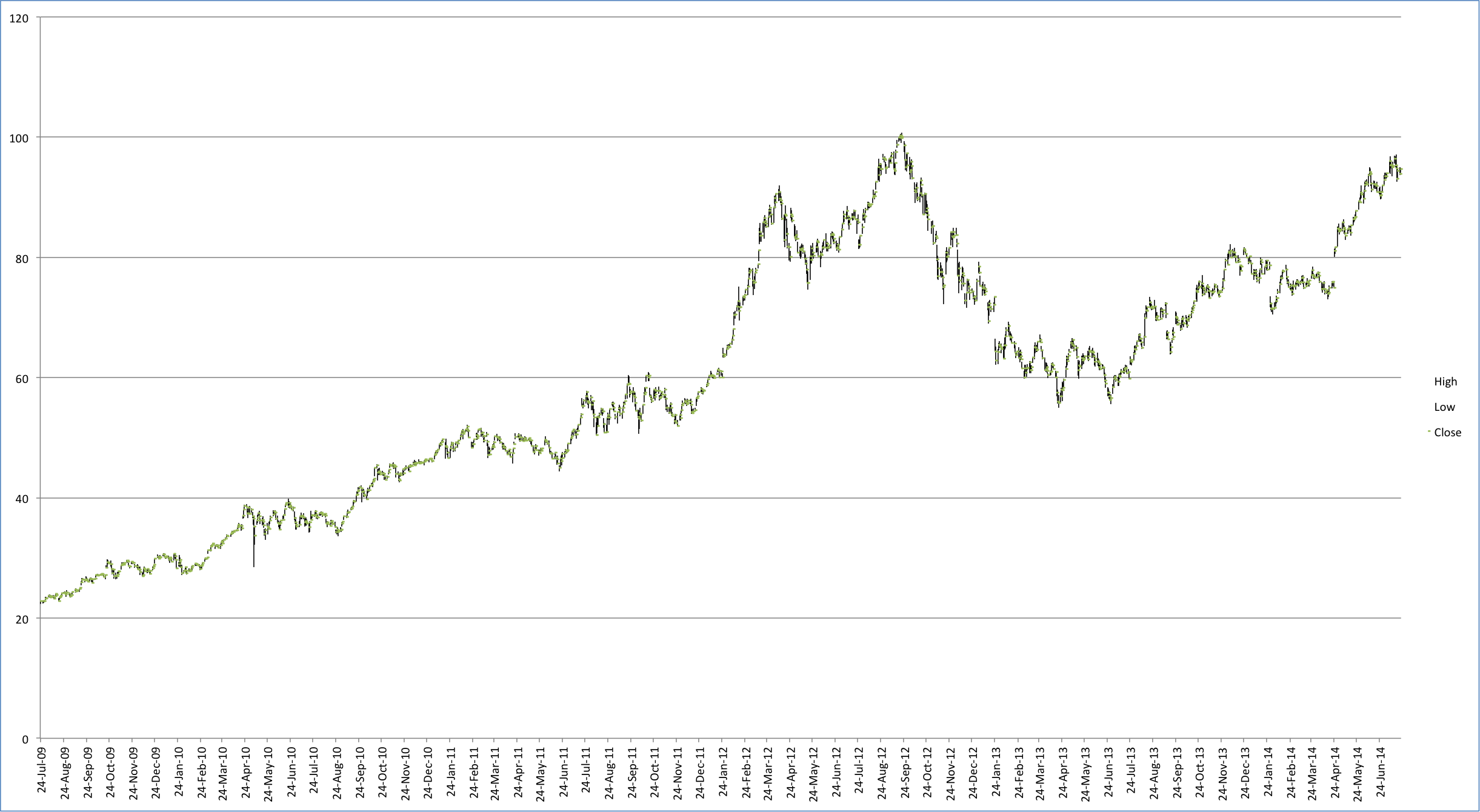
Apple’s stock has periodically taken a licking, but has been beating its way back to its previous high (partly due to a recent stock split and dividends periodically being paid), but its story is an important cautionary tale.

Apple Stock Price
Apple Share Price History

Good investing comes from choosing companies that produce revenue and retain growth potential, in other words focusing on the fundamentals of investing. Despite naysayers, that’s exactly the kind of company Apple has been. So why does Apple get so much negative attention? Because predicting the fall of a Goliath is exactly the kind of thing that makes news. Whether it’s true or not is irrelevant in the news cycle, but it is a source of bad investor advice, and should serve as a cautionary tale to investors considering taking financial advice from business news.

My Car Runs on Geopolitics – Why “Fracking” is an Important Investment for Your Portfolio

frackingI’m an environmentalist. But as a Financial Advisor I consider that some of the best opportunities I can provide to my clients is exposure to the burgeoning US and Canadian energy markets. That’s right I’m a big proponent for one of the most ecologically damaging and publicly derided forms of energy extraction.

However, next time you put gas in your tank consider this: 7000 fighters are currently making a mockery of whatever pretense Iraq was making at being a legitimate country. ISIS, the Islamic faction currently pushing into northern Iraq from Syria with aims to establish an Islamic Caliphate in the region has been routing Iraqi government forces. An army a quarter of a million strong, equipped with the latest in weapons, tanks and aircraft are losing regularly to a rag tag group of extremists equipped only with machine guns.

Meanwhile in the Ukraine we have fresh assurances that Russia will abide by a new ceasefire between Ukrainian government forces and rebels loyal to the Russian government. While Russia may have undone its own objectives of building a rival economic group, they have successfully reminded everyone why Russia, no matter how weakened it may be, is a powerful force that controls a great deal of energy needed for global consumption.

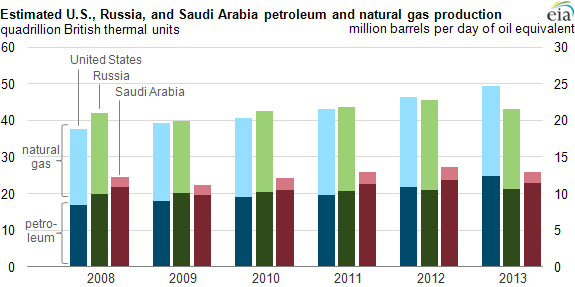
Across many of the nations that produce some form of energy (oil, natural gas, coal, etc.) there are very few that can claim to be a democratic, civil society not embroiled in some kind of sectarian civil war. But as of this year the United States has become the world’s largest producer of energy, outpacing Russia and Saudi Arabia, and that promises to change the way we think about economies and economic opportunities going forward.

production

In many developed countries there is a great deal of hand-ringing about the sudden rise of hydraulic fracturing – a relatively recent method of energy extraction that is reducing the cost of production and breathing new life into American manufacturing. “Fracking” comes with a number of environmental downsides, some of which are both scary and quite dramatic.

But energy is the life blood of civilisations and a steady supply of affordable energy is what gives us the ability to grow our economies and invest in new technologies. Sometimes this means making hard choices about how we allocate resources, and what the long term impacts of certain industries to our environment might be. But affordable energy, in the form of both oil and natural gas, provided from countries like Canada and the United States doesn’t just help bring back domestic manufacturing. It also economically weakens dictators and states that ignore human rights and puts power back in the hands of liberal democracies to enforce sanctions.

In other words there are numerous political and economic benefits that come along with cheaper Western energy. While this doesn’t address our environmental problems it’s important to love your monsters. The tools that give us our wealth and prosperity shouldn’t be abandoned just because they pose challenges, rather it invites us to both reap profits and seek new ways to conquer those problems we face. That is at least until either Google or Tesla solve all our driving problems.

Ninjutsu Economics – Watch the Empty Hand

First, an apology that we have been on a break from our website. Over the last month we’ve had lots going on that has distracted us from doing our regular writing, but we’re back now for the rest of the summer!

Since 2008 there has been two great themes in investing. One, is the search for yield, or income, from safer investments. The second has been the imminent arrival of a rising interest rate environment which threatens to gobble up everyone’s money. If you aren’t too familiar with monetary policy or even how low interest rates work on the economy, don’t worry. What you need to know is this:

In really bad economic times Keynsian theory states that the government should help the economy by creating inflation through stimulus spending and keeping borrowing rates low. This is often done by printing large amounts of money. The availability of cheap money has an inflationary effect on the market, and the economy is believed to rebound more quickly than it would have if it had simply let businesses fail and people be laid off work.

The flip side is that many believe printing money can lead to serious and even extreme hyper-inflation (not entirely unfounded) that in the long term can be extremely detrimental to the financial health of people. This is the fundamental tension in modern economics that is nicely summed up in the below parody video of John Maynard Keynes vs F.A. Hayek. Should markets be steered or set free? Or put more bleakly, should economies be allowed to collapse or should they be saved in the midst of an enormous financial meltdown?

In the past few years there has been an enormous amount of money printing going on (Keynsian) but at the same time governments have been trying to reduce their debts and deficits (Hayek). But the money printing has many people worried. The printing of billions of dollars globally has many inflation hawks declaring that the end of America is nigh, that the currency will soon be worth nothing and that the older traditional economies are doomed to fail. This concern has seeped into the general consciousness to a great degree and it’s not uncommon for me to get questions about whether the United States is on the verge of some new financial collapse.

I tend towards the contrarian angle however, and encourage you to do the same. So much energy and time has been focused on the threat of inflation, few seem to be watching the encroaching danger from deflation.

What’s deflation? It’s like inflation only much worse, since no one knows how to fix it. Deflation is a self fulfilling prophecy where a decreasing supply of circulating money leads to a drop in general prices for everything (this includes labour and products). On the surface that doesn’t sound too bad, but since people tend to earn less in a deflationary environment your existing debt tends to become ever more burdensome. In the same way that the collapse of the American housing market made many homes less valuable than the mortgages on them, deflation just does it to the whole economy. Japan has been in a deflationary situation for nearly 20 years, with little sign of relief. Even last year’s introduction of the unprecedented Abenomics has yet to produce the kind of inflationary turnaround that Japan is in such desperate need of.

When I look to Canada (and more specifically Toronto) I tend to see many of the signs that deflation looms in the shadows. Borrowing rates are incredibly low, largely to encourage spending. Many small retail spaces sit empty, squeezed out by  rising lease costs. Manufacturing sectors in Ontario continue to suffer, while wages remain stagnant. Canadians are currently sitting with record amount of debt and most growth in Canadian net worth have come through housing appreciation, not through greater wealth preservation. In other words, the things that contribute to a healthy economy like rising incomes and a growing industry base are largely absent from our economy. The lesson here is that when it comes to markets, we should worry more about the issues we ignore than the ones we constantly fret over. It’s the hand you don’t watch that deals the surprising blow!

Environmentalists Don’t Get Economics, and That’s Dangerous for Everyone

From the Toronto Star

The Keystone Pipeline has enraged many people since it was first announced. Traditionally framed as a conflict between environmentalists and oil executives, the Keystone Pipeline is 1897 km of 36 inch pipe running from Hardisty, Alberta to Steel, Nebraska and for several years it has existed in limbo. Caught in the cross hairs of politicians, environmentalists, various national interests and corporations, it has been six years of waiting and becoming more unlikely that it may ever get built. A definitive win for the champions of the environment.

Or is it? In simple terms, NOT having a Keystone Pipeline does indeed impede the growth of Tar Sands industry, hampering the longer term ability to send extracted oil to be refined. But it doesn’t stop it. In fact, not building doesn’t stop the oil companies from shipping at all. The Keystone Pipeline has become a symbol of social angst about the environment, but in its place a number of much more terrible and dangerous options have been pursued. For instance, if you live int he city of Toronto you may have noticed that the CP Rail line that runs through the heart of many residential neighbourhoods is actually carrying hundreds of thousands of oil tankers destined for the same location as the proposed pipeline.

In response to constant deferral Canada’s rail lines have picked up the slack, moving as much oil around as the proposed pipe would have. This first came to my attention around a year ago at a lunch where a portfolio manager for an energy fund was explaining that even though Keystone had stalled, a new pipeline had indeed opened. The difference was that it was actually the railway system. Since then it has slowly been gaining wider acknowledgement that in place of a relatively safe oil pipeline we instead now have hundreds of trains travelling through neighbourhoods and schools and towns carrying vast amounts of highly toxic oil, among other dangerous things.

All this leads to the hard truth about difficult economic decisions. Sometimes the big bad business is still making the best decision. Opposing development, no matter how well intentioned, rarely changes the underlying needs that feed those projects. Worse still, not recognizing the economic drivers behind controversial projects like this only leads to the kind of unintended blowback that creates future messes. For environmentalists the likely outcome will have been to have slain a largely symbolic dragon, while in reality they have set the stage for future environmental disasters on a much greater scale than they had ever intended. They haven’t changed the direction of the energy market, or the need for oil. But they have undermined a good economic proposal in favour of a bad one.

Crude Oil YTD

You Would Probably Make a Terrible Stock Picker

Mærsk_Mc-Kinney_MøllerYou would probably make a terrible stock picker. You really would. Why you ask? Because the world is big and complicated and its hard to hold on to more than a small piece of it at any one time.

Picking stocks isn’t exactly all the rage, but with the sheer volume of discount brokerages and online trading platforms there’s clearly enough interest in the DIY method of investing that it’s easy for people to either manage an entire stock portfolio or dabble in the occasional stock tip. Is this a good idea? Cost wise it’s hardly prohibitive, but from the standpoint of whether this makes for smart investing I have my doubts.

Why? Well, for one thing even the professionals get things wrong sometimes. But the investment industry is staffed with analysts that specialize in entire industries, looking to understand companies from different points of view that reveal opportunities for growth, value or misplaced market opportunities. These people spend their careers trying to understand companies and the industries they are part of.

By comparison the DIY investor tends to act on the things they think they know, and perhaps even the unknown knowns. All of this can lead to serious errors in judgement and costly mistakes in their investments. Are you right to think that Apple is on the decline because it isn’t innovative enough? Or that Microsoft has already lost because of declining computer sales. Is Tesla really worth as much as 50% of GM? Is that hot mining stock you heard about really as good a bet as you think?

In my time working at a mutual fund company I was most impressed when I spoke to portfolio managers who  talked about why they looked at companies and industries that no one else did. How much time did you think about mattress companies? How often were you reviewing currency trends between Mexico and India (yes that’s a thing)? How much do you really know about a company?

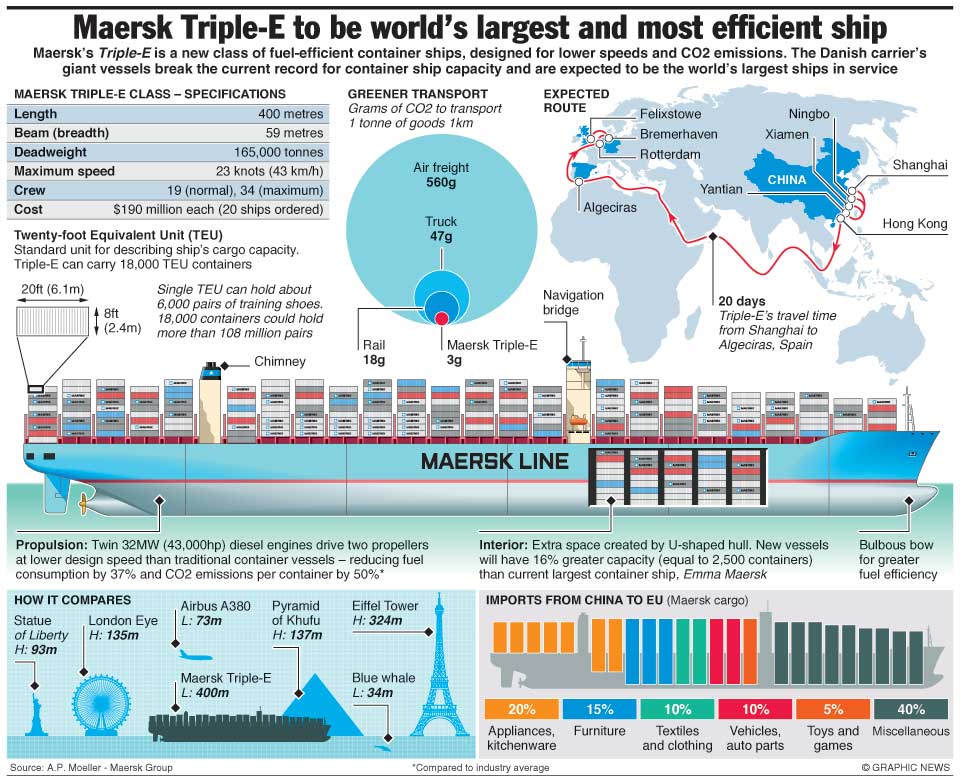
For example, have you ever heard of A.P. Moller-Maersk? It’s okay if you haven’t, but you might be surprised to learn just how big a company it is. Maersk is a Danish corporation that’s core business is global shipping. It’s so large a firm that it accounts for 20% of Denmark’s GDP. It owns and operates countless subsidiaries, including banks, energy companies and supermarkets. It’s full list of associated companies is 12 pages long (Company Overview), showing firms from Angola to Canada, the United States to  Japan, on the Middle East and through every Emerging and Developed market you can think of. Maersk commands a shipping fleet of six hundred vessels, making it the world’s largest. It’s revenues in 2011 were $60.2 billion, just shy of Microsoft’s. In 2005 it launched one of its biggest ships, called an E-class, that could carry 15,000 containers. In 2013 Maersk started using its Triple-E Class ship, so large it carries 18,000 containers.*

image.axd

I fully admit to knowing very little about such a large company, and it surprises me that a firm with such reach seems to fly just below the radar. But my job is to help people save for retirement and work with their individual financial situations. That’s why I trust professional analysts and portfolio managers to understand the nuances of the companies that make up the investing world. For the DIY investor all too often rumour and news reports substitute for real knowledge. The good fortune of a stock going up instills courage in stock picking prowess, while a declining market either confuses or robs an investor of their confidence and possibly their savings. Investing is a tricky business, and one where we should seek help when its offered.

*All the information regarding Maersk’s business comes either from their website or the excellent book Ninety Percent of Everything by Rose George, which I highly recommend. 

Why Buy an ETF?

Exchange Traded FundIt’s become an excepted fact amongst business reporters that the best investments to buy are ETFs, otherwise known as Exchange Traded Funds. What is an ETF and why are so many journalists convinced that you should buy them? Well an ETF is a fancy way to describe an investment that looks very similar too, (but isn’t quite) a stock market index. Unlike mutual funds, the ETF is bought and sold like a stock, but mirrors the performance of an index of your choosing, and by extension all the companies that make up that index. In that respect it shares the (supposedly) best aspects of both stocks and mutual funds. It is traded quickly and is quite inexpensive compared to a traditional fund, but unlike a stock is widely diversified and so should have reduced risk compared to a single company.

In the aftermath of 2008, many journalists that cover the investment portion of the news have touted ETFs as a better investment than traditional mutual funds, citing underperformance against respective benchmarks and the significant discount on trading costs for holding ETFs. ETFs represent a “passive investment”, meaning they don’t try to out perform their mirrored indexes, instead you get all of the ups, and all of the downs of the market. This message of lower fees and comparable performance has had some resonance on investors, and questions about ETFs are some of the most frequent I receive, however while I am not opposed to ETFs I am very hesitant about giving them a blanket endorsement.

That’s because I don’t know anybody who is happy with 100% risk. In the great wisdom of investing the investor should stay focused on “long term” returns and ignore short term fluctuations in the market. But investors are people, and people (this may shock you) are not cold calculating machines. They live each day as it comes and fret over negative news, get too excited about positive news and are generally greedy when they shouldn’t be. In short, people aren’t naturally good investors and being encouraged to buy an investment like an ETF exclusively on cost alone opens up all kinds of other problems for people who find that the market makes them nervous, or may be closing in on retirement. The passive nature of an ETF may be right for some people, but that decision will rarely depend solely on the cost of the product.

The hype for ETFs is therefore more comparable to buying a car exclusively on price based on the argument that all cars function the same way. But depending on your needs there may be multiple aspects you want to consider: size, safety, speed, etc. Investments are similar, with different products offering different benefits its important not to let greed set all of your investment designs. Investing is typically about retirement, not about maximizing every last dollar the market can offer. Reaching retirement is about balancing those investor needs with their wants, and frequently providing less downside at the expense of some of the performance is preferable to the full volatility of the financial markets.

Apple May Have Just Won the Tablet Wars

Global Tablet Sales
In 2013 global sales of tablets reached just over 195 million. Of that Apple sold over 70 million tablets, growing their year over year sales.

As of today you can download and use Microsoft Office on your iPad. This news has hit my family with a yawn, but to me this is an excellent signal for the long term financial health of both Apple and Microsoft. In fact, I’d go so far as to say that Apple may have just won the tablet wars for the foreseeable future.

In case you don’t know Microsoft has been hurting. Not financially. It’s doing great financially, but as a company where being “with it” seems important, Microsoft is decidedly not. Steve Baumer, the recently retired (and Bill Gates hand picked) CEO made several attempts to broaden and improve Microsoft’s product offerings, but many of them fell flat. The most notable has been Windows 8 and the Surface tablet, the new operating system that was meant to take Windows into the mobile era. The reception to both the Surface and Windows 8 has been so negative that the cost has been extraordinary. Microsoft has already announced Windows 9 and it is expected that it will be a return to the things that people love most about Windows.

Part of the strategy for moving into mobile computing had been to withhold Microsoft Office from the iPad. Office is still the bread and butter of the business world and it drives much of the revenue for Microsoft. The thought had been that limiting Office to a Microsoft platform would make their tablets more desirable and would steer the mobile business world towards Microsoft products. How wrong they were. Apple accounts for 73% of mobile enterprise solutions (sorry Blackberry). Even without the Microsoft Office platform people and businesses preferred to use the iPad, using different apps and numerous work arounds to integrate the Apple product into their business life.

Some will assume that the availability of Office for the iPad signals some kind of death knell for Microsoft’s future in the mobile world. I doubt that. If anything it will make them stronger. It will help solidify Microsoft Office as both the preferred software for businesses, renew interest in its personal use, and ease the pressure to choose the “right” tablet knowing that software can be shared across multiple platforms. The bigger story here is for Apple. Apple’s mobile operating system (iOS) may lag behind the sheer volume of users of Google’s Android operating system, but Apple easily sells the most tablets of any one company. In fact in 2013 Apple sold nearly double the number of iPad’s compared to its nearest competitor, Samsung.

But with the arrival of Microsoft Office it seems clear that Apple is likely to retain the profitable sector of personal and business tablets. Whether this ends up being reflected in the stock price of Apple is yet to be seen.

Crimean Crisis Reminds Everybody Why Investing is a Long Game

kiev-split_2829872b
Kiev Square, before and during the protests.

You might have been forgiven if you hadn’t been paying close attention to the Ukrainian Revolution two months ago when it was a long and violent standoff between the Ukrainian government and its people. Kiev square looked like a war zone and reports, while increasingly dire, were not necessarily front page news. But since the toppling of the pro-Russian Ukrainian President Victor Yanukovych it has been impossible to not pay attention to the exploding diplomatic mess of the Crimea.

As of this morning it appears that Vladimir Putin is going to annex the Crimea, much to Ukraine’s dismay, Europe’s frustrations and America’s exhaustion. The crisis is also far from over. The Ukrainian government (now mostly pro-western Europe) is saying that that will not allow such a loss of territory, EU and US sanctions are targeting Russian oligarchs. France is promising to cancel an order of military ships to Russia if Britain punishes Russian billionaire’s living in London. Russia seems relatively unfazed by any of this and seems to know that regardless of what legal reasons may exist that could start a war, few seem interested in shedding blood for the Ukraine.

All of this is obviously upsetting markets. Over the last month the global markets, and especially European markets have taken significant hits over concerns that some kind of conflict is about to breakout.

Bloomberg's Global Index looks at European, Middle Eastern and African Markets
Bloomberg’s Global Index looks at European, Middle Eastern and African Markets
This is the UK stock market (FTSE) over the last month. Performance has clearly suffered as the Crimean situation has worsened.

This creates the kind of immediate volatility that is both temporary and is difficult to counter. It’s a reminder that investing is different from day trading. There are people who are willing to try and make profits from the day to day fluctuations of this (most recent) crisis. They will be jumping in and out of the markets, trying to grab the slight differences over each day and profiting from nervous investors. But being an investor means riding out this volatility with the knowledge that while it is uncomfortable, it is ultimately temporary and that real growth comes from long term success, not day to day jitters.

That being said, it would be nice if we didn’t accidentally end the world!

the-worlds-end-poster-header