How To Invest In Energy When You Hate Volatility

***This post will refer to both a mutual fund company and a particular fund. This post should not be construed as endorsing that fund. We always make sure that we cite our sources and in this instance our source is a fund company, and we are not suggesting in any way that you should invest in or purchase this fund. If you are interested in any fund, please consult with your financial advisor first for suitability, especially if that financial advisor is us!*** 
frackingSince the price of oil dropped there have been lots of reasons to be excited. First the price of gas at the pumps is so low that I don’t hate going there anymore. Second, investments in energy have suffered since oil lost close to $30 in value.

WTI price over the last 6 months. From NASDAQ.com

And while energy stocks have recovered somewhat from their low points, they are still way off where they were earlier in the year. I’m not going to get into the finer points about the nuances of energy producers and the various types of oil and  costs of production. It’s a worthwhile article, but will take up too much time here. Instead I wanted to focus on a different way that Canadians can participate in the energy sector.

Commodities can be volatile but also a valuable element of a portfolio. So how can Canadians play the energy sector while being mindful of the risks associated with it?

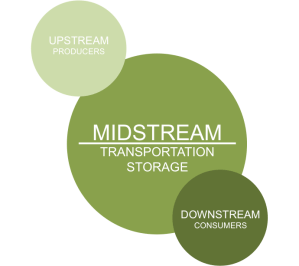
The answer may be by investing in what is called “Midstream MLPs”. Midstream MLPs (Master Limited Partnerships) are American operators that transport energy from the producers to the consumers. It’s a capital intensive business that is federally regulated but traded on the stock market. It therefore provides consistent cash flow while offering liquidity to investors. But Canadians already have opportunities for energy infrastructure, so why should they care about this in the United States?Midstream2The answer has everything to do with the rising levels of oil production in the United States combined with what federal regulators are willing to do to encourage new growth.
That brings us to the growth of the shale revolution in the United States. Newly discovered reserves (of significant size), improved technology and a dropping costs of production have set the US on a course to be the largest global energy provider in the coming years. This combination of efficiencies means that the United States is going to continue to increase its oil production over the next decade, while dropping the cost of extraction for each additional barrel. But each barrel produced has to go somewhere.

Projected Oil Growth in the United States

In the United States, Midstream MLPs are responsible for moving that oil. But it’s a sector that also must grow. Infrastructure to move oil efficiently from shale producers doesn’t exist yet, and regulators are eager to get MPLs in place with new development. New infrastructure is costly, and while the business model for an MLP doesn’t require a high price for energy to be profitable, it does need assurances about the consistency of the volume of oil to be moved. To encourage that growth regulators are allowing the price that MLPs charge to rise at a rate faster than inflation. Why are they doing that? Much of the shale oil is having to be shipped via rail to get to its right home. This causes price disparities that reduces producer margins and rankles federal governments.
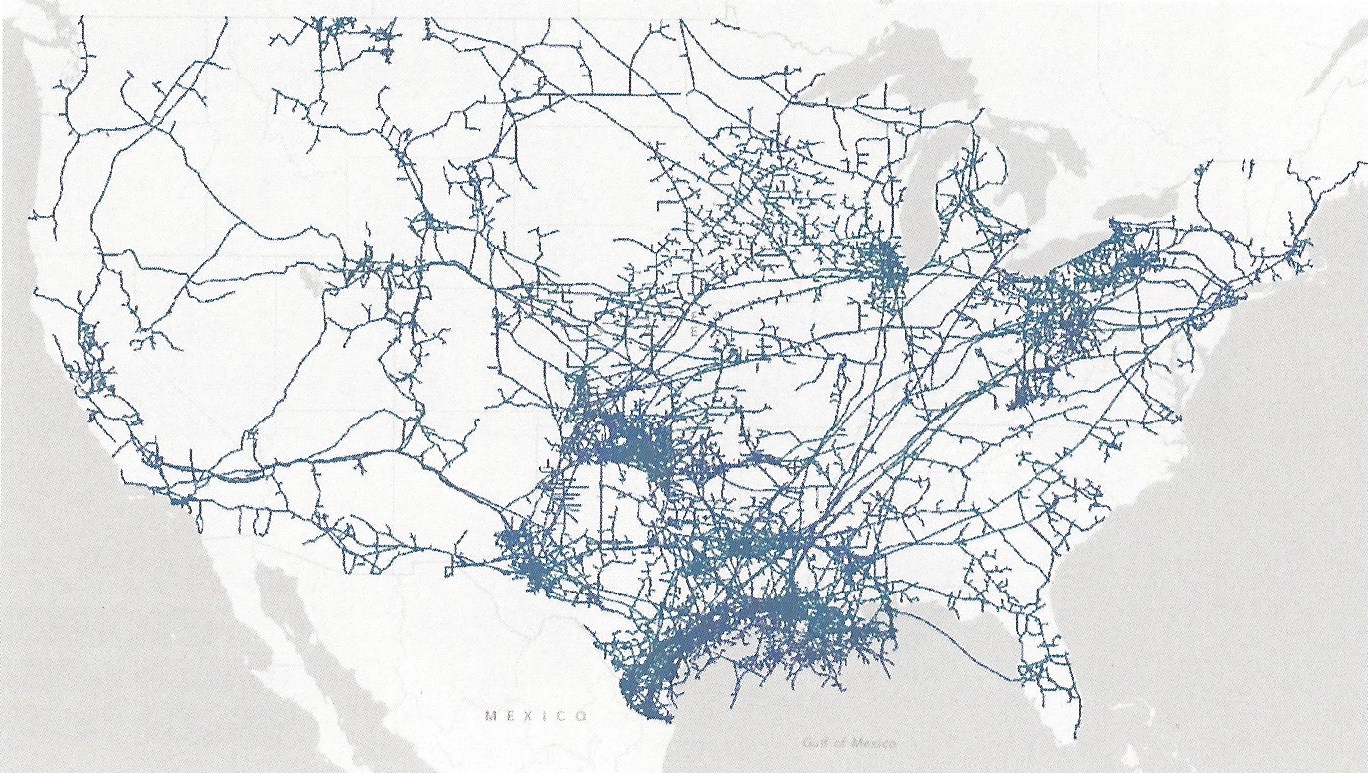
 Pipelines in the US. Most of the pipelines direct energy to Texas, which isn't set up to handle the ultra light crude from shale projects. that energy, coming out of North Dakota, needs to get to New Jersey. The lack of pipelines means it is being shipped by rail to Chicago and then via pipeline.

Pipelines in the US. Most of the pipelines direct energy to Texas, which isn’t set up to handle the ultra light crude from shale projects. that energy, coming out of North Dakota, needs to get to New Jersey. The lack of pipelines means it is being shipped by rail to Chicago and then via pipeline.
The various prices of oil. Oil from Canada is sold at a discount while Brent crude is sold at a premium to WTI. Improving infrastructure would rectify this problem and equalize prices. (The WTI price is listed from the summer). Click on the image to see it larger.


Currently there is only one fund option in Canada that we are aware of for investing in MLPs. We had an opportunity earlier this week to meet the managers of this fund and were greatly impressed by what they had to show us. I am already a big believer in the growing Shale Revolution, and am particularly pleased by the arrival of new opportunities for investment. Growth in the Canadian and American energy sectors is good news for not just investors, but also citizens. Russia, Saudi Arabia, Venezuela and a host of other despotic and semi-despotic regimes have been able to get by on the high price of oil. Now they are feeling the pinch of a decreasing price that has the benefit of bringing jobs back to North America while weakening their influence. In all, this is a good story for everyone.

Want to talk oil? Send us a message!

Go back

Your message has been sent

Warning
Warning
Warning

Warning.


The Zombie Apocalypse and Investing

If 2008 was the financial apocalypse it is often written about, it is a zombie apocalypse for sure. It’s victims don’t die, they are merely resurrected as an infected horde threatening to infect the other survivors. And no matter how many times you think the enemy has been slain, it turns out there is always one more in a dark corner ready to jump out and bite you.

This past month has seen the return of the zombie of deflation, a menacing creature that has spread from the worst ravaged economies in Europe into the healthier economies of the Eurozone. Deflation is like the unspoken evil twin that lives in the attic. I’ve yet to meet an analyst, portfolio manager or other financial professional that wants to take the threat seriously and doesn’t insist that inflation, and with it higher interest rates are just around a corner.

The eagerness to shrug-off concerns about deflation may have more to do with the reality that few know what to do when deflation strikes. Keeping deflation away is challenging, but not impossible, and it has been the chief job of the central banks around the world for the last few years. But like any good zombie movie, eventually the defences are overrun and suddenly we are scrambling again against the zombie horde.

This. Except it’s an entire economy and it won’t go away.

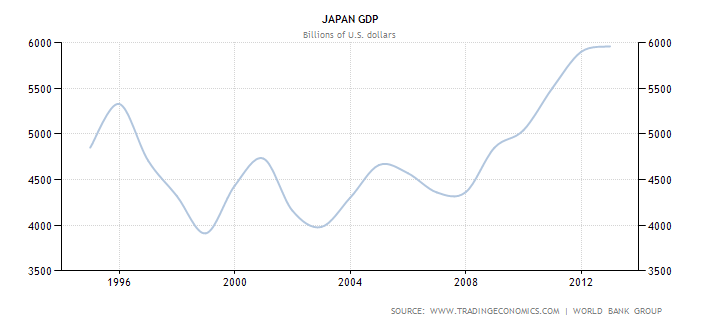
In the late 1990s, Japan was hit with deflation, and it stayed in a deflationary funk until recently. That’s nearly 20 years in which the Japanese economy didn’t grow and little could be done to change its fate. The next victim could be Europe, whose official inflation numbers showed a five year low in September of 0.3%. That’s across the Eurozone as a whole. In reality countries like Greece, Spain and Portugal all have negative inflation rates and there is little that can be done about it. Pressure is mounting on Germany to “do more”, but while the German economy has slowed over the past few months it is still a long way from a recession and there is little appetite to boost government spending in Germany to help weaker economies in the EU.

Japanese GDP from 1994-2014

Across the world we see the spectre of zombie deflation. Much has been made of China’s slowing growth numbers, but perhaps more attention should be paid to its official inflation numbers, which now sit below 2% and well below their target of 4%. The United States, the UK, the Eurozone and even Canada are all below their desired rates of inflation and things have gotten worse in this field over the summer.

What makes the parallel between this and a zombie apocalypse so much more convincing is that we have squandered some of our best options and now are left with fewer worse ones. Since 2008 the world hasn’t deleveraged. In fact governments have leveraged up to help indebted private sectors and fight off the effects of the global recession. Much of this come in the form of lower (from already low) interest rates to spur lending. But when the world last faced global deflation the cure ended up being broad based government spending that cumulated in a massive war effort. By comparison the debts of the government haven’t been transformed into lots of major public works initiatives, instead that money has sat in bank accounts and been used for share buybacks and increases in dividends.

For investors this is all very frustrating. The desire to return to normalcy (and fondly remembering the past) is both the hallmark of most zombie films and the wish of almost every person with money in the market. But as The Walking Dead has taught us, this is the new normal, and investing must take that into account. Deflation, which many have assumed just won’t happen, must be treated as a very likely possibility, and that will change the dynamics of opportunities for investment. It leads to lower costs for oil and different pressures for different economies. It will also mean different things for how people use their savings for retirement and how they will seek income in retirement. In short, the next zombie apocalypse can likely be defeated by paying attention and not keeping our fingers in our ears.

tumblr_m690z9rmAy1qhnl93
If it were only this simple….

If I Tell You This is Just a Correction, Will You Feel Better?

19_6_origA correction is typically defined as a drop of roughly 10% in the markets over a very short period of time. It’s often “welcomed” by investment professionals because it creates opportunities for new investments into liked companies that were previously trading above valuations considered appealing. Corrections are talked about as being necessary, beneficial and part of a normal and healthy market cycle, which all makes it sound somewhat medical. But in medical terms it falls under the category of being told your are about to receive 5 injections in short order and they are all going to hurt.

Screen Shot 2014-10-02 at 7.22.55 AM
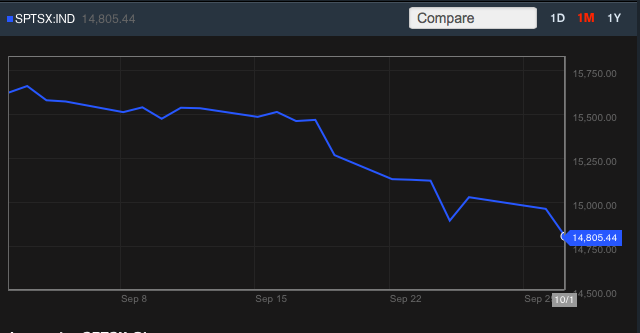
S&P TSX From Bloomberg – October 2, 2014

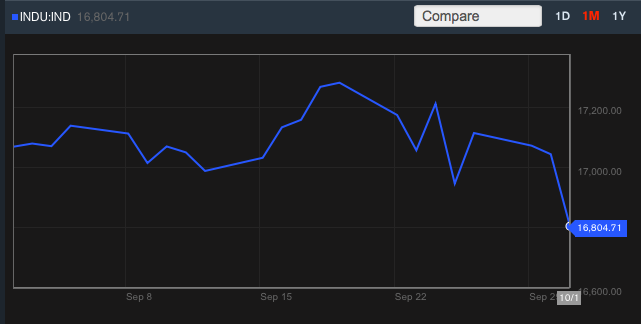
For investors the past couple of weeks in the market has felt like many such injections. The US markets have had a significant sell off, as have the global, emerging, and Canadian markets. All of it very quickly. The sudden drop has erased many of the gains in an already slow year and eaten dramatically into the TSX’s return which had been one of the best.

From Bloomberg - October 2, 2014
Dow Jones Industrial From Bloomberg – October 2, 2014

For many investors any sudden change in the direction of the markets can immediately give the sense that we are heading into another 2008. As Canadian (and American) investors are now 6 years older and closer to retirement the stakes also seem much higher. So here are some reasons why you shouldn’t be concerned about the most recent market volatility, and what you can do to make them work to your advantage.

1. Everyone is nervous.

For several months people have been calling for a correction. Investor sentiment is neutral and consumer confidence has dipped, meaning that overall atmosphere is somewhat negative for the markets. But that can be a good thing. Market crashes and bust cycles typically show up when people are exuberant and feel euphoric about markets. Bad news is swept aside and the four most dangerous words in investing “This time it’s different” become the hallmark of the new bubble. It’s rare that negativity breeds an over exuberant market.

2. The Economy isn’t running on all cylinders.

There certainly have been encouraging numbers in the United States, and even recently Canada has had some improved economic numbers, but by and large there hasn’t been a big expansion yet in the economy. Unemployment is still high, especially in Europe and the labour force has shrunk (which can skew the unemployment numbers) while corporations continue to sit on enormous piles of cash, to their detriment. A market crash usually follows an overheated economy that begins to over-produce based on faulty views about future growth potential. That isn’t where we are yet.

3.  Corporations are really healthy, and so are investors.

Canadians may still have bundles of debt, but the US is a different story. American corporations and households have been heavily deleveraging since 2008. In fact corporations in the US look to be some of the healthiest in decades, showing better earnings to debt ratios than previously thought. Crashes have as much to do with over-production as they do with out-of-control borrowing. The two go hand in hand and both factors are currently missing from the existing economic landscape.

4. Energy is cheap. Like, really cheap. 

Remember when oil was more than $100 a barrel? High energy prices, and the expectation of future high energy prices can really put the kibosh on future returns and throw cold water all over the market. As we’ve previously said, energy is the lifeblood of civilizations and a steady supply of affordable energy is what separates great economies from poor ones. (Look, we tweeted this earlier! See, twitter is useful. Follow us @Walker_Report)

https://twitter.com/Walker_Report/status/517604263493894145

West Texas Crude Oil Price over the last 3 months - from NASDAQ - October 2, 2014
West Texas Crude Oil Price over the last 3 months – from NASDAQ – October 2, 2014

The arrival and growth of American gas production combined with changing technologies and increasing efficiencies on existing energy use means that global demand is slowing, while global supply is increasing. In fact in March of last year, the head analyst for energy at Citigroup published a paper describing exactly this trend of improved efficiency with new sources as a mix for lower energy prices in the long term. Whether this proves true over the next two decades is hard to say, but what is true is that cheap energy helps economies while expensive energy hinders it. Since economies have already adjusted to the higher price over the last few years, a declining price is a tailwind for growth.

Does this mean that there aren’t any risks in the market? Absolutely not. Europe is having a terrible year as a result of persistent economic problems and Russian intransience, and many Emerging Markets are showing the strain of continued growth, either through corruption or exceeding optimism about the future. Those pose real risks, but taken in the grand scheme of things our outlook remains positive for the markets.

How can I make this all work for me?

So what can you do as an investor to make a correction benefit you? The first piece of advice is always the same. Sit tight. Dramatic changes to your investments when they are down tends to lead to permanent losses. Secondly, rebalance your account periodically as the market declines. On the whole equity funds will lose a greater proportion of their value than fixed income, leaving a balanced portfolio heavier in conservative than growth investments. Rebalancing gives you a chance to buy more units of growth funds at a lower price while adding greater potential for upside as the market recovers. Lastly, if you have money sitting on the sidelines, down markets are great opportunities to begin Dollar-Cost-Averaging. For nervous investors this is a great way to ease into the markets even as markets look unstable. You can read about it here, but I recommend watching the movie below for a nice visual explanation. Now, take your medicine.

http://youtu.be/QzJZi6rX2xY

Russia Invades Ukraine, Needs Potatoes

This Russian paratrooper crossed the Ukrainian border “by accident”

Last week it looked as though Russia was escalating its engagement in Ukraine, sending supplies directly into Ukrainian territory and potentially starting a full blown war. But things have remained opaque since then, with increasing reports that Russian troops were crossing the border and Russia steadfastly denying it. But after days of reports from the Ukraine that Russia had started a low level invasion to assist with Pro-Russian forces, CNN reports this morning that Russia is now using tanks and armoured personal carriers and is fighting on two fronts within the Ukraine.

Screen Shot 2014-08-28 at 8.19.38 AM

Whether this proves to be a false start, or if Russia is going to become more open in its military involvement it’s hard to say. What is clear is that this war in Ukraine is far from over.

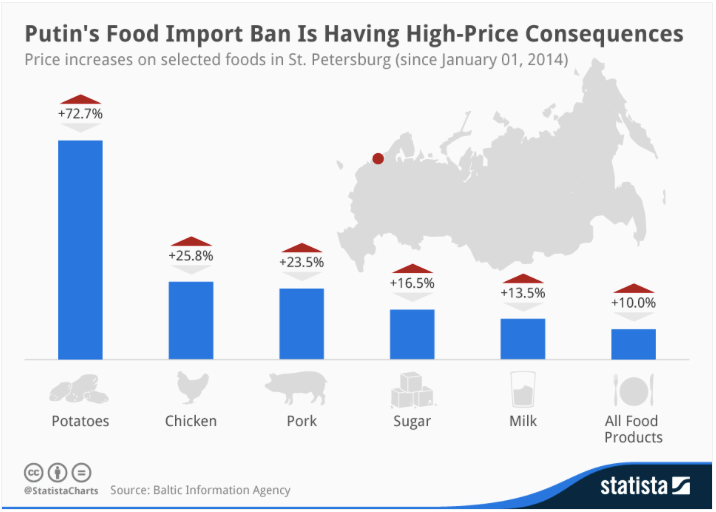
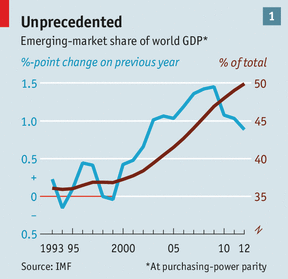
Meanwhile this week also saw some evidence about the rising cost of food in Russia as a result of the retaliatory trade restrictions directed at nations like the United States, Canada and most of Europe. Reported in Slate and Vox.com, this graph of rising food costs is actually quite surprising. Potato prices have risen by 73%!

Screen Shot 2014-08-28 at 8.26.29 AM

I’m reluctant to say too much about this situation and what it means from an investor standpoint, lest people think I am taking the suffering of people in a war zone too lightly.  I will say that as emerging market countries become richer and begin to flex their national muscles, jostling over everything from important natural resources, long disputed borders, and sometimes even national approval, its likely that international events could increasingly be outside of our control. Since much of our manufacturing is now outside of our borders, and often even energy supplies come from nations openly hostile to us, we find ourselves in an economic trap of our own making. How can you act with a free hand against a nation that holds so many of your own economic interests?

Screen Shot 2014-08-28 at 11.39.19 AM
From “The Economist” July 27th, 2013 “When Giants Slow Down”

I sincerely doubt that our sanctions against Russia or high potato prices will bring Putin to his knees, (although his people may get fed up with higher food costs) but in the past it was much clearer how to deal with this kind of brinkmanship. Today we live a world where many of our economic interests are heavily tangled with nations who do not share our same strategic goals. It is said that nations do not have friends, only interests, and as Emerging Markets look increasingly attractive to foreign investors we may have to remind ourselves that Emerging Markets are not simply opportunities for growth, but nations with their own set of interests and goals separate from our own.

Russia’s Trade War Shows Europe to be The Better Economy

Putin-SmirkSince I first wrote about the Ukraine much has happened. Russia has been unmasked as a bizarre cartoon villain seemingly hellbent on destabilizing the Ukrainian government, assisting “rebels” and being indirectly responsible for the murder of a plane full of people. All of which came to a head last week when it appeared that Russia might have just started a war with the Ukraine (still somewhat indeterminate).

Russia’s moves with the Ukraine may have more to do with challenging the West, and some of the other recent militaristic actions show that may be its real intent. Russia announced in July that it would be reopening both an arctic naval base and a listening post in Cuba built back in the 1960s. Combined with many heavy handed tactics at home including essentially banning homosexuality, Putin is making a brazen attempt to assert its regional dominance and stem the growth of Europe’s influence in the most aggressive way it can. To some extent this seems to be working with his own population, but it isn’t making him popular globally.

Europe’s response to Russia has been to hurt it with economic sanctions, which since the Ukrainian situation first began have been escalating in severity. Two weeks ago Russia responded in kind. How? By banning food imports from sanctioning nations.

If you don’t know much about the Russian or European economies this may seem like potent response from one of the BRIC countries and major global economies. But Europe is a big economy, and agricultural exports don’t make up a significant part of GDP, with the same being true for the United States. And while sanctions targeted at farms can be politically dangerous (farmers are typically a well organized and vocal lobby) the most interesting thing about these sanctions is what it tells us about the Russian and European economies respectively.

First, Russia imports a great deal of food, mostly from Denmark, Germany, the United States and Canada. So sanctions imposed by Russia are really going to hurt the Russians as food prices begin to rise and new food suppliers (expected to be from Latin America) have to ship food farther. But more interesting is the sanctions Russia chose not to impose. Europe is heavily dependant on oil & gas for its energy needs. So why not really make Europe feel the pinch and create an energy crisis? Because Russia needs oil revenue.

16% of Russia’s GDP is made up from the oil and gas sector. Beyond that oil and gas make up more than half of Russia’s tax revenues and 70% of it’s exports. In other words Russia can’t stop selling its oil without creating an economic crisis at home every bit as severe as in Europe. Banning imports of food and raising the cost of living may not be the ideal outcome from sanctions you impose, but it is mild in comparison to creating a full on catastrophe.

By comparison Europe starts to look very good, and it’s a reason that investors shouldn’t be quick to write off Europe and all its recent economic troubles. It’s a large and dynamic economy, filled with multi-national companies that do business the world over. It is backed by stable democracies and a relatively prosperous citizenry. By comparison Russia is a very narrow economy, dependent on one sector for its economic strength run by a (in all but name) dictator with an incredibly poor populace. A few years ago it was quite trendy in the business news to write off Europe as a top heavy financial mess, and while I wouldn’t want to dismiss Europe’s problems (some of which are quite serious) it’s important to have some perspective about how economies can rebound and which ones have the flexibility to recover.

My Car Runs on Geopolitics – Why “Fracking” is an Important Investment for Your Portfolio

frackingI’m an environmentalist. But as a Financial Advisor I consider that some of the best opportunities I can provide to my clients is exposure to the burgeoning US and Canadian energy markets. That’s right I’m a big proponent for one of the most ecologically damaging and publicly derided forms of energy extraction.

However, next time you put gas in your tank consider this: 7000 fighters are currently making a mockery of whatever pretense Iraq was making at being a legitimate country. ISIS, the Islamic faction currently pushing into northern Iraq from Syria with aims to establish an Islamic Caliphate in the region has been routing Iraqi government forces. An army a quarter of a million strong, equipped with the latest in weapons, tanks and aircraft are losing regularly to a rag tag group of extremists equipped only with machine guns.

Meanwhile in the Ukraine we have fresh assurances that Russia will abide by a new ceasefire between Ukrainian government forces and rebels loyal to the Russian government. While Russia may have undone its own objectives of building a rival economic group, they have successfully reminded everyone why Russia, no matter how weakened it may be, is a powerful force that controls a great deal of energy needed for global consumption.

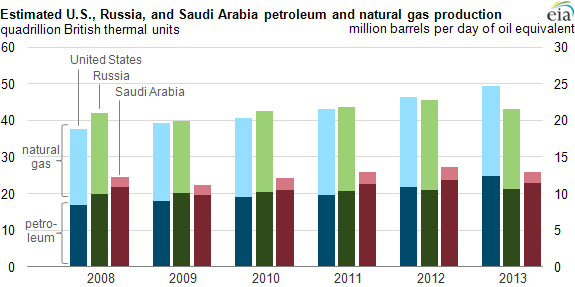
Across many of the nations that produce some form of energy (oil, natural gas, coal, etc.) there are very few that can claim to be a democratic, civil society not embroiled in some kind of sectarian civil war. But as of this year the United States has become the world’s largest producer of energy, outpacing Russia and Saudi Arabia, and that promises to change the way we think about economies and economic opportunities going forward.

production

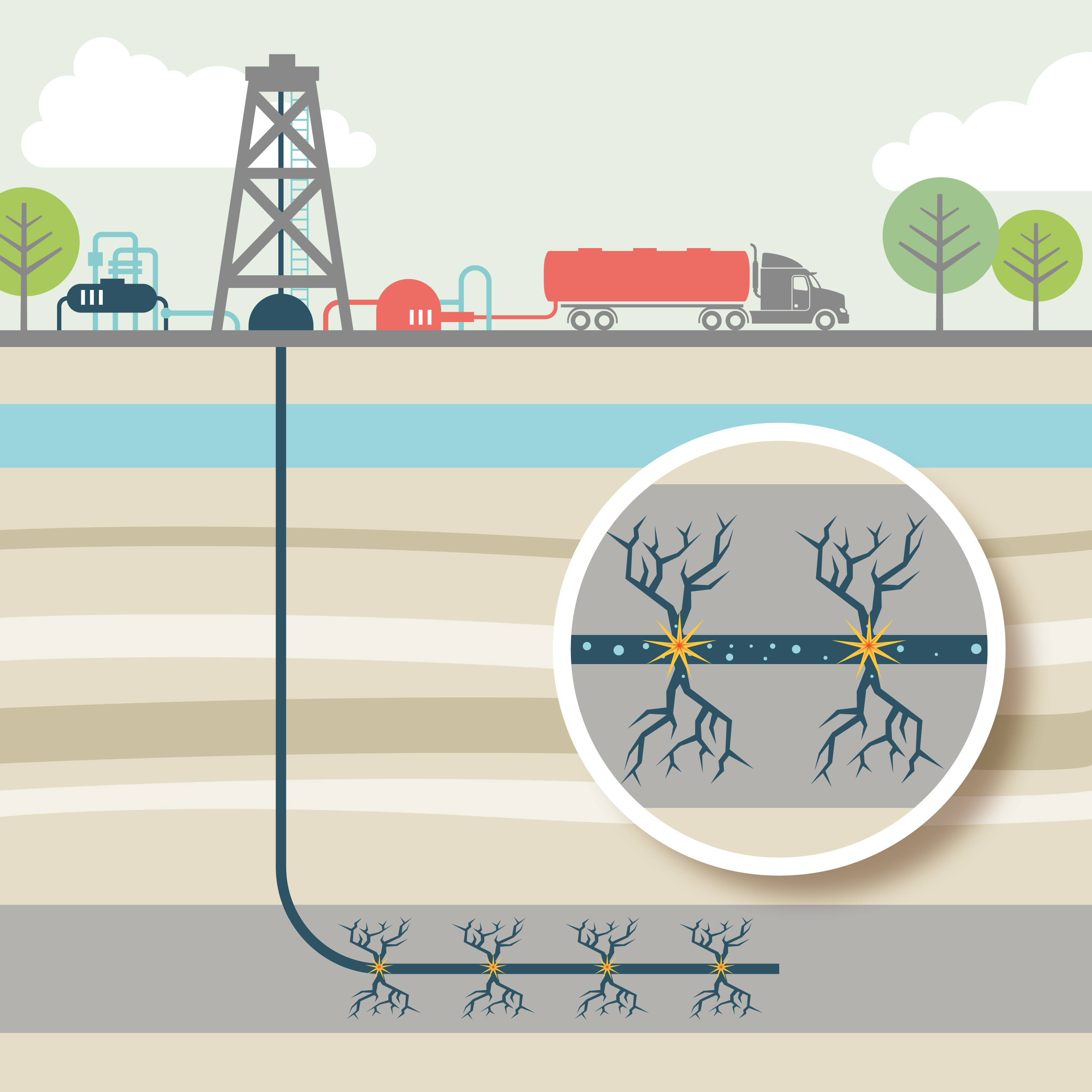
In many developed countries there is a great deal of hand-ringing about the sudden rise of hydraulic fracturing – a relatively recent method of energy extraction that is reducing the cost of production and breathing new life into American manufacturing. “Fracking” comes with a number of environmental downsides, some of which are both scary and quite dramatic.

But energy is the life blood of civilisations and a steady supply of affordable energy is what gives us the ability to grow our economies and invest in new technologies. Sometimes this means making hard choices about how we allocate resources, and what the long term impacts of certain industries to our environment might be. But affordable energy, in the form of both oil and natural gas, provided from countries like Canada and the United States doesn’t just help bring back domestic manufacturing. It also economically weakens dictators and states that ignore human rights and puts power back in the hands of liberal democracies to enforce sanctions.

In other words there are numerous political and economic benefits that come along with cheaper Western energy. While this doesn’t address our environmental problems it’s important to love your monsters. The tools that give us our wealth and prosperity shouldn’t be abandoned just because they pose challenges, rather it invites us to both reap profits and seek new ways to conquer those problems we face. That is at least until either Google or Tesla solve all our driving problems.

Environmentalists Don’t Get Economics, and That’s Dangerous for Everyone

From the Toronto Star

The Keystone Pipeline has enraged many people since it was first announced. Traditionally framed as a conflict between environmentalists and oil executives, the Keystone Pipeline is 1897 km of 36 inch pipe running from Hardisty, Alberta to Steel, Nebraska and for several years it has existed in limbo. Caught in the cross hairs of politicians, environmentalists, various national interests and corporations, it has been six years of waiting and becoming more unlikely that it may ever get built. A definitive win for the champions of the environment.

Or is it? In simple terms, NOT having a Keystone Pipeline does indeed impede the growth of Tar Sands industry, hampering the longer term ability to send extracted oil to be refined. But it doesn’t stop it. In fact, not building doesn’t stop the oil companies from shipping at all. The Keystone Pipeline has become a symbol of social angst about the environment, but in its place a number of much more terrible and dangerous options have been pursued. For instance, if you live int he city of Toronto you may have noticed that the CP Rail line that runs through the heart of many residential neighbourhoods is actually carrying hundreds of thousands of oil tankers destined for the same location as the proposed pipeline.

In response to constant deferral Canada’s rail lines have picked up the slack, moving as much oil around as the proposed pipe would have. This first came to my attention around a year ago at a lunch where a portfolio manager for an energy fund was explaining that even though Keystone had stalled, a new pipeline had indeed opened. The difference was that it was actually the railway system. Since then it has slowly been gaining wider acknowledgement that in place of a relatively safe oil pipeline we instead now have hundreds of trains travelling through neighbourhoods and schools and towns carrying vast amounts of highly toxic oil, among other dangerous things.

All this leads to the hard truth about difficult economic decisions. Sometimes the big bad business is still making the best decision. Opposing development, no matter how well intentioned, rarely changes the underlying needs that feed those projects. Worse still, not recognizing the economic drivers behind controversial projects like this only leads to the kind of unintended blowback that creates future messes. For environmentalists the likely outcome will have been to have slain a largely symbolic dragon, while in reality they have set the stage for future environmental disasters on a much greater scale than they had ever intended. They haven’t changed the direction of the energy market, or the need for oil. But they have undermined a good economic proposal in favour of a bad one.

Crude Oil YTD