Separating Fact and Fiction in Investing

Is America’s economy failing? Has Trump undone the American economic empire? Do ports sit empty? Are people being laid off? Have world leaders conspired to control America’s debt?

These are just some of the headlines and subjects floating around the internet. Depending on who you are and where your political allegiances lay, the answers will be self-evident. Trump is either a an economic genius and unparalleled negotiator, or he is a clumsy and indifferent conman masquerading as successful businessman and politician.

For investors this presents a real challenge. These questions aren’t just thought experiments. Depending on the answers they may significantly impact where one chooses to invest, and the more polemical the question the farther we may get from a useful answer, regardless of politics. If our goal is to ask questions to reveal truth, we may find ourselves confused as to why markets have surged back from their lows (as of May 12th the major US indices have almost recovered from their tumble at the beginning of April) even while business reporting warns of a potential for a worsening economy.

One way to make better sense of what’s happening is to put ourselves in the shoes of Donald Trump’s administrative allies. Imagine what someone who believes in what Donald Trump is doing would say about his economic plans. Its not as though they haven’t heard economists and businesses express doubt and worry about the actions of his administration. So how would they defend them?

In my imagining I believe they would argue something like the following:

                The United States is enormously rich but wastes money on cheap goods from China, and while some of these goods don’t need to be made here, America has lost enough manufacturing jobs that its worthwhile experimenting with tariffs to bring jobs back. Over the past 45 years we’ve seen countless evidence that playing by the rules of globalization reduces the ability of governments to help their most vulnerable citizens, and money has become too fluid and too willing to cross borders at the expense of their domestic homes. Regardless of what people fear, America remains the richest country in the world, with the largest consumer base, and that combined with the existing strength of the US economy will be enough to bring industry back to the US in some capacity while tariffs on junk from other countries will help pay for renewed and permanent tax cuts. Market volatility will be temporary while the economy realigns itself, but the combination of lower taxes and existing economic strength will ultimately help lift the markets even higher.

You don’t have to believe in such a claim, or even pretend this was what Donald Trump campaigned on. What I’m putting forth is a set of ideas (picked up through numerous interviews and speeches) that I believe his administration finds largely defensible and recognizable, and would be a better frame of reference for understanding their actions. Let’s start with the recent indication that GDP is contracting. In traditional economic terms, two quarters of back-to-back GDP contractions constitute a recession. We’ve had more than a few of those over the past decade, but few people would say that we’ve had recessions. The reason for this might be best expressed by Jason Furman; an American economist, professor at Harvard, and former deputy director of the US National Economic Council, in a recent editorial in the Financial Times. Outlining the importance of “Core GDP” vs “GDP”, he points out that Core GDP (actually known as Real Final Sales to Private Domestic Purchasers) better reflects consumer spending and private investment while the traditional GDP includes net exports, inventories, and government spending, all things in flux because of Trump’s new administration. So, while the GDP contracted in Q1 of this year, the Core GDP was up in the first three months.

What about rumours of empty ports and empty shelves? Reportedly Trump was shaken following meetings with the heads of three major retailers about shelves being empty if the tariff’s remain at 145% on China. Trump seems to have vacillated a number of times about the size and implementation of the tariffs, but as of today they remain intact. Asked about higher prices and fewer options Trump seemed dismissive of concerns over the Chinese trade war declaring “maybe the children will have two dolls instead of thirty dolls, and maybe those dolls will cost a couple of bucks more.”

Is Trump being dismissive? Yes, but he’s also not worried that shelves will be empty. Though shipping and imports are down as we head into May for cargo coming from China, far from alarmist rumours that docks are sitting empty there is still plenty of ocean-going traffic coming from China.

 Does this mean that there won’t be furloughed dock workers or empty shelves? According to the Port of Los Angeles there has been a 35% drop week over week of expected cargo, and a 14% decline from the previous year. That very well may lead to reduced working hours and fewer options in stores, but the discrepancy between what’s being shared online and what is likely to actually happen is probably enough to gird the loins for Trump’s team to continue their policies.

What about layoffs? Fears about unemployment remain high, but as the most recent jobs report shows hiring remains robust and the unemployment rate, already very low, remains unchanged.

This discrepancy between a popular public impression and the on-the-ground economic reality gives room to Trump’s administration to continue ahead with ideas that remain controversial, as well as opening up investors to making mistakes in their allocations. For the time being, Trump does have a reservoir of economic and political strength to call on. He may be using that reserve up, but may also have guessed with some accuracy that the global economy will keep doing business with America regardless of whatever feathers he ruffles.

But markets may also not be calculating the longer-term direction correctly, mispricing assets and remaining too optimistic. Since Trump’s re-election markets have been shown to be placated by the promise of deferred tariffs, as though deferring them is really the prelude of getting rid of them. Trump doesn’t help this by going back and forth on their implementation, but listening to his words, and following his actions, I feel that it would be a mistake to assume that the tariffs will ultimately be rescinded.

This past week changes to the auto-tariffs were announced, reducing some of the duplication of tariffs on steel and aluminum, but also laid out reimbursements and tariff relief for parts manufacturers need to import. These changes also make clear the groundwork for a longer and more durable tariff regime. Trump himself has been quick to correct any reporting that suggests that he’s backtracking or creating exemptions for specific products, and that some products may end up with different tariff treatment, but will still be subject to tariffs.

This seems best exemplified by the announcement of the US-UK trade deal. Called “a starting point” by the British ambassador, the Trump administration has said the deal is “maxed out”, leaving in place a 10% tariff on British imports, with a reduced tariff on British cars, steel, and aluminum (the deal effectively lowers car and steel duties to the flat 10% rates, down from 27.5%).

Whether deals such as these are anything for the market to get excited about is a question that will be answered with time, like all the unanswered questions that have been introduced this year. What investors must work on is remaining clear eyed about what is happening, and resist submitting to their own partisan preferences. Trump may yet undermine the US economy, and trade deals may turn out to simply be acknowledgements of existing tariff rates, or perhaps the opposite may happen. But recognizing that reality is more mixed and that we do not yet have a clear picture about the future will promote more time tested strategies for sensible investing.

Aligned Capital Partners Inc. (“ACPI”) is a full-service investment dealer and a member of the Canadian Investor Protection Fund (“CIPF”) and the Canadian Investment Regulatory Organization (“CIRO”).  Investment services are provided through Walker Wealth Management, an approved trade name of ACPI.  Only investment-related products and services are offered through ACPI/Walker Wealth Management and covered by the CIPF. Financial planning services are provided through Walker Wealth Management. Walker Wealth Management is an independent company separate and distinct from ACPI/Walker Wealth Management.
Seriously and Literally

In 2016, Donald Trump supporters said that you should take him seriously, but not literally. His first press secretary, Anthony Scaramucci said “don’t take him literally, take him symbolically.” This defense of Trump was meant to highlight that while he may have said incredibly controversial things, much of that was just talk, and it was his message behind the words that you should really pay attention to.

But Trump himself has contradicted this view more than once, frequently saying “I don’t kid” when challenged on policy (the exact comment came about in 2020 over coronavirus testing). In other words, Trump has let people know that you shouldn’t be surprised when he does do things that seemed initially outrageous. For the wider world this has meant that you should take Trump at his word, and that even if some of his rhetoric is just that, rhetoric, you would be foolish to ignore the substance of his messages.

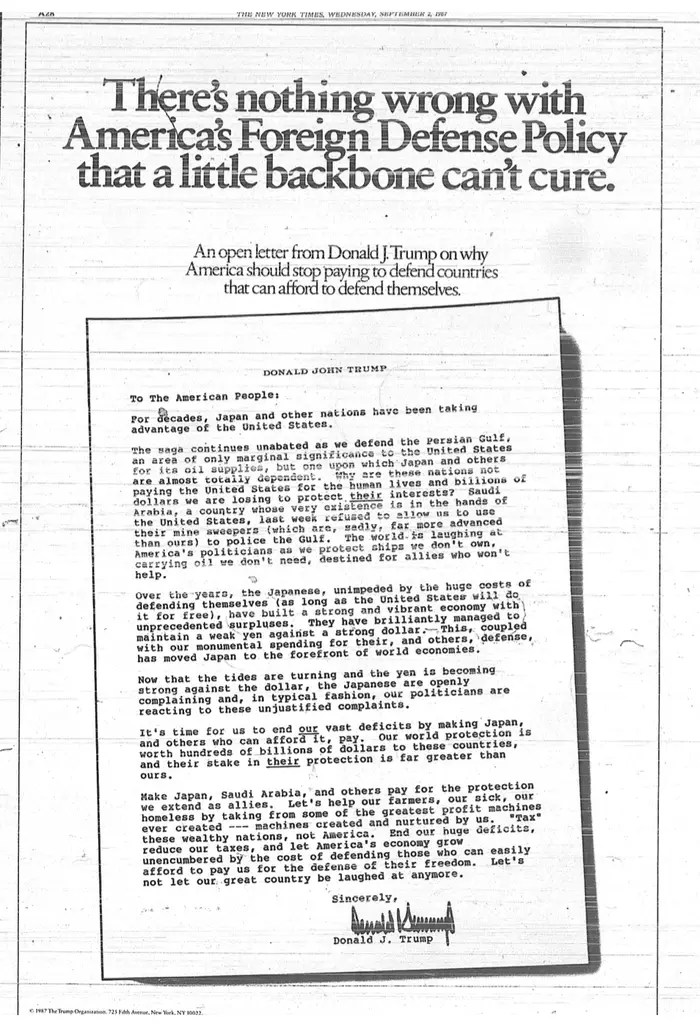
Since his re-election Trump’s focus has been squarely on tariffs, promising them on China (a further 10%), on BRIC nations (100%) and Canada and Mexico (25% each). He’s suggested that some of the tariffs can be avoided for Canada and Mexico over better border controls on drugs and illegal immigrants, but whether this is true is unknown. Political commentators like David Frum have pointed out that Trump’s views on trade have been consistent since his first considered run for the presidency in 1987, that he is hostile to trade and sees it as a zero-sum game.

A close-up of a piece of paper

Description automatically generatedIn 2025 world leaders and policy shapers believe Trump should be taken both seriously and literally. While the current political situation in Canada has been turbulent, the view of the government and provinces is almost unanimous (Quebec and Alberta remain the perennial opponents to joining the band wagon). Doug Ford took the initiative to announce that Ontario could stop energy exports to the US in the event of a trade fight, a position seconded by BC’s premier David Eby.

But in the United States the threat of aggressive and expanding tariffs have also been taken literally, notably by Jerome Powell of the Federal Reserve. On December 18th, in a move that shook markets, Jerome Powell did announce a final rate cut for 2024, but stressed that future cuts were heavily dependent on inflation, which will likely rise if Trump enacts his regime of trading tariffs. Markets were quick to react, and though 2024 will be remembered as a pretty good year for investors, the speed and size of the market sell-off was newsworthy, being the largest since August.

The next morning and markets began on a relatively positive note, continuing a trend of brief panics followed by long yawns as markets simply resume their upward momentum. Little seems to have dissuaded the bull market since 2022 and with the US economy still showing itself to be very strong there’s every chance that the brief panic on December 18th was just that, a moment of panic at the end of 2024. But Trump, like the rest of us, doesn’t live in longer and slower news cycles. Instead market panics live on in social media, and run the risk of coalescing into counter narratives that Trump might hurt the economy more than help it (its notable that the economy has been very strong under Biden, but that didn’t change the perception that Trump had been the better economic steward).

In 2018 Jerome Powell began raising rates to blunt the sharper edges of a hot economy and return interest rates to somewhere near a historic norm. Since 2008 rates had remained at emergency low levels, and there was a genuine concern that markets were becoming addicted to cheap cash. In October of that year Jerome Powell made clear that rate hikes would continue until the Fed felt they’d reached a neutral rate, news not well received by the stock market. From October to the end of the year the S&P 500 lost 18% by December 24th, before rebounding slightly by the New Year. Markets had posted decent returns to the end of September, but wiped out those gains and finished the year -6.24% . During the last months of the year Trump made repeated efforts to pressure Powell to halt or cut rates, often publicly over Twitter.

My opinion is that Trump likes the ambiguity surrounding his pronouncements. Whether he actually intends to implement all the tariffs he’s discussed, whether they are bargaining positions, or whether he can be talked out of them is a grey area that offers him a position of strength. Politicians may be particularly vulnerable to his vagaries since they often wish to protect the status quo while Trump feels free to be a disruptor. But that grey area only works as a negotiating tactic so long as people believe that deals can be reached. If nations come to believe that Trump is serious and literal about tariffs and don’t believe they can be avoided, you are only left with a trade war. Similarly if you are in charge of the Federal Reserve and believe that Trump will do what he says, then you have every reason to pursue positions that curb inflation.

Following Trump’s election Jerome Powell was asked whether he would resign as the Federal Reserve chair, and was clear in his response; he will not, he is not required to leave, and cannot be compelled to. Trump already has a difficult and publicly hostile history with Powell, and its easy to imagine that if Powell is taking Trump seriously, he will move into direct conflict with Trump because of his policies, not in spite of them. Similarly conflict may be around the corner on diplomatic issues for the exact same reason. If Mexico feels it can’t avoid a trade fight with the US, you can assume that Mexico might be less interested in working to curb migrants at the US border. In Canada the same might be true, negotiating with someone who has no intent to make a deal (or honor the one already made) is not likely to build support for concessions.

Today Trump will take office following his inauguration, and he’s expected to sign a number of executive orders kicking off his next term. He has posed as a disruptor, and has nominated a number of other unusual thinkers and people opposed to the status quo to make up his cabinet. Whether they all take those roles and can do what they say they plan too is yet to be seen, but on December 18th we may have gotten some insight into what that future might look like, a future where Donald Trump is taken at his word, both seriously and literally.  

Aligned Capital Partners Inc. (“ACPI”) is a full-service investment dealer and a member of the Canadian Investor Protection Fund (“CIPF”) and the Canadian Investment Regulatory Organization (“CIRO”).  Investment services are provided through Walker Welath Management, an approved trade name of ACPI.  Only investment-related products and services are offered through ACPI/Walker Wealth Management and covered by the CIPF. Financial planning services are provided through Walker Wealth Management. Walker Wealth Management is an independent company seperate and distinct from ACPI/Walker Wealth Management.

What Could a Faltering Condo Market Mean?

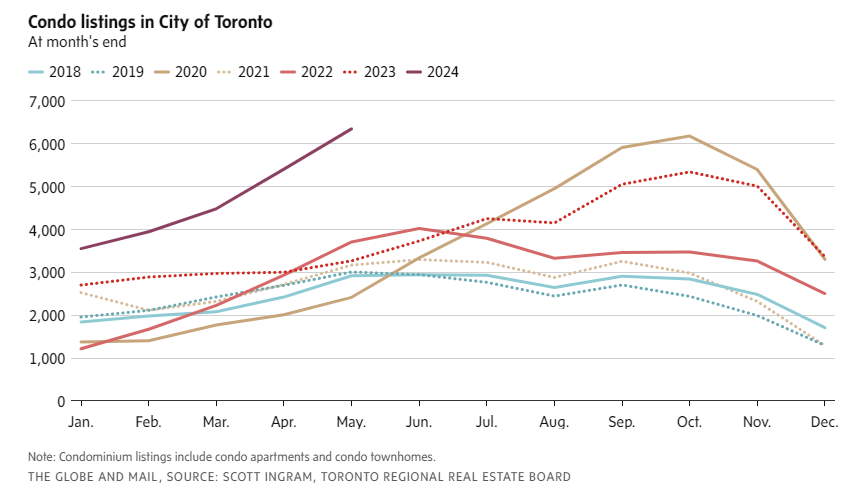
As summer has worn on there have been a growing number of headlines focused on Toronto’s stagnant condo market. In short, the number of units for sale continues to grow as buyers refuse to pay the elevated prices being demanded by sellers. Interestingly sale activity has been stagnant and prices haven’t really moved despite the growing inventory.

The knock on effect has been a significant slow down in new developments. This has led to growing concern that prices will rise in the future as new supply is postponed or canceled, and pressure is growing to get interest rates lowered to help stimulate buyers.

All of this sounds a touch too convenient for me. One of the reasons (not the only reason, but a significant one) we face a “cost of living crisis” is that housing has increasingly been seen as an investment, one that people have had greater faith in than other traditional assets. But housing booms aren’t new, and it seems odd to me that our chief concern about a growing glut of over-priced condos will be that condo prices will be higher in five to ten years. A more pressing concern is likely that condo investors, and the banks that have provided the mortgages, are deeply concerned that if buying doesn’t resume property prices could take a serious decline, erasing Canadian wealth and forcing Canadian banks to write down balance sheets.

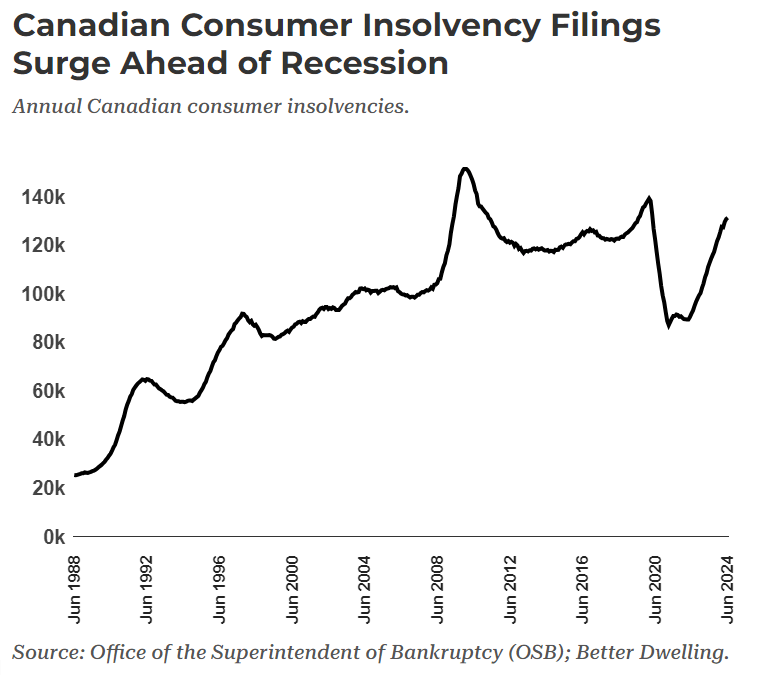
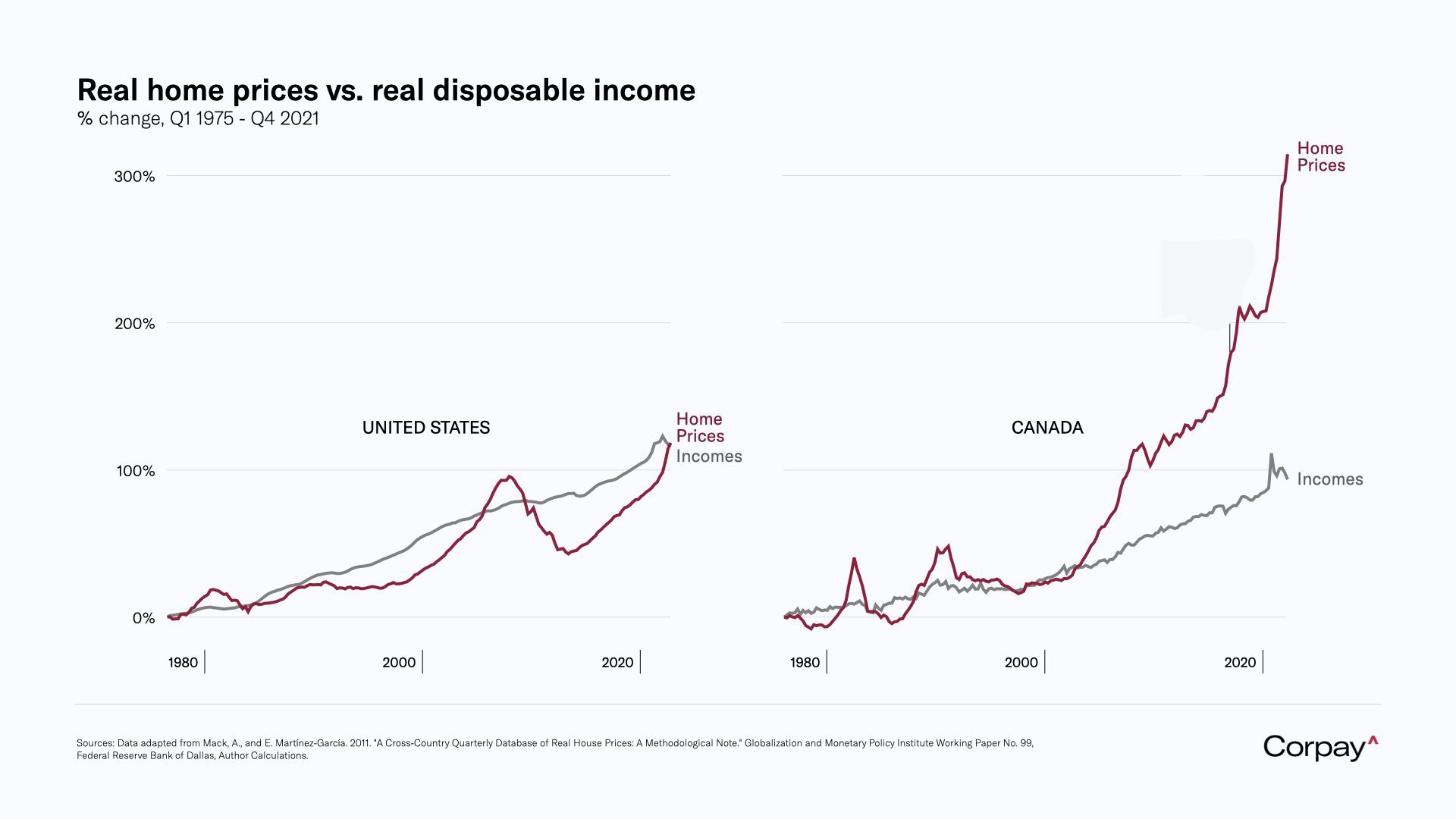
For many this would be a welcome relief, potentially opening Toronto’s property ladder and easing some of the burden of the cost of living. But property ownership has been the source of growth of Canadian wealth over the past twelve years. According to Credit Suisse, Canadian wealth rose by two thirds from 2010 to 2022, however Canadian economic growth was quite weak, with income only rising by 15% over the same period. In other words, if Canadians are richer today than they’ve been in the past, its because they owned homes, not because the economy was paying more. Independently, we might conclude that there was something unique happening with Toronto’s condo market, but this news goes hand in hand with other worrying economic trends in the country. Notably, Canadian consumer insolvencies have been steadily climbing while unemployment has also been climbing. The unsold condo inventory is the highest it’s been since 2008, while data shows that household credit growth has been decelerating. Other disturbing news includes the expansion of the public sector, which now accounts for 1 in every 4 employed Canadians while public sector growth accounted for 49% of our most recent GDP growth.

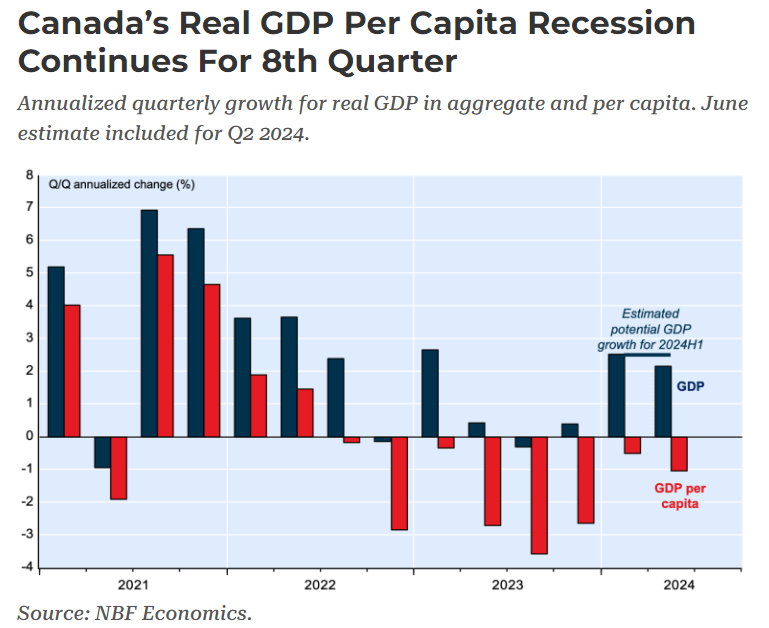
2024 has been a disappointing year for Canadian economic news. Aside from the headlines above, one of the most striking statistics is that Canada is losing economic ground per capita. Much of our GDP growth is coming from high immigration, in effect importing new economic activity but at a rate below what is needed to expand the economy on a per person basis, and it has been doing so for more than 2 years. We are, in effect, in a “per capita recession”.

Since 2022, interest rate increases have pummeled the economy, particularly real estate, which has grabbed a lot of headlines. But Canada’s real estate market has shown considerable resilience through the first few years. However, investors that over are extended and feel the building pain from higher borrowing costs are starting to exit their investments. That hasn’t been altered by the recent interest rate cut which has yet to stimulate much new buying activity. Pressure is building from sectors of the economy to see rates fall and hopefully ease or reverse the effects of higher borrowing costs, but it remains to be seen whether rate cuts can happen at a pace both responsibly and fast enough to substantially change the direction of Canada’s economy (if it can at all).

On Monday, August 5th, changes in interest rates from the Bank of Japan reportedly triggered an unwinding of a popular “carry trade”, in which large institutions borrowed money in Japan for low cost, and then invested that money in US stocks. A hike in the BoJ’s lending rate had forced up the value of the yen, forcing the sale of those same US investments to pay back the now more expensive Japanese loans. Markets have recovered quickly, but it shook investor confidence, and while the explanation may not be wholly accurate, it’s a useful reminder that debt, which offers real value when used in moderation, can make economies extremely fragile. For years Canada has had the highest level of household debt to disposable income of any G7 country, and much of that was tied up in housing. What happens next is anybody’s guess.

Aligned Capital Partners Inc. (“ACPI”) is a full-service investment dealer and a member of the Canadian Investor Protection Fund (“CIPF”) and the Canadian Investment Regulatory Organization (“CIRO”).  Investment services are provided through Walker Welath Management, an approved trade name of ACPI.  Only investment-related products and services are offered through ACPI/Walker Wealth Management and covered by the CIPF. Financial planning services are provided through Walker Wealth Management. Walker Wealth Management is an independent company seperate and distinct from ACPI/Walker Wealth Management.

Climate Change, Real Estate, & Markets – A Mid-summer Update!

Updates: Climate Change

In his book The Third Horseman: A Story of Weather, War, and the Famine That History Forgot, historian William Rosen recounts the effect of the regional climate change on Europe in the early 1300s. His recounting of the history of Europe (but mostly England) in the wake of the “Little Ice Age” is fascinating and frightening. Political upheaval, inflation and famine are all magnified by the effects of a changing climate, while the uncertainty it brings dramatically alters the European landscape and its political status quo.

The little ice age saw a general cooling across much of Europe, a shortening of the growing season, an increase in heavy rains that flooded land, rendered marginal farmland unusable, and a spiking in grain prices forcing cereals to be sourced from farther away (like the middle east) to feed the northern parts of the continent. It also saw the loss of some industries, like England’s wine producers. The reputation for terrific French and Spanish wines, and the English reputation for drinking them in great quantities is forged in the shadow of the this geographically specific climate alteration.

Until now.

According to the Financial Times Britain is seeing a surge of vineyards opening, as far south as Sussex and as far north as Scotland. In 2023 the country recorded its largest ever grape harvest, while the country’s largest winemaker, Chapel Down, is looking to sell more shares to fund further expansion of its business.

Over the last decade I’ve made the case that climate change is really about water and its predictability. It is interesting to note that in the mass of worrisome predictions, of the potential for war, for famine, and for a less secure and more fragile world, that one of the less expected outcomes might be a change in cultural identity of a whole nation; that one rainy little island may stop being rainy, and undo 700 years of a cultural identity.

Updates: Real Estate

In 2020, one of the first things I wrote in at the beginning of the lockdowns was about the Canadian real estate market, and whether lockdowns and a pandemic might unravel our condo market. Though the lockdowns were long lived, Canadian real estate survived helped in large part by the extension of emergency levels of interest rates. The cost of living crisis and the housing bubble, ever intertwined, got worse, not better.

Condo prices reached their peak in January of 2023, and fell back to a current low by late April. Since then prices have fluctuated somewhat, but have been largely range bound. Reported by the Toronto Star on June 14th, “the number of new listings for condos has increased 30% since last May” the bulk of those in the investor size, ranging between 500 to 599 square feet. Urbanation, a trade publication for real estate states “In the past year, unsold new condominium supply increased 30%, rising 124% over the past two years.” In addition “projects in pre-construction during Q1-2024 were 50% presold, down from a 61% average absorption over a year ago, and 85% two years earlier.”

The Globe and Mail wrote on June 29th that “there were 6350 active condo listings in the city, an increase of 94% from the previous May” and that “condo inventory 70 per cent higher than the 10-year average for last month.” The deterioration in the condo market is being felt by existing owners and investors, as well as developers whose per square foot costs run roughly $500 higher than existing condo values.

All this seems to be aligning with a secondary real estate problem; office and commercial real estate. Across the United States as well as Canada office real estate is also struggling. Though not news, employees refusing to return to work and companies downsizing their real estate foot prints has had a significant impact on owners of office space. Banks are unloading office loans, REITs are trying to sell unprofitable assets, and some, like Slate Office RIET just defaulted on $158 million of debt. The story of real estate, once the most unflappable asset an investor could hold, continues to unfold in surprising and worrying ways.

Updates: Markets

With half the year behind us market performance has significantly diverged. US markets, being carried by the strong performance of NVIDIA as well as the handful of usual tech company suspects, have delivered shockingly great results. At the end of June the S&P 500 was up 14.48% so far. An impressive return, but 70% of those returns are from six companies, and 30% of the return is from just one. The S&P 500 Equal Weight return, an index that assigns each company a proportional weight, only has a return of 4.07%. That 70% difference in performance is down to Nvidia, Microsoft, Apple, Amazon, Google (Alphabet), and Facebook (Meta).

Figure 1 Performance data from Y Charts

The concentration of that performance makes the current rally fragile, though curiously other global indices, including Canada, are actually more concentrated than the US. This may account for why the TSX is only up 4.38% for the year, and had briefly dipped as low as 2.66% in June. Canadians are familiar with the feeling of having one of three industries (banking, energy, or materials) often set the tenor of a year’s returns. If the price of oil is climbing or falling, its often immediately reflected in our market index returns. In their own way the S&P 500 has taken on some of these characteristics.

Investors should know that markets continue to offer considerable upside, but those returns are coming from fewer and fewer parts of the economy.

Aligned Capital Partners Inc. (“ACPI”) is a full-service investment dealer and a member of the Canadian Investor Protection Fund (“CIPF”) and the Canadian Investment Regulatory Organization (“CIRO”).  Investment services are provided through Walker Welath Management, an approved trade name of ACPI.  Only investment-related products and services are offered through ACPI/Walker Wealth Management and covered by the CIPF. Financial planning services are provided through Walker Wealth Management. Walker Wealth Management is an independent company seperate and distinct from ACPI/Walker Wealth Management.
Revisiting Inflationary Heat Waves

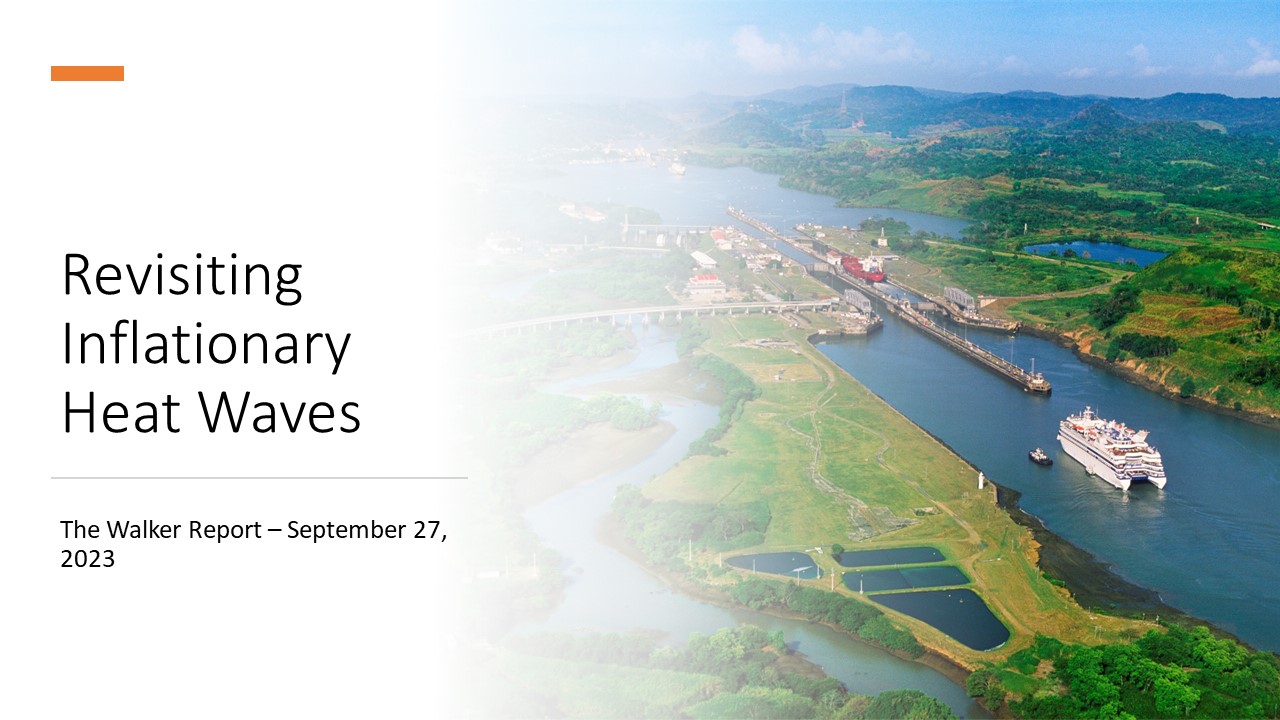
About 12 months ago I had reflected on a summer of global heat waves and how rising global temperatures would ultimately be inflationary as citizens and governments would be stressed in a multitude of ways to tackle heat waves, flooding, and health issues. But as it turns out there were other (not considered) ways that global warming might become an inflationary issue for countries.

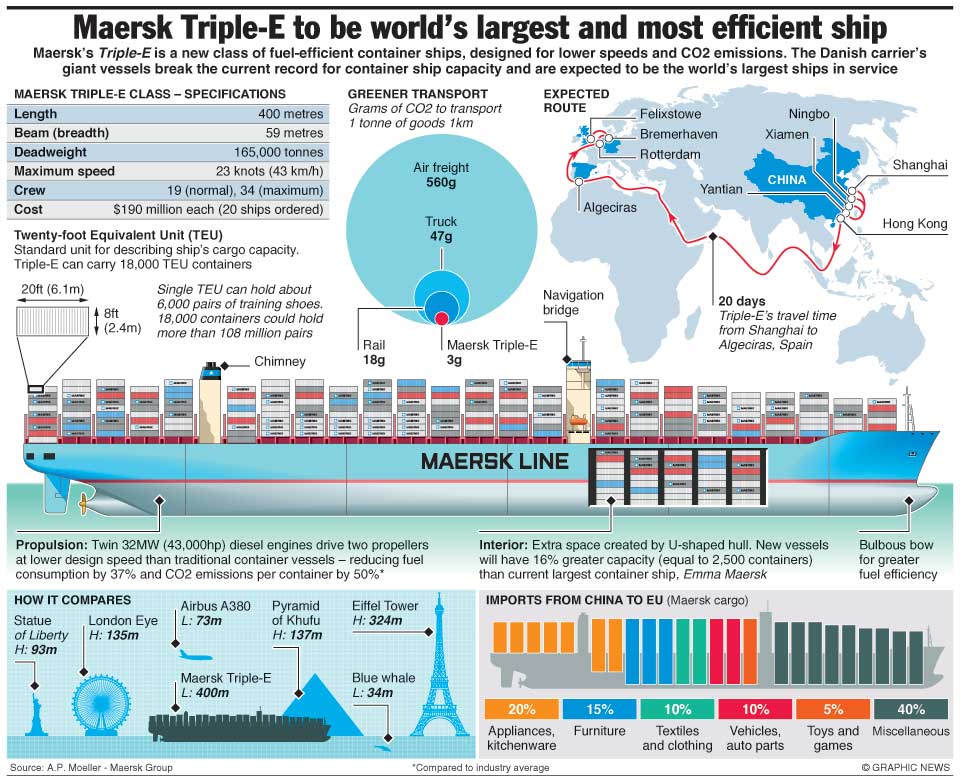
If you’ve never stopped to look into global shipping, you’re missing out on one of the most impressive global logistical challenges that has been tackled by human civilization. The ubiquity of cargo containers and the ships that move 90% of everything we use across oceans, renders both the novelty of this achievement and its impressiveness invisible. It wasn’t that long ago that shipping things (anything) was a cumbersome and wasteful endeavor where the distance something could be shipped, its speed in getting there, and the amount that would arrive unspoiled was a pitiful fraction of what travels today. The creation of standardized shipping containers and the development of ever larger ships to carry them has been a cornerstone of globalization.

But the speed of shipping is also dependent on two enormous infrastructure projects of significant historical importance; the Suez Canal and the Panama Canal. The histories of these mega projects are impressive and they retain essential roles in cutting down transportation times for ships crossing from one side of the planet to the other, speeding raw materials and finished goods to markets faster and for less money.

As I like to point out, most stories involving global warming are really stories about water. The Panama Canal, though it connects two oceans, is in fact a freshwater canal and relies on tributaries and rainfall to maintain its depth. But 2023 has delivered a serious drought to Panama and left tributaries and rivers dry, leading to a shallower draft in the Panama Canal. The managers of the canal have taken several measures to deal with this, the most notable has been reducing the draft limit of ships by six feet.  

Six feet may not sound like a lot, but each foot reduced equates to a reduction of between 300 to 350 cargo containers per ship. Six feet is about 2000 fewer containers per boat, or around 25% of a typical cargo ship. This has meant that ships have to carry less cargo, or manufacturers are paying a premium to ensure their cargo is on an earlier scheduled ship. Other options include unloading and shipping some of the cargo by train and reloading it at another port, or travelling around the southern tip of South America, adding weeks to the voyage.

As if this wasn’t enough, lower water levels have also meant fewer ships allowed to transit the canal, with daily transits dropping from 40 to 36 to 32 trips a day, while fees for those crossings have risen to $400,000 per trip. For ships that have set travel times and book passage through the Panama Canal in advance, the impact of these changes has been less pronounced, but other types of shipping, like bulk and gas carriers that must wait for a slot in the canal are now waiting an average of 10 days (an increase of 280% since June) to make it through.

Inflation has many sources, but one we’ve been assumed would recede quite quickly was inflation due to infrastructure and shipping. Initially global supply chain stresses came from China, pandemic shutdowns, and backlogs. But time would ultimately fix these issues as China reopened and ports cleared the backlog of ships. The challenges of the Panama Canal show that climate change will likely remain a source of inflation, unanticipated and requiring considerable money to manage. Since water infrastructure is something that we typically underfund, there is almost no place, rich or poor, that isn’t looking at considerable future costs to improve and maintain existing infrastructure, let alone new infrastructure.

As we head into the winter, its very likely that the drought in Panama will ease, and shipping costs may come down while transportation times shorten. But this marks another change in the environment that may become a reoccurring pressure point on economies, and one that may become so regular as to recede into the background even while it impacts our daily lives. The lesson to investors should be that global warming remains inflationary and will demand ever more money for infrastructure.

Walker Wealth Management is a trade name of Aligned Capital Partners Inc. (ACPI)*

ACPI is regulated by the Investment Industry Regulatory Organization of Canada (www.iiroc.ca) and a Member of the Canadian Investor Protection Fund (www.cipf.ca). (Advisor Name) is registered to advise in (securities and/or mutual funds) to clients residing in (List Provinces).

This publication is for informational purposes only and shall not be construed to constitute any form of investment advice. The views expressed are those of the author and may not necessarily be those of ACPI. Opinions expressed are as of the date of this publication and are subject to change without notice and information has been compiled from sources believed to be reliable. This publication has been prepared for general circulation and without regard to the individual financial circumstances and objectives of persons who receive it. You should not act or rely on the information without seeking the advice of the appropriate professional.

Investment products are provided by ACPI and include, but are not limited to, mutual funds, stocks, and bonds. Non-securities related business includes, without limitation, fee-based financial planning services; estate and tax planning; tax return preparation services; advising in or selling any type of insurance product; any type of mortgage service. Accordingly, ACPI is not providing and does not supervise any of the above noted activities and you should not rely on ACPI for any review of any non-securities services provided by Adrian Walker.

Any investment products and services referred to herein are only available to investors in certain jurisdictions where they may be legally offered and to certain investors who are qualified according to the laws of the applicable jurisdiction. The information contained does not constitute an offer or solicitation to buy or sell any product or service. 16 Past performance is not indicative of future performance, future returns are not guaranteed, and a loss of principal may occur. Content may not be reproduced or copied by any means without the prior consent of the author and ACPI.

The Inflationary Heat Wave

In his book “The Ministry for the Future”, author Kim Stanley Robinson imagines a heat wave impacting India, pushing temperatures ever higher for an extended period of time. Eventually temperatures exceed the “wet bulb temperature”[1] for human survival, the point when a human body can not cool itself down by sweating, sitting in the shade, or drinking water. The death toll is unimaginable. Millions die. So begins Robinson’s account of a world in the throes of global warming.

This year contained many headlines that echoed Robinson’s book. There were heat waves in Australia, India, North America, Europe, the Middle East, Africa, and Asia. It comes on the heels of energy and food shortages, exacerbating already stressed pressure points for global security and worsening inflation. To date I’m not aware that there have been any places where the WBT has gone above 35C, but that doesn’t mean people, economies, and nations aren’t being pushed to the breaking point. Forest fires are common after such an extended period of heat. Crops suffer and efforts to stop agricultural failure are expensive. Water patterns are disrupted, with sudden downpours and earth so parched it can’t absorb rapid deluges leading to flooding. Electrical grids are increasingly stressed to their breaking point as demand surges. And of course, people die due to heat exhaustion.

How hot are these heat waves? In January temperatures in Buenos Aires reached 41.1C and 700,000 people lost power. In Australia a town called Onslow reached 50.7C, tied now for the hottest temperature recorded in the Southern Hemisphere. The city of Perth had 11 days of temperatures over 40C. In the same period (early February), Palm Springs in California reached 34C.

In March and April 90 deaths would be recorded across India and Pakistan, a number almost certainly (and deliberately) inaccurate. Cities across the subcontinent saw temperatures more than 42.8C, and one city in Maharashtra state recording over 45C. Pakistan saw temperatures in excess of 49.5C and 47C in various cities. Birds fell from the sky in Gujarat, and a bridge collapsed in Pakistan following glacial flooding. While the official total was only 90, other more recent heat waves across Europe reveal those numbers must be much higher, with some of the most vulnerable in the society simply going uncounted as victims.

In June heat waves hit much of Europe, pushing temperatures up to 40C, or higher across much of the continent. That same heat wave reached the UK, pushing the temperature in London to 40C as well, a first in living memory for the country. While that spike was short lived, it was a reminder of just how dependent populations are on the infrastructure built on certain climatic expectations. Air conditioners, while not totally uncommon, are not used by the majority of Europeans, and often homes or apartments cannot easily accommodate their introduction by design.

Our thinking can also be quite constrained by experiences, but the extreme temperatures we’ve seen affect more than people. Heat waves and their accompanying droughts can also create problems we wouldn’t consider. In France the temperature of rivers (specifically the Rhone and Garonne) rose so much that they were too hot to cool nuclear reactors, forcing shutdowns. In Germany the Rhine was so low in early August that it was in danger of being shut to cargo, potentially hindering delivery of the coal now needed to meet energy needs. And in China, Foxconn, a major industrial supplier for companies like Apple and Toyota, suspended plant operations as the region suffers from hydropower shortages due to low water levels in the Yangtze.  

We’ve just passed the end of summer, but across much of the world heat waves have left significant impacts on economies and peoples.  I started writing this piece while in Spain with my family in July, where everyday temperatures had remained above 40C. Since then I have been returning to this essay only to note that things have gotten worse. The high temperatures being faced by people in countries like India, Pakistan and Bangladesh have been compounded by surging demand for electricity, forcing governments to have structured rolling blackouts. Protests have been erupting in Pakistan as energy prices have continued to soar despite the ongoing blackouts. In Bangladesh production in the garment industry has struggled as a result of the mandatory power cuts, efforts to curb the rising prices faced by the nation in energy and food.

If water levels were low in China at the beginning of August, they were positively dire at the summer’s end. China’s largest freshwater lake, Poyang Lake, nearly dried up forcing extensive trench digging operations to keep water flowing to farmland. In France portions of the Loire River ran dry (the government is quick to point out the river is still open to traffic and is not at its historic lowest point) while in Nevada the artificial lake created by the Hoover Dam, Lake Mead (the primary source of water for Las Vegas) is at its lowest levels since 1937 (Lake Mead has had a small rebound since the end of July, driven in part by reduced demand downstream of the dam). The heat wave affecting California is now thought to be one of the worst and most persistent in history. Meanwhile in Pakistan heat waves have given way to unparalleled flooding. An estimated 33 million people have been displaced, 15% of the country’s population, as its crumbling infrastructure has proven no match for extreme weather.

Global warming has much the same effect on economies like black holes do on physics, warping everything around them until the laws we assume that govern things become unrecognizable. In the period of a week or so, roughly 900 people died in Spain from the heat, including the death of a sanitation worker who dropped dead on the job in Madrid due to heart failure. Reportedly his internal body temperature was above 40C when he was attended to by paramedics. In the face of tragedies like this, what are governments likely to do? What will citizens do?

They will be forced to act, encouraging the use of air conditioners, building more resilience in the electrical grid, directing public funds to deal with vulnerable individuals who are at risk in high heat conditions. If crops start to be affected, you can also bet that governments will be more predatory when it comes to protecting grain supplies and working on minimizing the effects of climate related inflation. If energy rationing becomes more common it will force more top down restrictions, more public money towards expensive infrastructure projects, and contractions in living standards.

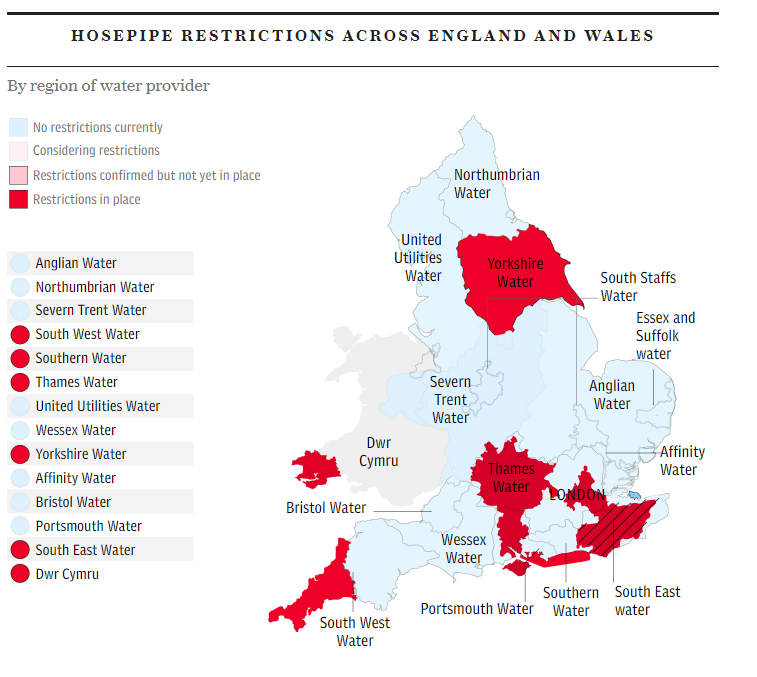
For my own part I remain unconvinced that governments will be proactive with regards to these challenges, and instead I expect them to be reactive to a fault with only the richest nations able to potentially solve more than one problem at a time. But short-sighted self interest is not unique to kleptocratic dictatorships. In the United Kingdom, which came under numerous “hosepipe bans” in the summer, selling off reservoirs for new developments while not investing in any new significant water infrastructure for 30 years goes hand in hand with climate change impact. Countries across Europe, Asia and North America have been robbing Peter to pay Paul, and now the bill is coming due.

Winter is coming, and before us lies the potential for further difficult months. Heatwaves have raised food prices and taxed electrical grids. Winter promises to see further pain as energy needs traditionally met by Russian oil will now need alternatives. Coal, a major contributor to the climate crisis, is the current favourite choice both across the developing world, but now also in wealthier western countries facing the pinch of oil and natural gas shortages. The demand is so great that coal use is expected to be at an all time high in 2022. In Germany people are buying electric heaters, but being so inefficient they actually use more electricity and will likely increase energy prices further for Europe’s most beleaguered industrial powerhouse.

Headlines in 2022 have been dominated by central banks raising interest rates to combat inflation. The risk of this strategy is a recession, potentially globally, but the cost of failure is an inflationary environment where food, energy, utilities, and consumer goods become more expensive. And yet that is exactly what has happened; over confidence, short sightedness and a fundamental misunderstanding of resilience planning has made us all “richer” in the short term, but promises to make us pay more in the long term. Heatwaves are baking in our inflation.

Walker Wealth Management is a trade name of Aligned Capital Partners Inc. (ACPI)* – ACPI is regulated by the Investment Industry Regulatory Organization of Canada (www.iiroc.ca) and a Member of the Canadian Investor Protection Fund (www.cipf.ca). Adrian Walker is registered to advise in securities and mutual funds to clients residing in British Columbia and Ontario.

This publication is for informational purposes only and shall not be construed to constitute any form of investment advice. The views expressed are those of the author and may not necessarily be those of ACPI. Opinions expressed are as of the date of this publication and are subject to change without notice and information has been compiled from sources believed to be reliable. This publication has been prepared for general circulation and without regard to the individual financial circumstances and objectives of persons who receive it. You should not act or rely on the information without seeking the advice of the appropriate professional.

Investment products are provided by ACPI and include, but are not limited to, mutual funds, stocks, and bonds. Non-securities related business includes, without limitation, fee-based financial planning services; estate and tax planning; tax return preparation services; advising in or selling any type of insurance product; any type of mortgage service. Accordingly, ACPI is not providing and does not supervise any of the above noted activities and you should not rely on ACPI for any review of any non-securities services provided by Adrian Walker.

Any investment products and services referred to herein are only available to investors in certain jurisdictions where they may be legally offered and to certain investors who are qualified according to the laws of the applicable jurisdiction. The information contained does not constitute an offer or solicitation to buy or sell any product or service.


[1] You may never have heard of the wet bulb temperature before, but it will be something we all come to know. The temperature is determined by having two thermometers side by side, one covered with a “sock” soaking in water. As air moves over the wet bulb of the second thermometer, moisture will evaporate and lower the temperature, giving you a different reading from the unadulterated thermometer. The first tells you the outside air temperature. The second tells you how much cooler you can be if water is evaporating off you. If in a heat wave the WBT reaches or exceeds 35C, the human body can not survive for an extended period outdoors.

The Unravelling

In his book Fooled by Randomness, Nassim Taleb says of hindsight bias “A mistake is not something to be determined after the fact, but in the light of the information until that point.”  With this guidance we can forgive some of the covid precautions and restrictions governments imposed on populations in 2020, a period of great uncertainty. 

But in mid-2022 assessing the course of action by governments and central banks as they attempt to tackle a number of non-pandemic related crises (as well as still managing a pandemic that is increasingly endemic) I think its fair to say that mistakes are being made. From political unrest, to cost of living nightmares and finally inflation dangers, the path being plotted for us should be inviting closer scrutiny by citizens before we find ourselves with ever worsening problems. 

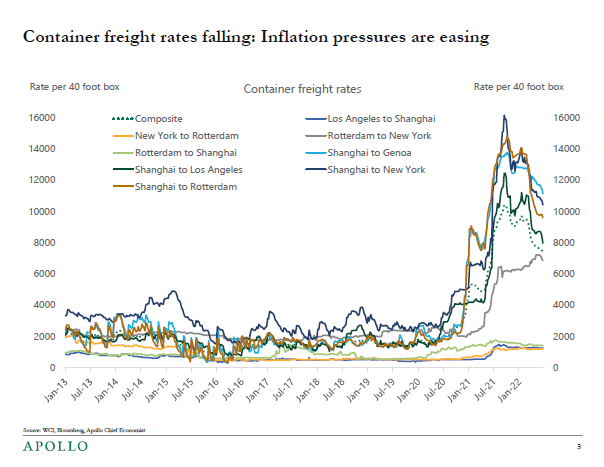
Let’s start with the twin risks of inflation and interest rates. Inflation is high, higher than its been in decades, and central banks the world over are attempting to stamp this out with aggressive rate hiking. It is easy to point to Turkey, a country whose inflation rate is 70%, and see that their recent cutting of interest rates is a mistake in the face of such crippling inflation. But what are we to make of North American efforts to slow inflation, even at the risk of a recession? Inflation for much of the West has been tied to economic stimulus (in the form of government action through the pandemic), supply chain disruptions and low oil and gas inventories. The economy is running “hot”, with lots of businesses struggling to find employees. But inflation, measured as the CPI is a rear-view mirror way of understanding the economy, also known as a lagging indicator. But here is one that is not. The price of container freight rates, which have fallen substantially from the 2021 highs.

We can count other numbers here too. The stock market, which is having a bad year, has fallen close to pre-pandemic highs. A $10,000 investment in the TSX Composite Index would have a return of 6.1% over the past 28 months, or an annualized rate of 2.6%. In February of this year that annualized rate was 8.85%, a 70% decline in returns. The numbers are worse for US markets. While US markets have performed better through the pandemic, the decline in the S&P500 is roughly 75% from its pandemic high in annualized returns (these numbers were calculated at the end of June, offering a recent low point in performance).

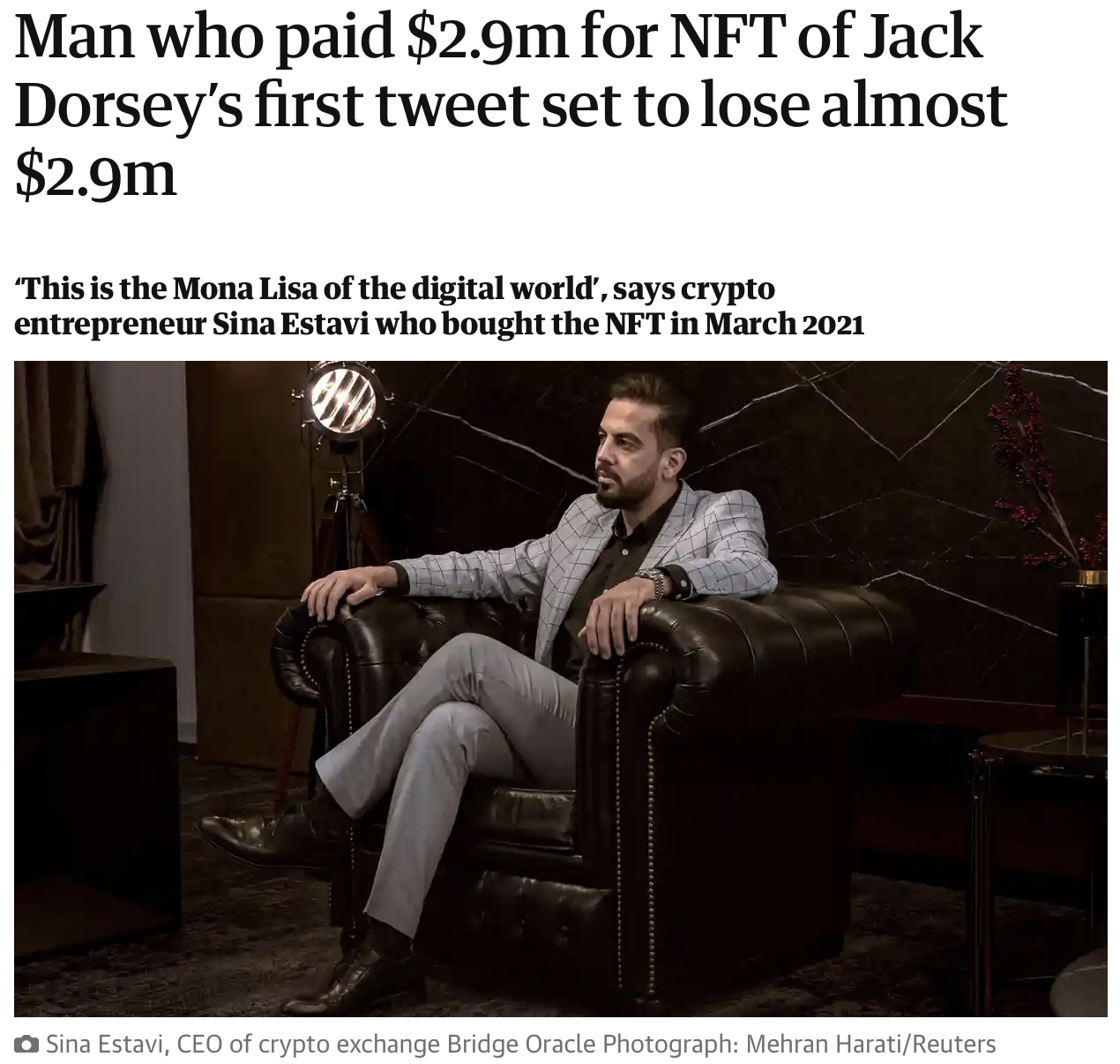
For many who felt that the stock market was too difficult to navigate but the crypto market offered just the right mix of “can’t fail” and “new thing”, 2022 has wiped out $2 trillion (yes, with a “T”) of value. 

In fact speculative bubbles are themselves inflationary and their elimination will also help reduce inflation. Writes Charles Mackay in his famous book Extraordinary Popular Delusions and the Madness of Crowds (1841) on the Mississippi Bubble in France, “[John] Law was now at the zenith of his prosperity, and the people were rapidly approaching the zenith of their infatuation. The highest and lowest classes were alike filled with a vision of boundless wealth…

It was remarkable at this time, that Paris had never before been so full of objects of elegance and luxury. Statues, pictures, and tapestries were imported in great quantities from foreign countries, and found a ready market. All those pretty trifles in the way of furniture and ornament which the French excel in manufacturing were no longer the exclusive play-things of the aristocracy, but were to be found in abundance in the houses of traders and the middle classes in general.

Evidence today indicates that supply chains are beginning to correct, an important component of taming inflation, while trillions of dollars have been wiped out of a speculative bubble. Even oil, which seems to be facing structural issues that would normally be inflationary has had a significant retreat, along with other commodities like copper, lumber and wheat. Some of these declines may only be temporary as markets react to recession threats, but these declines do not happen in a vacuum. They are disinflationary and should be treated as such.  

But central banks seem ready to trigger a recession in the name of defeating the beast of inflation even as it seems to be bleeding out on the ground. In June the Federal Reserve raised its benchmark interest rate by 0.75%, and the current view is that the Bank of Canada is likely to do the same in July. All this is sparking deep recession fears that seem to be driving markets lower. 

In the background remain genuine issues that seem to be addressed at best haphazardly. Inflation is a real issue making food prices go up, but its been crushing people in housing for years. Even as interest rise and house prices moderate lower, average rents in the GTA were up 18% over the last year. The Canadian government’s response to the mounting costs of living has been to propose a one time payment of $500 to low income renters. That is just a little more than the average increase in rent over the previous 12 months. 

In the face of such mounting housing pressure the city of Toronto has done the following things:

  1. Ban the feeding of birds.
  2. Consider the leashing of cats.
  3. Raised development fees 49%

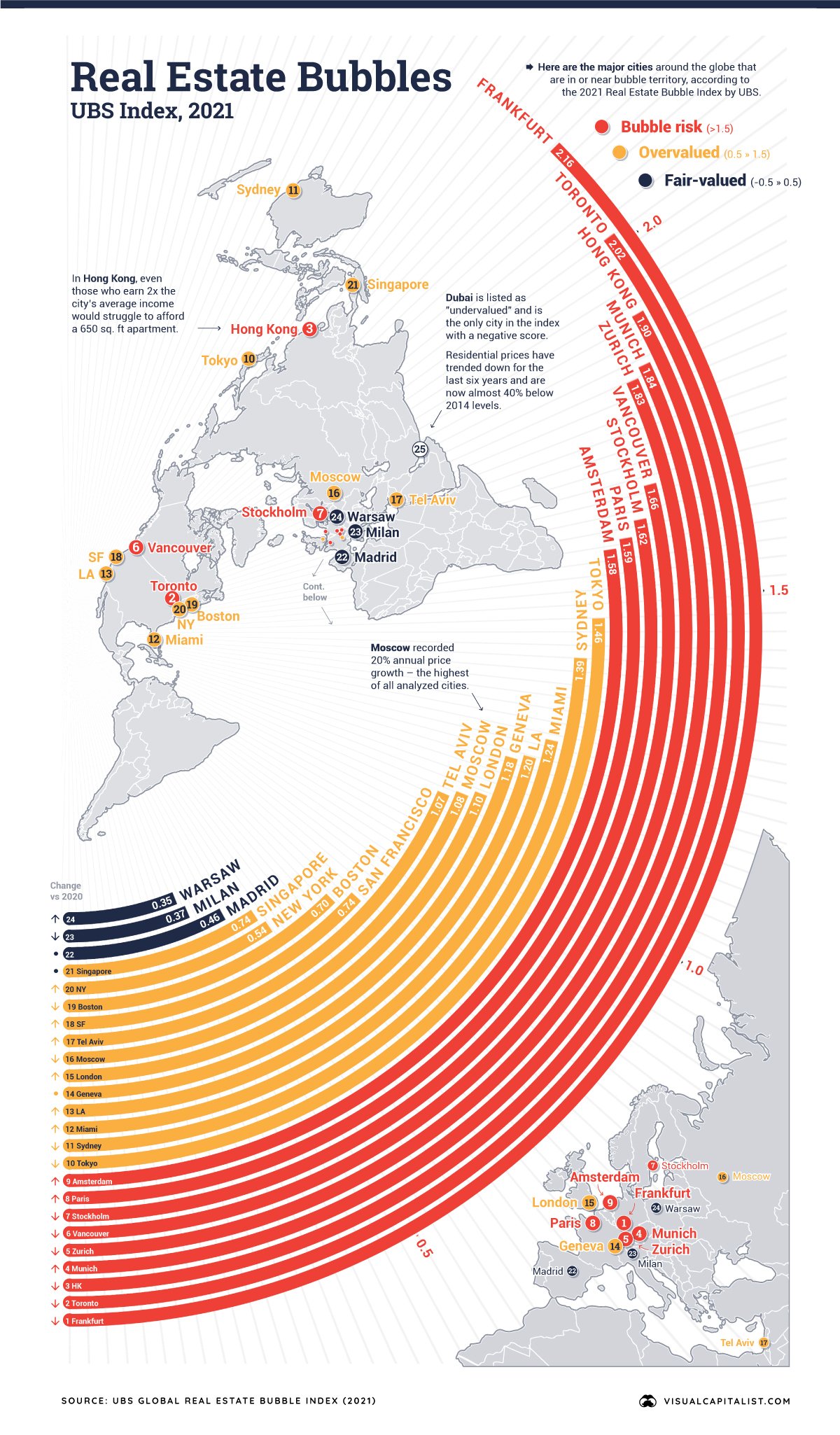
For the record, Toronto is believed to have the second biggest property bubble globally. 

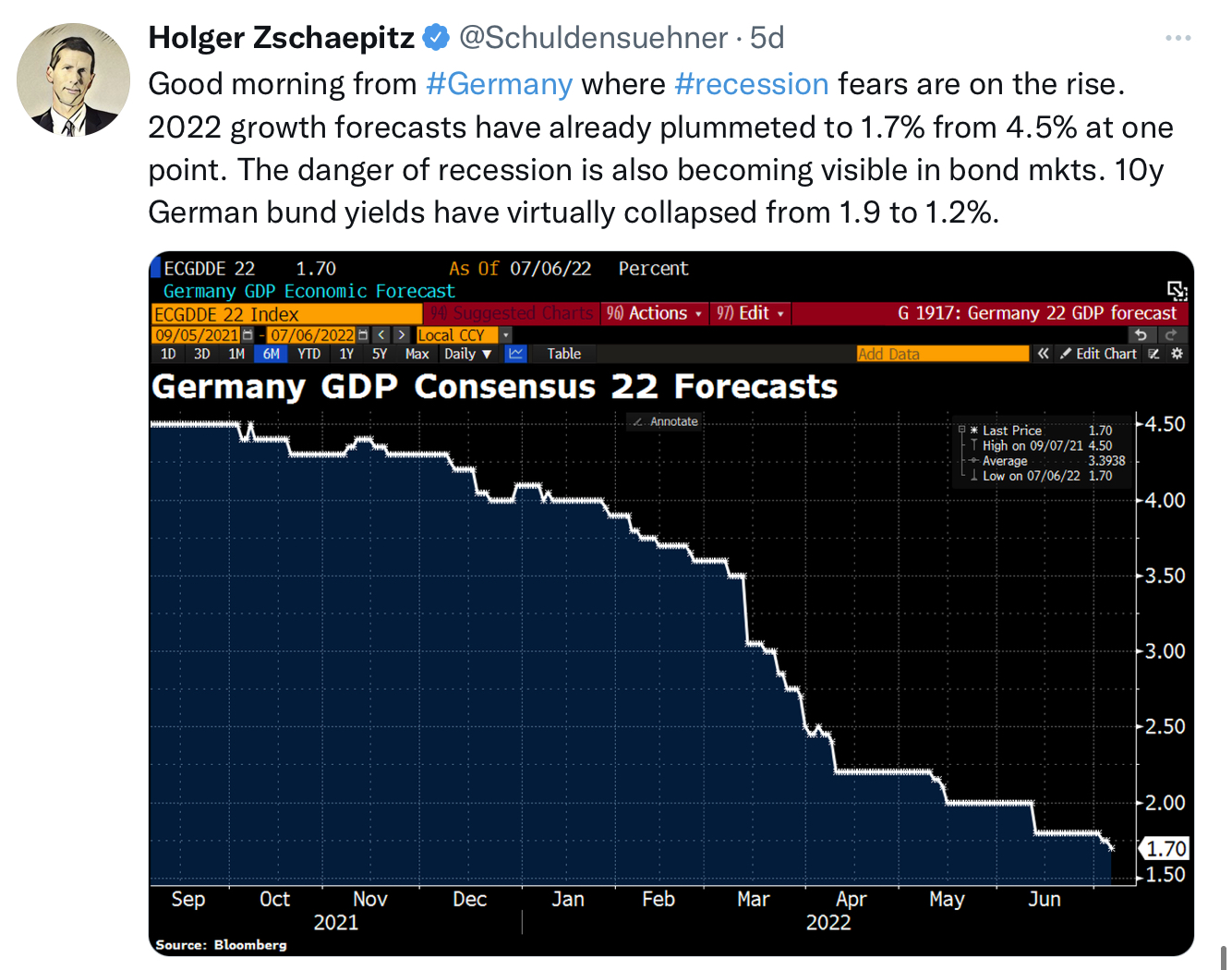
Globally Europe looks to be on the cusp of a serious recession. If North American central banks are looking too aggressive, Europe is struggling to chart a path for its shared currency. Rates have been at record lows but recently the ECB has said it will begin raising rates to tackle inflation. Across the continent the rate of inflation is over 8.1%, but it varies widely country to country, with Germany closer to the average, while Lithuania is at 22%. In the face of mounting inflation the ECB hasn’t raised rates once yet this year, though its expected to this month, even has the European economy and stock markets have been doing worse and worse. 

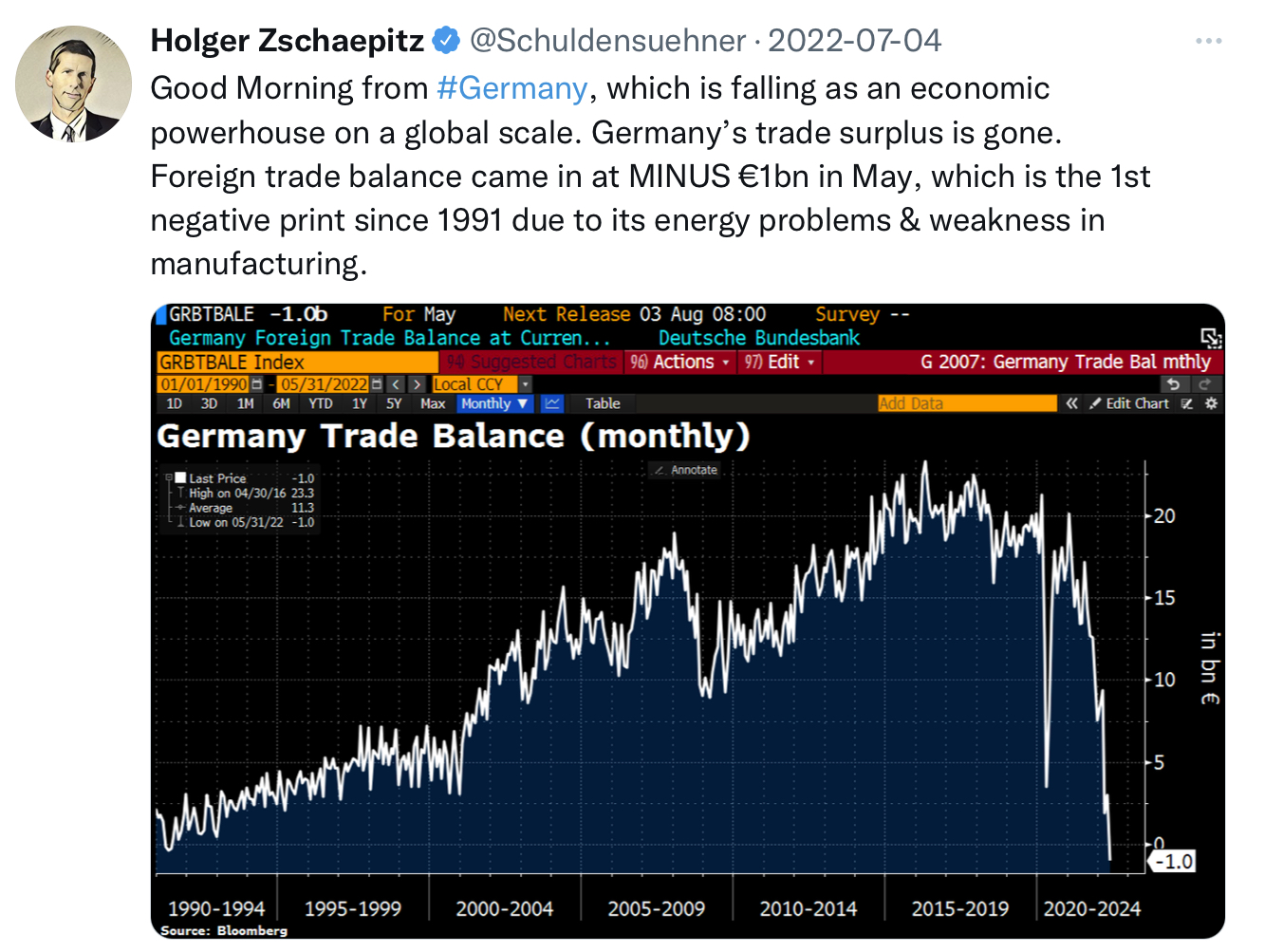
Coincidentally, Germany, who is now both the linchpin in NATO support for Ukraine while simultaneously its weakest link, has seen its economic health crumble due to decisions made years ago to pin Germany’s energy needs to Russian energy supplies. Will Germany today be able to make political decisions that support NATO and the EU even if it means further economic pain for a country that has grown accustomed to being the beneficiary of these arrangements?

It is not just Western or developed nations that are struggling. China is in the middle of some kind of debt bubble in its real estate market, whose impact is harder to know, but will likely be long lasting given its size. Numerous developing nations are on the cusp of debt defaults, the tip of the iceberg being Sri Lanka.

A small island nation off the southern tip of India, Sri Lanka has been reasonably prosperous over the past few decades with an improving standard of living. Yet government mismanagement, graft and a haphazard experiment in organic farming have left the country destitute. Literally destitute. Out of money, gas and food. In the past few days protests have moved beyond general unrest into a full blown revolution, with the Sri Lankan people storming the government and the political leaders fleeing for their lives.

Behind them is El Salvador which has decided to embark on an experiment in making Bitcoin an official currency, a move designed to liberate the country from the tyranny of the World Bank and the US Government. It has instead likely led to a default, financial instability, and a more regressive and authoritarian government
This year stands out for the complex problems that have grown out of the pandemic, but if we’re serious about the kinds of big problems politicians regularly say that must be tackled, then it raises a question as to whether we are handling them properly, or whether we are making mistakes given what we know right now.

For the last few years I have written or touched on many of these topics; on housing, inflation, crypto currencies and the fragile nature of many of our institutions. And while I am cautious about making grand predictions, it remains worth asking whether we are making smart choices given what we know, and if we are not we should be making greater demands of our elected leaders. And if our elected officials continue to make poor decisions, we as investors should plan accordingly.

Walker Wealth Management is a trade name of Aligned Capital Partners Inc. (ACPI)*

ACPI is regulated by the Investment Industry Regulatory Organization of Canada (www.iiroc.ca) and a Member of the Canadian Investor Protection Fund (www.cipf.ca). (Advisor Name) is registered to advise in (securities and/or mutual funds) to clients residing in (List Provinces).

This publication is for informational purposes only and shall not be construed to constitute any form of investment advice. The views expressed are those of the author and may not necessarily be those of ACPI. Opinions expressed are as of the date of this publication and are subject to change without notice and information has been compiled from sources believed to be reliable. This publication has been prepared for general circulation and without regard to the individual financial circumstances and objectives of persons who receive it. You should not act or rely on the information without seeking the advice of the appropriate professional.

Investment products are provided by ACPI and include, but are not limited to, mutual funds, stocks, and bonds. Non-securities related business includes, without limitation, fee-based financial planning services; estate and tax planning; tax return preparation services; advising in or selling any type of insurance product; any type of mortgage service. Accordingly, ACPI is not providing and does not supervise any of the above noted activities and you should not rely on ACPI for any review of any non-securities services provided by Adrian Walker.

Any investment products and services referred to herein are only available to investors in certain jurisdictions where they may be legally offered and to certain investors who are qualified according to the laws of the applicable jurisdiction. The information contained does not constitute an offer or solicitation to buy or sell any product or service. 16 Past performance is not indicative of future performance, future returns are not guaranteed, and a loss of principal may occur. Content may not be reproduced or copied by any means without the prior consent of the author and ACPI.

Control Your Soul’s Thirst for Freedom

Since late February the bulk of global attention has been focused on the Russian invasion of Ukraine. The invasion remains ongoing, and will likely last for months, potentially even years, and represents the most dangerous geopolitical situation we are likely to face until China tries to enforce control over the South China Seas or invades Taiwan.

But while our attention has been narrowly focused, interest is growing about how the world’s second largest economy is choosing to mange the late stages of the pandemic, a series of choices that have ramifications for much of the world.

China has had mixed luck with Covid. By the end of 2020 it looked as though China might be the only winner economically from the pandemic, but 2021 turned out to be a year for the West. First, Western vaccines, particularly the mRNA vaccines were highly effective, while the Chinese vaccine produced domestically had only a 50% success rate. The Chinese government also was hyper critical of the more effective Moderna and Pfizer vaccines, essentially precluding them from Chinese use. This has left the country in a difficult spot. Chinese mandated lockdowns have been brutal but effective, leading to uneven vaccine use. The low infection rates that the “Covid Zero” policy has delivered has also robbed the country of natural immunity. Today China, already struggling economically, is still locking down whole cities in the hopes of containing outbreaks.

Shanghai is the current major city to be shut down, but the lockdowns are spreading. Complaints about food shortages and people trapped in apartment buildings, offices, and closed off from their places of work have led to some fairly strange places, including protests and at least once the use of “speaking drones” urging citizens to comply with rules and reprimanding the citizens singing in protest one night to “Control your soul’s thirst for freedom. Do not open your windows and sing.”

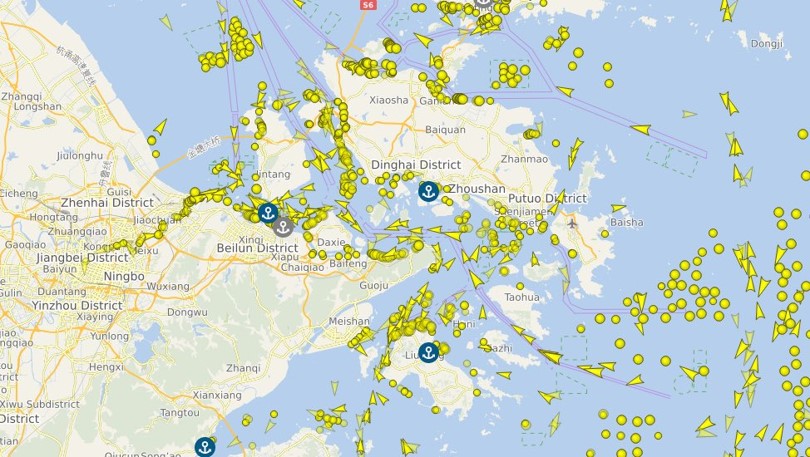
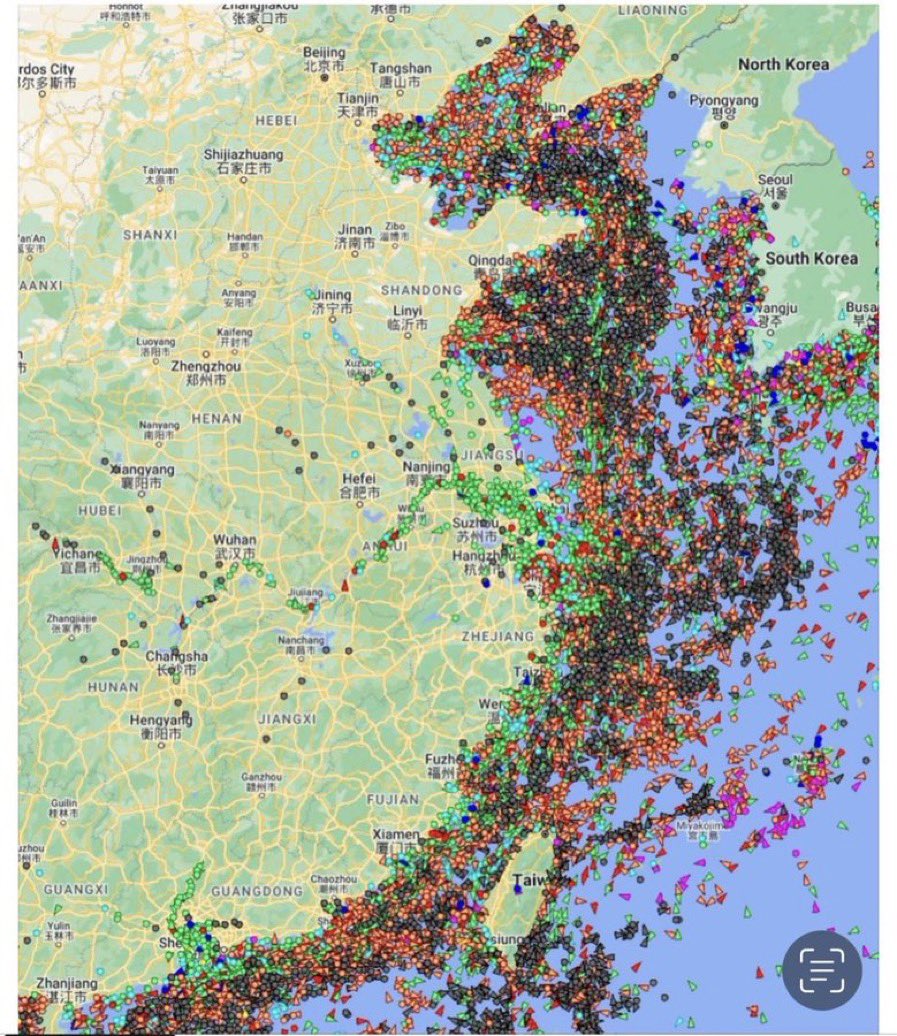
This image came from early April

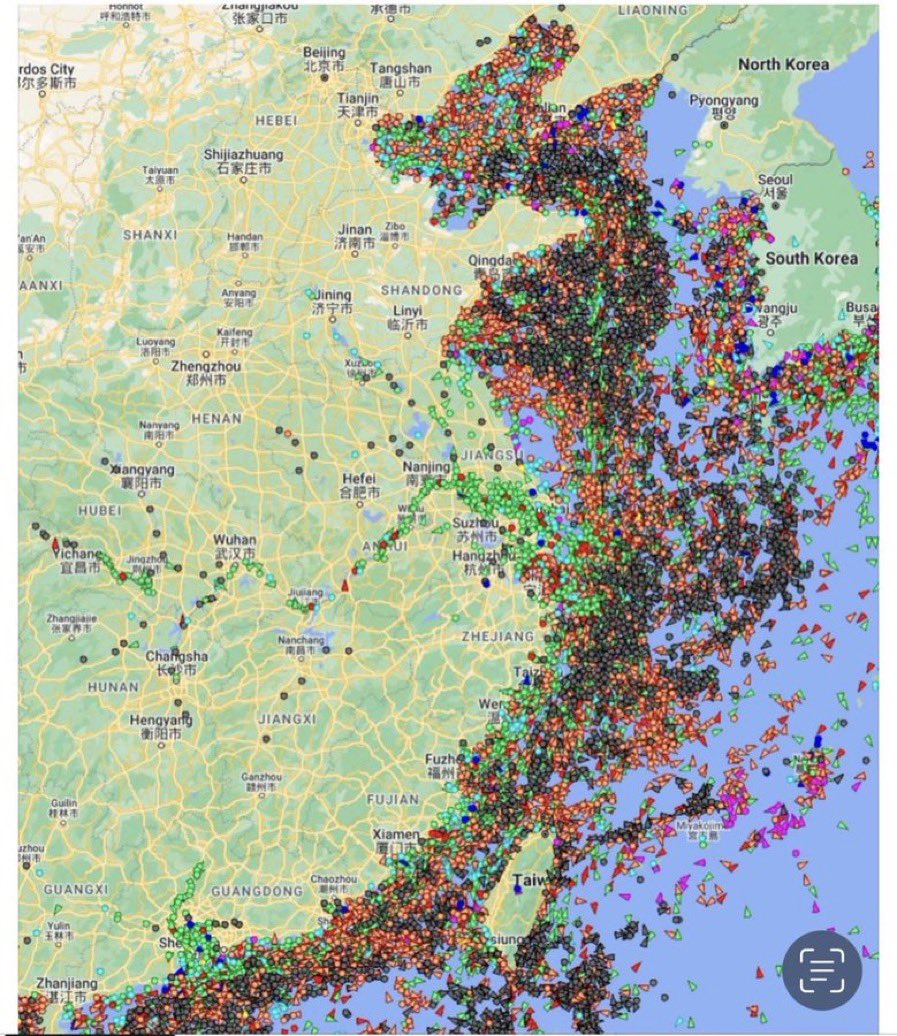
Chinese lockdowns are also worsening global inflation. The supply chain disruptions caused by the most recent lockdowns in Shanghai are dramatic to say the least. In the above picture each yellow dot represents one cargo ship waiting to be docked and unloaded. Supply chains were already deeply stressed when Shanghai went into lockdown last month, and the global impact of further supply disruptions is something we’re very likely to notice.

This image came from early May

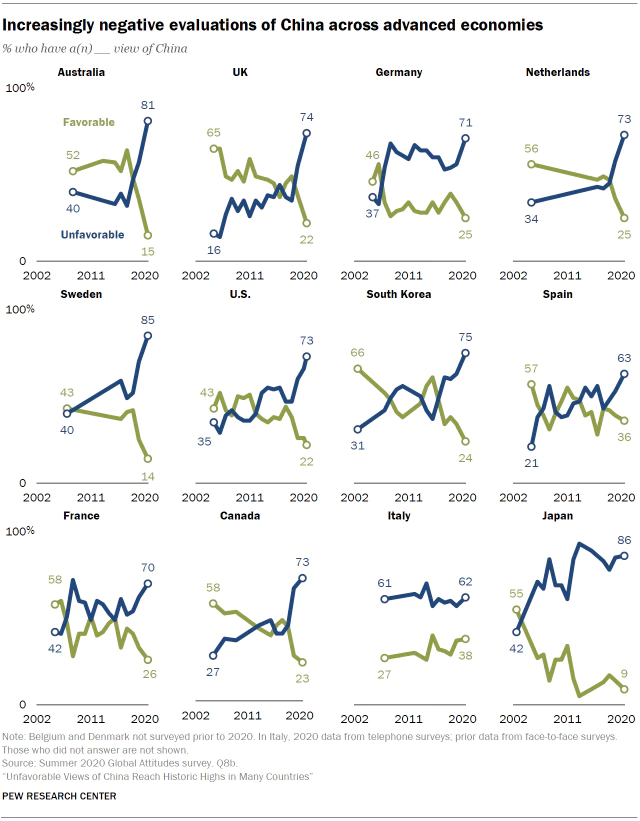
Lastly, some months ago (October 2020) I had detailed how China’s foreign policy, which was heavy handed and often petulant, was angering nations all across the globe. China may not view the world the way its geopolitical rivals do, but its inability to grasp at least what might be considered fair or just by other nations is damaging its own ability to wield soft power, an essential part of being a global hegemon. China’s decision to back Russia in its invasion of Ukraine likely reflected China’s near-term goals of retaking Taiwan and its general contempt for the current world order. However, the global resistance to the Russian invasion, the support shown Ukraine and the barrage of negative publicity (as well as realizing that an untested military in countries with lots of corruption may not be able to score quick military victories) must serve as a wake-up call to China’s ruling class. As of 2022 China seems to have squandered much of its international good will and is unlikely to find many willing allies for its global ambitions.

China seems to be suffering on all fronts. 2021 was a bad year for China’s economy, cumulating in the public meltdown of one of its biggest developers in November. But everything, from its politics to its public health policies are working against it. The world’s second largest economy, one that is the largest trading partner to 130 countries, can’t seem get out of its own way, and as it falters it can’t help but impact us.

Walker Wealth Management is a trade name of Aligned Capital Partners Inc. (ACPI)*

ACPI is regulated by the Investment Industry Regulatory Organization of Canada (www.iiroc.ca) and a Member of the Canadian Investor Protection Fund (www.cipf.ca). (Advisor Name) is registered to advise in (securities and/or mutual funds) to clients residing in (List Provinces).

This publication is for informational purposes only and shall not be construed to constitute any form of investment advice. The views expressed are those of the author and may not necessarily be those of ACPI. Opinions expressed are as of the date of this publication and are subject to change without notice and information has been compiled from sources believed to be reliable. This publication has been prepared for general circulation and without regard to the individual financial circumstances and objectives of persons who receive it. You should not act or rely on the information without seeking the advice of the appropriate professional.

Investment products are provided by ACPI and include, but are not limited to, mutual funds, stocks, and bonds. Non-securities related business includes, without limitation, fee-based financial planning services; estate and tax planning; tax return preparation services; advising in or selling any type of insurance product; any type of mortgage service. Accordingly, ACPI is not providing and does not supervise any of the above noted activities and you should not rely on ACPI for any review of any non-securities services provided by Adrian Walker.

Any investment products and services referred to herein are only available to investors in certain jurisdictions where they may be legally offered and to certain investors who are qualified according to the laws of the applicable jurisdiction. The information contained does not constitute an offer or solicitation to buy or sell any product or service. 16 Past performance is not indicative of future performance, future returns are not guaranteed, and a loss of principal may occur. Content may not be reproduced or copied by any means without the prior consent of the author and ACPI.

What’s Happening With Markets?

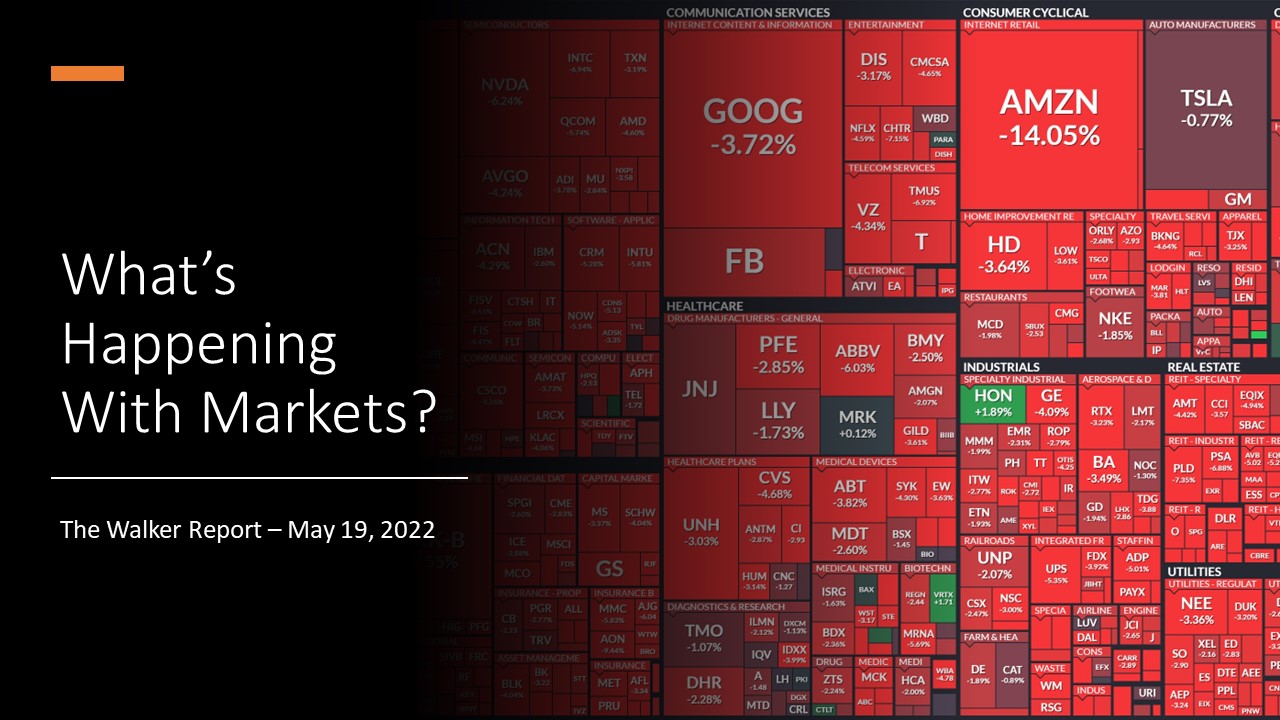
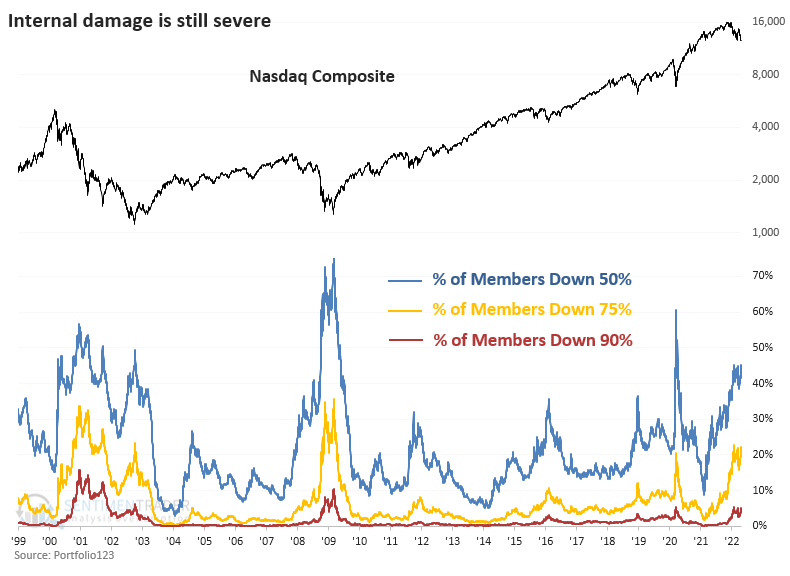
Markets have been falling through the year, and despite some encouraging rallies the trend so far has been decidedly negative. The NASDAQ Composite, one of the three big indexes heavily tilted towards technology companies had a -23.86% YTD return as of Monday, May 16th, a minor recovery after it had reached a low of -27% on Thursday of the previous week. The Dow Jones and the S&P 500 have YTD returns of -10.31% and -14.82% respectively. The question for investors is “what to do?” in such markets, especially after some of the best years despite the pandemic.

A closer inspection of the markets however shows that while there have been some steep sell offs reflected in the broad market, the real market declines have been far more concentrated. And while there are many different market headwinds to choose from when it comes to reasons for the recent selling action; inflation, interest rates, geopolitical strife, COVID-19, maybe even Elon Musk, the sector that has been sending markets lower has been the tech sector.

Over the past couple of years the companies posting the biggest gains in the markets have been tech companies. Apple stock (AAPL) was up 88.97% in 2019, 82.31% in 2020, 34.65% in 2021, and is down -11.6% so far in 2022. Amazon (AMZN) was up 76.26% in 2020, and has fallen -30.18% this year. Facebook, now META Platforms (FB) gained 56.57% in 2019, 33.09% in 2020, 23.13% in 2021 and has lost -38.08% in 2022. Netflix was up 67.11% in 2020, and a further 11.41% in 2021 but is down -68.74% this year. Tesla, which had an astounding 743.4% gain in 2020 and another 49.76% return in 2021 is so far down -17.36% in 2022, how long can it resist gravity? (All prices and YTD performance were collected from ycharts.com on May 6th, 2022).

I predict that we may never fully understand how the pandemic changed thinking and why stock prices climbed so much, but the reality was that many tech companies benefited from people staying home, going online and the changing priorities that coincided with not having to be in offices and commuting. Tech companies that became huge like Shopify (SHOP), which allowed traditional retailers to become online retailers, benefitted immeasurably from the lockdowns. But it too has seen its stock decline this year by -69.59%, pushing the price back to where it was in December 2019.  

Because the tech sector has become so large, particularly in the NASDAQ, the retreat of these companies carries big implications for indexes and by extension the wider market as well. As markets fall, it encourages investors to panic sell, aided and abetted by the army of computers that help multiply the effects of momentum selling. This is especially true as investors have migrated to low-cost passive index ETFs, a trend so noticeable that experts worry it might be warping the market as investors worry less about the value of individual companies and instead pile money into broad indexes with no quality filters.

Markets are facing other risks too. Inflation, which seems to be running at about 8%, can threaten economies as people buy fewer items due to cost increases. Interest rate hikes, which are meant to ultimately curb inflation by restricting monetary supply and reduce lending/economic activity have hit bond markets particularly hard. Higher interest rates mean higher borrowing costs, and its here we might hypothesize about some of the unintended consequences of the incredibly accommodative monetary policy that the pandemic introduced. That might be that investors were able to borrow to invest, and the threat of both rising interest rates and stumbling returns will only hasten the exit of money from the market by some investors. Higher borrowing costs will also have another impact on markets, as a sizeable amount of stock market returns over the past decade have come from share buy backs, funded in part by low-cost borrowing.

Having said all that, economies are still looking very strong in the present. Earnings have remained high, jobless claims continue to fall, and while we’ve seen a spike in costs the ability to address those inflationary pressures may not be something that can be easily done through monetary restricting.
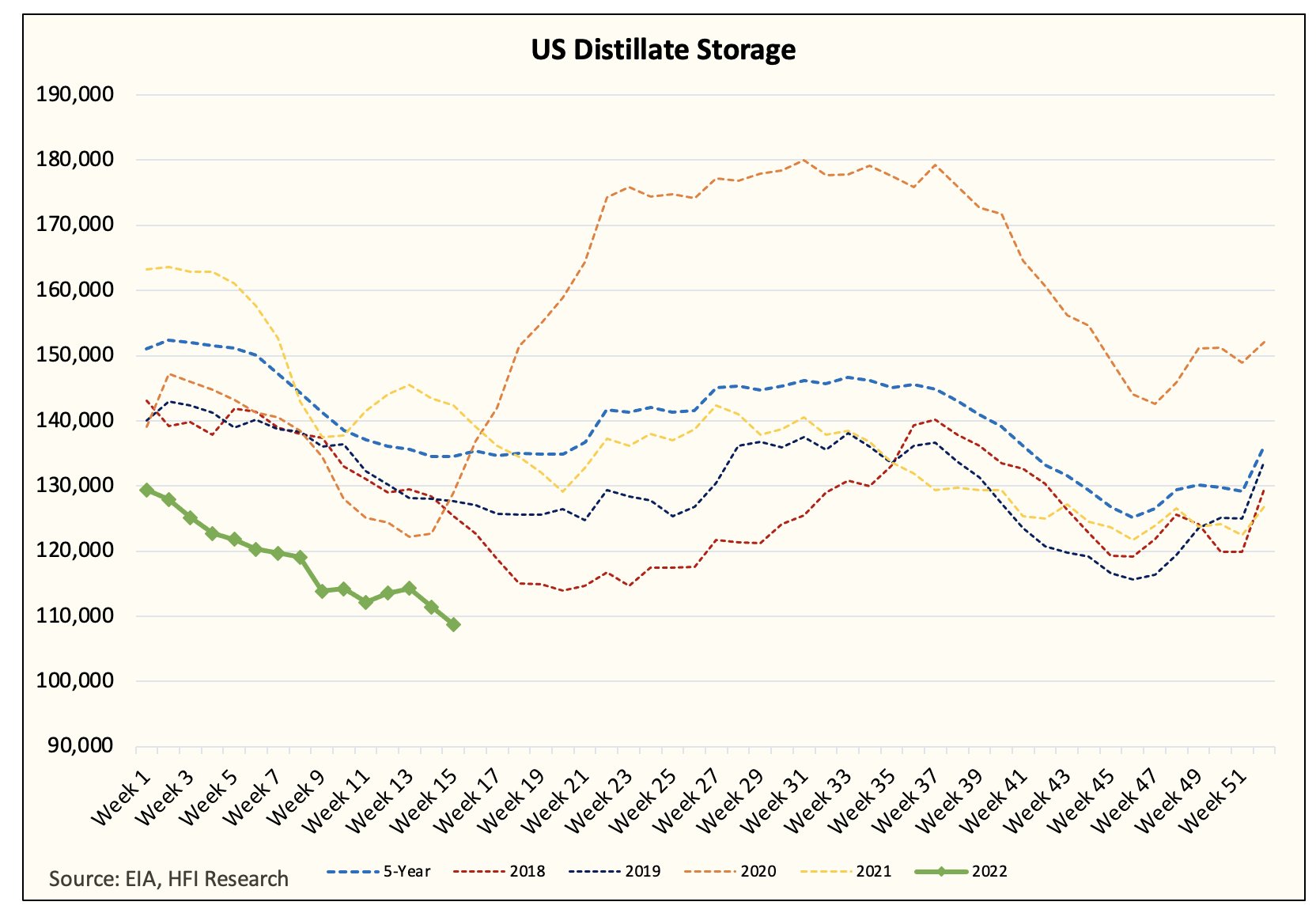
There are many different sources of inflation, but two significant issues are not connected to “cheap money”. Instead we have issues that are primarily structural and represent the failure of political foresight. The first among these has to do with oil. Since the price of oil fell in 2014, infrastructure development has stalled, heavily indebted producers have retreated, and now Russia has been closed off from much of the global market. This confluence of events has unfortunately arrived as economies are reopening, global use nears pre-pandemic levels, and global refined supply is at historic lows. There is no simple solution for this, as the only remedy is time (and development). In theory, Canadian and US oil could make up much of the global need, but for a multitude of reasons neither country is in a position to rapidly increase production.

Similarly, supply chain disruption and the heavy reliance on offshore manufacturing have meant that there is no simple solution to production problems occurring in other nations. China is the key issue here, with an enormous grip on much of global supply on many items and their current insistence on a “Covid Zero Policy” China is effectively shut to global business. This means ships can’t get into port, and with-it products cannot make it to market.

Higher borrowing costs seem unlikely to handle this problem. High gas prices and lack of supply may be inflationary, but high borrowing costs can’t target those issues. Instead, higher interest rates and the threat of more in the future are hitting the parts of the market that have been pushed higher by cheap credit. The stock market and the housing market.

If markets seem to be moving independently of economies, its possible that won’t stay that way for long. As previously mentioned, higher energy prices are not controllable by higher lending rates. But higher energy prices can introduce demand destruction, a fancy way of saying that economies shrink because prices get out of control. Oil is still in high use and its needs go far beyond powering cars. In fact internal combustion engines only account for 26% of global oil need, meaning those higher prices for crude, if they get too high, can have wide inflationary impacts to the entire economy.

Higher lending rates may also lead to a substantial economic reset, especially for Canadians who have much of their net worth tied up in their homes. With almost 50% of new mortgages in Canada variable rate mortgages, home prices having skyrocketed in the past few years and with most Canadian debt connected to homes, the risk to home owners is very real. Can the Bank of Canada tame inflation, orchestrate a soft landing for the housing market and keep the economy chugging along? Such a question invites highwire act comparisons.

So what’s happening with markets? Perhaps we are simply correcting a narrow subset of the market that got too hot through 2020-2021. Perhaps we are seeing the dangers of printing too much money. Perhaps we are seeing the realities of people buying too many index ETFs. Perhaps we are witnessing people being too fearful about the future. Perhaps we are too fearful of inflation or interest rates. Perhaps we are on the brink of a recession.

Perhaps, perhaps, perhaps.

But let me offer a slightly different take. Investing is frequently about connecting your needs as an investor with the realities of the world. As Warren Buffet famously said, in the short term the stock market is a voting machine, in the long term a weighing machine. If you can afford risk, you can be risky, and with that comes the potential for significant market swings. If you can not afford risk, then your portfolio should reflect that need. If you cannot stomach bad days, potentially weeks or even months of bad news, then you need to find a way to keep your investment goals aligned with your risk tolerance.

When I started this essay we had just completed one of the worst weeks of the year, which bled into the second week of May. As I finish this piece markets are in the process of rallying for a third day, posting modest gains against the backdrop of significant losses. It would be nice if I could end this with some confidence that we’ve turned a corner, that markets had bottomed and that the pessimism that has led to so much selling is evaporating as people come to recognize that stocks have been oversold. Yet such prognosticating is the exact wrong tack to take in these markets. Instead, this is a good time to review portfolios, ensuring that you are comfortable with your risk, that your financial goals remain in sight and that the portfolio remains positioned both for bad markets, and for good ones too.

If you have any concerns about how your portfolio is positioned and need to review, please don’t hesitate to contact us today.

Walker Wealth Management is a trade name of Aligned Capital Partners Inc. (ACPI)*

ACPI is regulated by the Investment Industry Regulatory Organization of Canada (www.iiroc.ca) and a Member of the Canadian Investor Protection Fund (www.cipf.ca). (Advisor Name) is registered to advise in (securities and/or mutual funds) to clients residing in (List Provinces).

This publication is for informational purposes only and shall not be construed to constitute any form of investment advice. The views expressed are those of the author and may not necessarily be those of ACPI. Opinions expressed are as of the date of this publication and are subject to change without notice and information has been compiled from sources believed to be reliable. This publication has been prepared for general circulation and without regard to the individual financial circumstances and objectives of persons who receive it. You should not act or rely on the information without seeking the advice of the appropriate professional.

Investment products are provided by ACPI and include, but are not limited to, mutual funds, stocks, and bonds. Non-securities related business includes, without limitation, fee-based financial planning services; estate and tax planning; tax return preparation services; advising in or selling any type of insurance product; any type of mortgage service. Accordingly, ACPI is not providing and does not supervise any of the above noted activities and you should not rely on ACPI for any review of any non-securities services provided by Adrian Walker.

Any investment products and services referred to herein are only available to investors in certain jurisdictions where they may be legally offered and to certain investors who are qualified according to the laws of the applicable jurisdiction. The information contained does not constitute an offer or solicitation to buy or sell any product or service. 16 Past performance is not indicative of future performance, future returns are not guaranteed, and a loss of principal may occur. Content may not be reproduced or copied by any means without the prior consent of the author and ACPI.

Chaos Unleashed

Two weeks ago Russia began its invasion of the Ukraine in earnest. What had begun in 2014 following the ouster of a corrupt pro-Russian government was followed by the annexation of the Crimea and then the fermenting of a civil war in the Donbas region of eastern Ukraine, finally cumulating in his goal of retaking the entire country and bringing it back under Russian purview, most likely in the form of a puppet government.
No one has been more successful at undoing Russian strategic goals than the Russian government. Putin had once hoped to establish a new Warsaw style pact, he hoped to undermine NATO, he’d longed to set up an Eastern European economic zone to compete with the EU. To imagine that any of these goals could today be defined as likely is to dabble in fantasy. His ultimate goal, at least defined by his own comments, was to restore Russia to its previous status as a respected superpower like it was under the Soviet Union. Today it seems as though his army, impressive and large though it is, has already met its match in conventional warfare in the early days of its Ukrainian adventure.
While the military side of his invasion doesn’t seem to be going according to plan, something that must have really taken him by surprise was the resolve he faced globally. Though NATO has said it won’t get involved, weapons are flowing into the country. Nations, like Finland and Sweden whom Russia has treated as extensions of its old empire, are making loud noises that they too would like to join NATO. Germany, long a NATO laggard has promised to increase its military spending above the target 2% of GDP for NATO members. The notoriously neutral Switzerland has said it will freeze Russian assets, and throughout the world condemnation has been swift, especially on the financial front.

In the space of a few days Russia didn’t just find itself diplomatically isolated, but financially as well. The international banking system has been effectively closed to Russia and its central bank, putting a stop on many of its rainy day funds it will need to sustain its campaign. I won’t endeavor to explain the full range of how the global bank sanctions work, as the process is complicated and other better versed people can explain it more succinctly, but the truth is that the Russian state is deeply isolated and in financial chaos.

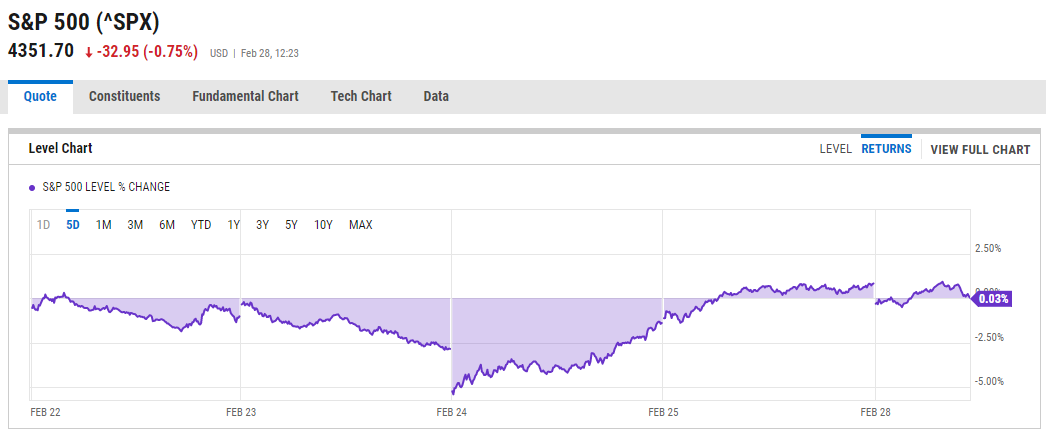
Markets have responded to this chaos with a fair amount of volatility, with some big swings both up and down since the invasion began. This is understandable, but what comes next will be more unpredictable. Russia does not have many face-saving ways to undo its situation, a fact that has not gone unnoticed by many. Stuck in heavy fighting in Ukraine, a collapsing economy, a restless population at home and a kleptocratic network of military officials and billionaire oligarchs who hide their assets in Western nations, Putin may find himself backed into a corner with few options open to him, some of which were likely previously unthinkable.

Sun Tzu, famed military strategist and author whose book sits unread on the shelves of tedious hedge fund managers.

I’m reminded of a saying from Sun Tzu, the famed military strategist of ancient China, whose book on strategy is often “required reading” for a certain type of hedge fund manager. “When you surround your enemies, leave an opening; do not push too hard on the enemies who are desperate.” Even if Putin is ultimately successful in Ukraine it’s hard to see what kind of victory can be cobbled together on the world stage. Russia will need a way out, an opportunity to exit and with walls closing in our own “Western” victory of aiming to contain Putin may create more chaos than we are expecting or can anticipate.  

I don’t want to be alarmist, but the nature of war is to be unpredictable, and cautious investors should take note that we are still in the early days of what could prove to be a long, protracted, and ultimately surprising conflict that has many unknowable outcomes, some of which may leave the world order changed, for better and worse. Putin has unleashed something, and what that is can not be fully guessed.