Will COVID-19 Make Real Estate Sick?

TSX Friday march 27

Markets have been bullish the last few days, moving off the most recent lows and easing the strain on investors who have watched their savings tumble by up to 35% since the beginning of the year. Any enthusiasm that this will be a sustained recovery should be tempered by the sheer scope of the economic disruption that we are facing, how early into the problem we currently are, or the potential for a pandemic disaster in the United States, which now has officially more cases than China ever did.
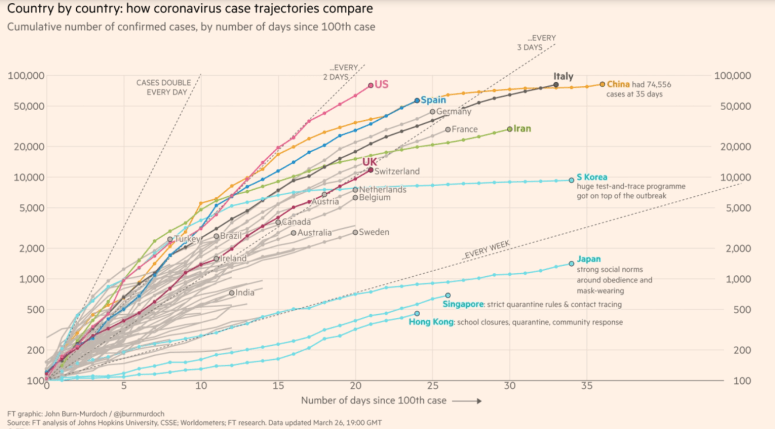
FT Capture

While I remain grateful for the respite we’ve seen, however fleeting, the problem that sticks out in my mind is that of the tangled web of Canadian debt, growing insolvencies, and hundreds of empty condos in downtown Toronto.

Problems rarely exist in isolation, and a problem’s ability to fester, grow and become malignant to the health of the wider body requires an interconnected set of resources to allow its most pernicious aspects to be deferred. In Canada the problem has been long known about, a high level of personal debt that has grown unabated since we missed the worst of 2008. What has allowed this problem to become wide ranging is a banking system more than happy to continue to finance home ownership, a real estate industry convinced that real estate can not fail, and a political class that has been prepared to look the other way on multiple issues including short term rental accommodation, in favour of rising property values to offset stagnant wages.

G&M Canada's Household Debt Burden

Recently I was at a round table event on Toronto real estate shortly after the COVID-19 situation started to gain real traction in late February. Benjamin Tal, Deputy Chief Economist for CIBC Capital Markets, described the Canadian real estate scene as “having 9 lives”, every time it seems like house prices can go no higher, something happens to prop up the market. At that moment it was the likely cut in interest rates and an easing of the stress test for mortgages which might breathe more life into the over heated housing market. But that was before international travel dropped off, before national states of emergency, before social distancing, before borders were closed, before essential services, before #lockdowns and #quarantinelife. Tal may not have been wrong conceptually, he simply hadn’t considered that the world might close for business.

Economist Cover

Canadian debt has been kept afloat because nothing could conceivably undermine it. And now, in downtown Toronto, condos sit empty. Airbnb hosts have no customers. Costs are mounting and there is no immediate end in sight to the pandemic, no end date that people can bank on. This week 3.3 million Americans filed for EI. In Canada the number was around 1 million. Even the most generous stimulus packages are unlikely to fix a debt problem as big as Canada’s.

True, there is some hope in mortgage deferrals, but scuttlebutt is that banks aren’t very liberal on this matter, telling many that they don’t qualify regardless of political pronouncements. This problem isn’t limited to Toronto. In Dublin rental accommodation jumped by 64% as COVID-19 became a crisis and people began looking for long term tenants to replace the short term ones. Short term thinking by investors, banks, and politicians has facilitated a serious economic problem. But to its enablers it seemed unlikely that there was a scenario that could conceivably expose its flaws.

It is becoming ever clearer that the focus for citizens in the 21st century should be on resilience. Expedience and an assumption that the stability of the recent past is prologue is now a dangerous and toxic combination, creating risks and magnifying bad decisions. Whether the coronavirus ushers in a fiscal reckoning for Canadians, or somehow we sidestep the worst of the crisis through quick action and nimble minds remains to be seen. But how much easier would life be for all had politicians adopted a more hostile stance to Airbnb pushing into the traditional rental markets? Had investors not eagerly dumped savings into condo developments, and had banks been more willing to question the wisdom of lending into what most acknowledged was a real estate bubble.

In December I wrote that the Canadian insolvency rate was the highest it had been in a decade. The city of Toronto recently took action to curb the growth of payday advance loan businesses, as though the problem was the businesses and not people in general need of credit to make ends meet. Whatever is coming in the wake of the COVID-19 shutdown, the issue long predates it. And if insolvencies go up and, for the first time in a long time, a portion of the Canadian real estate sector comes under real pressure there will be a lot of finger pointing at the individuals who have over extended themselves with an illiquid pool of investments. But the truth will be that this problem will have had many facilitators; enablers that were happy to ignore the problem, even help grow it, because they didn’t want to believe that things could go wrong or didn’t see it was their responsibility curb its malignancy.

Information in this commentary is for informational purposes only and not meant to be personalized investment advice. The content has been prepared by Adrian Walker from sources believed to be accurate. The opinions expressed are of the author and do not necessarily represent those of ACPI.

The Housing Bubble Jane Jacobs Built

160503_met_jane-jacobs-jpg-crop-promo-xlarge2

When Jane Jacobs died in 2006, her Annex home sold for a reported $3,000,000. A lofty sum, but a fitting metaphor for the career of a woman so central to how we’ve come to understand cities and urban growth.

Cities, almost everywhere, are under a crunch to meet the needs of growing populations and affordable housing. In Canada two cities stand out as being places to go when you are looking for work, Toronto and Vancouver, and notably they have both been beset with rapidly inflating housing prices. And while I have covered this topic many times (many, many, many times), recently various governments have seen fit to try and wrestle the housing monster to the ground before it explodes and does long term damage to the economy.

First, a BC law was passed on foreign buyers. Totalling 15%, early signs are that it has worked in Vancouver and Victoria. Sort of. In late October several news outlets published the startling result that “Home Sales Plunge 38.8%”, which is helpfully misleading. The gross number of home sales on a year over year result (that is October 2015 vs October 2016) was 61.2% of what it had been in the previous year. 3646 homes were sold in October 2015, and 2233 were sold in October 2016. A corresponding decline in price for the same two periods was non-existent. Prices were actually up year over year, by 24.8%, though the average price had dropped by 0.8% from September.

The next set of laws has come from the federal government, which is trying to improve the financial health of those seeking mortgages by setting higher thresholds for banks and CMHC insurance qualifications. More recently imposed than the BC foreign buyers tax, we’ve yet to see what kind of impact these new rules will have, but I’m willing to posit a guess.

Like the BC law, the new national rules will do more to curtail the supply of property than it will reduce price and limit demand. The reason for this is that governments are attempting to tackle the part of the housing problem they feel most comfortable in, taxing and regulation. And while we know fundamentally very little about how many foreign buyers there are and what impact they are having on the Canadian market (among other obtuse aspects of Canadian realty, you can read about these issues here.), regulation and taxation are well understood tools that most politicians feel comfortable using even when the problem may still not be well understood.

What governments are loath to do though is tackle the part of the problem they could have the greatest impact on, which is supply. Governments, municipal and provincial, have a big say in what can get built and at what speed. But cities like Toronto frequently challenge their own growth, trying to straddle the boundary between their future needs while obsessively preserving some idea of a perfect version of itself.


metro-highways
Proposed highway construction for Toronto


The efforts the city and province have made, to try and “densify” urban corridors while leaving the neighbourhoods of detached homes in between them untouched, is probably failing in some measure. First because the neighbourhoods themselves aren’t super excited about 20 story buildings going up within the line of sight of their homes. Second because many people don’t see themselves raising families in condos, leading to an abundance of 500 – 700 sq-ft spaces that only serve first time buyers, but not growing families.

The resistance that neighbourhoods put up to growth can be almost comical. From petitions to “Stop Density Creep” to city councilors objecting to condos not being “in keeping with the community” in our most urbanly dense sectors, citizens and their representatives can be almost hysterically opposed to any changes that might affect them.

tumblr_mtxtnjdxzb1s9jvclo1_1280And so we come back to Jane Jacobs. There is unlikely anyone more influential on how we think of cities than Jane Jacobs. She’s responsible for many great ideas about livable spaces, about how sidewalks and cities need people to thrive, the benefits of cities for bringing different people from different socio-economic backgrounds together and the importance of making cities for people, and not cars. When she lived in New York she fought against the likes of Robert Moses, and the push for more highways (frequently built at the expense of poorer neighbourhoods). When she brought her family to Toronto to avoid the Vietnam war (her kids were of drafting age) she moved into the Annex and fought against plans for the Spading Expressway (now Allan Rd) and campaigned so that its southern portion was never built.

But Jacob’s legacy has born some strange fruit. Though Jacob’s herself did seem to support growth of cities and solid development, the movement she helped birth and guide has become paranoid, myopic and NIMBY-istic. Here in Toronto we both benefit from her insight, and are hobbled by it as well. We have learned to love cities as places for people, but have grown suspicious of the development needed to accommodate our growth.

can-debt-service-ratio


Against those challenges, stricter regulations for new home buyers and a tax on foreigners seems to do very little to solve the one problem we do have, not enough supply. While tightening the lending restrictions is important to stemming the growing debt burden saddled on Canadians, the goal should still be to restore a healthy real estate market to our major cities, both a certain way to avert a massive housing bubble implosion and a way of making homes more affordable. That seems to be a challenge our elected officials aren’t up to yet.

Canada’s Bad Week (Or The Best Recession Ever)

boc

Perennial pessimists like myself have been waiting for something to go wrong with the Canadian economy for some time. But years have passed and the economy continues to defy logic. Despite abundant consumer debt and a housing bubble of record proportions, and an economy dependent on volatile material and natural resource markets, disaster has forever loomed but never struck. And while the TSX hasn’t always been the strongest performer, the Canadian stock market has proven to be quite resilient over the past few years.

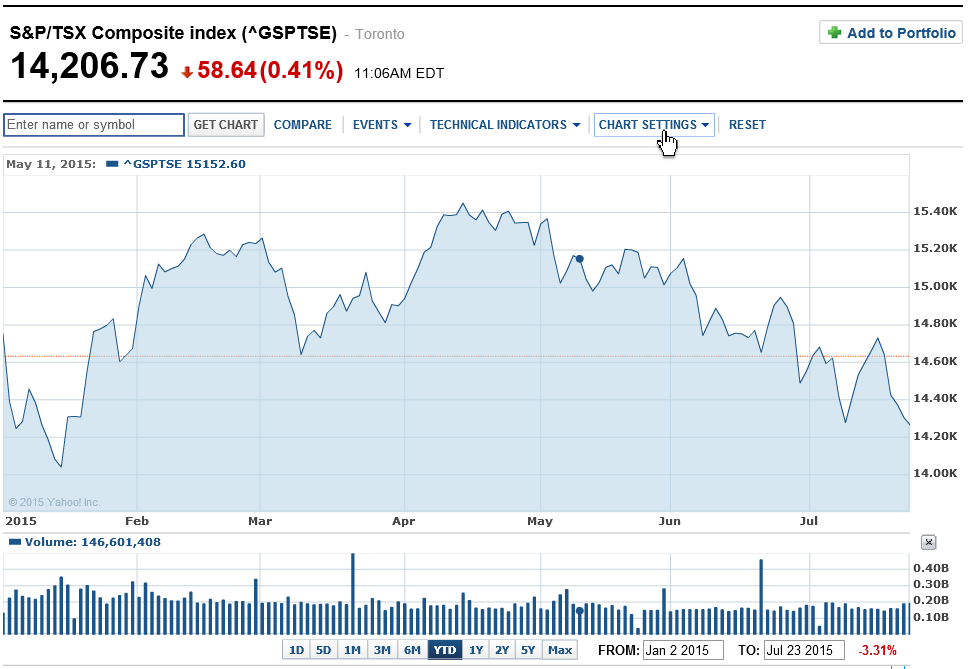
TSX performance YTD, July 24, 2015. Yahoo Finance

That may be coming to an end however. The TSX has had five negative days in a row, following a sudden cut in Canada’s key interest rate. This is the second unexpected cut this year, dropping the lending rate from 1% to 0.5%. Energy prices remain quite low, off 50% from their high last year, and severely stunting Alberta’s economic engine. The Bank of Canada (BoC) was reportedly taken by surprise by the negative GDP numbers for April, marking four consecutive months of GDP contraction and edging us closer to an “official” recession of two consecutive negative quarters. Just this week the BoC predicted a $1 Billion deficit, challenging the Federal Government’s expectation that they would have a $1.4 Billion surplus.

Joe Oliver flees reports after refusing to take questions
The price of West Texas Crude, over the past 18 months. From NASDAQ

The optimism that surrounds Canada’s economic future is an unspoken assumption that a reviving US economy floats all boats, just maybe not this time. As the United States economy continues to improve, the Federal Reserve continues to remain optimistic about raising the lending rate, a sign of burgeoning economic strength. Canada is going the other direction, and for now it seems, the two economies are diverging.

Things could still turn around; the Canadian economy has shown surprising resilience so far, and our falling dollar could very well help super charge the Ontario manufacturing engine, or the price of oil could begin a steep rise (it has in the past) and restart the Alberta economy. But the challenges faced are fairly enormous. 

But if I’m concerned about one thing, it seems to be the general Canadian obliviousness to the problems we are facing. The National Post called this the “Best Recession Ever”, because of how little has changed despite the worsening GDP. The BoC’s June Financial Service Review highlighted that the biggest threats to the Canadian market would be “some event” that would make it difficult for Canadians to service their ballooning debt, but that such an event was “very unlikely”. That was despite the collapsing oil price and the sudden need for two interest rate cuts.

 Optimism can easily become denial as “experts” twist themselves into knots attempting to explain how risks are really benefits, danger is really safety and hurricanes are only storms in teacups. And while business news thrives off of both controversy and hyperbole, there is also a vested interest in making things seem like they are under control. The news should be exciting, but never give the impression that the experts don’t know what is going on. Thus, everything is explainable and only in hindsight do we acknowledge just how out of control it seemed to be. Whether this is the case for Canada right now is hard to say. But the risks associated with Canada have been large for some time, and they have been ignored, dismissed or marginalized regularly by experts within the media. Being a smart investor means facing those risks honestly and acting accordingly.

Danger Creeps: Housing Bubbles and Crying Wolf

I can not find a better metaphor for Canada's housing market than this image from the movie UP! (Which is a film I highly recommend)
I can not find a better metaphor for Canada’s housing market than this image from the movie UP! (Which is a film I highly recommend)

If you’re looking for some good reading Google “Canadian Housing Bubble” and you could fill a library with the amount of material available. There isn’t a week that goes by without some new article somewhere screaming with alarm about Canada’s precarious and overvalued housing market. I’ve written many myself, but in conversation almost everyone admits that regardless of the danger nothing seems to abate the growth in home values.

From the Globe and Mail, published May 13, 2015
The history of the average five year mortgage in Canada going back to the mid 1960s. It’s hard to believe that Canadians once paid interest rates in excess of 20% to buy a home. Today rates are at an all time low and unlikely to rise anytime soon. From the Globe and Mail, published May 13, 2015

This defying of financial gravity gives ammunition to those that doubt there is any real risk at all. The combination of low interest rates, willing banks, rising prices and an aggressive housing market has given a veneer of stability to an otherwise risky situation. Combined with the “sky is falling” talk about the house prices and it is easy to understand why many simply accept, or outright dismiss, the growing chorus of concerns about house prices.

26621859Nissam Taleb’s book “The Black Swan” highlighted that negative Black Swan events tended to be fast, like 2008, while positive Black Swan events tended to be slow moving, like the progressive improvement in standards of living since the end of the Second World War. But it would be fair to say that creating a negative event requires a prolonged period of danger creep, a period where a known danger continues to grow but remains benign, fooling many to believe that there isn’t any real danger at all.

I would argue we are living in such a period now. The housing market is continuing to grow more precarious and many Canadians are finding that their own financial well being is connected to their home’s appreciating value. Between large mortgages and HELOCs, Canadians are deeply indebted and need their home prices to continue to inflate to offset the absurd level of borrowing that is going on.

As an example of how the “danger creeps” have a look at this article from last week’s Globe and Mail which highlights a young couple living in Mississauga with a burdensome debt and an unexpected pregnancy. They are classified as some of the “most indebted” of Canadians; house rich and cash poor. By their own estimates they are over budget every month and 100% of one of their incomes goes exclusively to pay the mortgage, stressful as that is they aren’t worried. It may seem irresponsible on their part to buy such a home, but they couldn’t do it if there weren’t many others complicit in making such a bad financial arrangement. Between lax rules from the government, a willing lending officer and well intentioned families that help out, it turns out that creating a financially fragile family takes a village.

A nation of debtors is a vulnerable one indeed. I’ve often said that financial strength comes through being able to withstand financial shocks, and this is exactly where Canadians are falling short. It’s the high debt load and minimal savings (and that these two issues are self-reinforcing) that make Canadians vulnerable. A change in the economic fortunes would force many Canadians to deleverage and in the process would inflict further damage to the economy and likely many homes onto the market.

Such an event is strictly in the “uncharted seas” sector of the economy. No one has a clear idea what it would take to shift the housing sector loose, or what would happen once it did. And that’s just the unknown stuff. With interest rates at an all time low it would also only take a small increase in the interest rate (say 2%) to bump up many people out of their once affordable mortgage and into unaffordable territory.

That’s the problem with slow growing danger, it has a glacial pace but when it arrives it is already too large to be dealt with easily. In one of my favorite movies, the Usual Suspects, Kevin Spacey utters the line “The greatest trick the devil ever pulled was convincing the world he didn’t exist”. That’s something we should all be wary of, the longer the housing market stays aloft the more convinced we become that not only is it not dangerous, but that there was never any danger at all.

https://youtu.be/DN_sRhaehw4