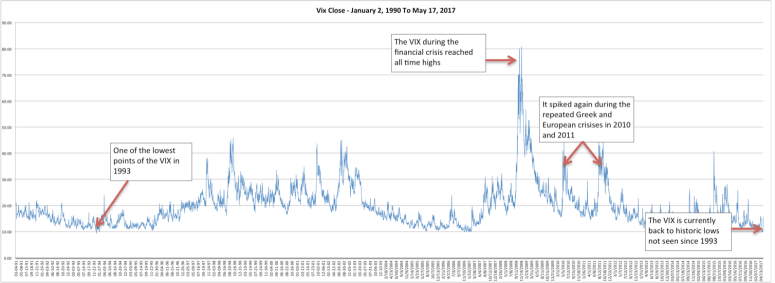
This past week a number of articles spilled forth regarding the VIX index being at record lows. If you aren’t familiar with the VIX, that’s quite okay; the VIX is an index that tracks the nervousness of investors. The lower the VIX is the more confident investors are. The higher the VIX, the greater the concern.
At first glance the VIX seems to clearly tell us…something. At least it seems like it should. The index is really a measure of volatility using an aggregate of prices of options traded on the S&P 500, estimating how volatile those options will be between the current date and when they mature. The mechanics aren’t so important for our purposes, just that this index has become the benchmark for the assumed fear or comfort investors have with the market.
So what does it mean when the VIX is supposedly at its lowest point in nearly a quarter of a century?
This is the historic performance of the VIX. Data provided by CBOE.
Because we live in the 21st century, and not some other more primitive time, we have the best technology and research to look to when it comes to discerning the meaning of such emotionally driven statistics. Its here that the the area of study of behavioural economics and investing supposedly cross paths and that we might be able to yield some useful insight from the VIX.
What is this, 2007? Might as well be the stone age!
Or not.
The holy grail of investing would presumably be something that allowed you to accurately predict changes in the market based on investor sentiment. Though over time stock markets are meant to be an accurate reflection of the health and wealth of an economy, in the short term the market more closely tracks a series of more micro events. Investor sentiment, political news, potential scandals as well as outside influences like high frequency trading and professional traders pushing stocks up and down all make up daily activity.
The VIX seems like an ideally suited index to then tell us something about the market, and yet it probably isn’t. The problem with research into behavioural economics (and its other partner, big data) is that it is great at telling us about things that have already happened. The goal, that we could use this information to change or alter human behaviour, is still a long way off (if it exists at all). Similarly the VIX is basically great at telling us stuff that we already know. When markets are bad the VIX is high. When markets are good its generally low.
Bad forecasting can lead to terrible outcomes.
Thus, the VIX represents a terrible forecasting device but an excellent reminder about investor complacency. When markets are “good” (read: going up) there is a tendency for investors to ask for more exposure to those markets to maximize returns. If you feel uncertain about the future, investors and financial advisors are less likely to “drift” in terms of their investing style, but if people feel very good about the future their far more likely to take their foot off the breaks.
Yesterday’s selloff followed news that Trump’s Russia problem wasn’t going to go away, but remain a permanent feature of his administration.
Real market panics and crashes tend to be triggered by actual structural problems. 2008 wasn’t the result of too much confidence about the future from investors, but because the market itself was sitting on a bubble. That the VIX was low only tells us what we already knew, that we weren’t expecting a financial crisis.
We can hope.
With markets down sharply yesterday its tempting to see that this level of investor complacency/confidence harbingered the most recent sell off. But that’s not the case. Trump is, and remains, a kind of nuclear bomb of unpredictability that must be factored into anyone’s expectations about the markets. But what we should do is consider the VIX a mirror to judge our willingness and preparedness to deal with unexpected events and market downturns. If you’ve started to assume that you can afford growing concentration in your portfolio of high performing equity or that you don’t need as many conservative positions, you should take a long hard look at why you feel that way. Maybe its just because you feel a little too confident.
Some time ago I wrote that it really didn’t matter whether or not there was a housing bubble, because what we actually have is a debt bubble. Houses just happen to be where the debt is. At that time many people were sceptical about the likelihood of an actual bubble. It wasn’t that prices weren’t high, it was just that people had been calling for a housing crunch for so long that most “serious” people simply didn’t think it was immediate or likely. That was several years ago now and the mood has shifted considerably. The housing bubble now occupies more mental space than any other economic challenge facing the country.
If one thing has gotten under the skin of economists and government officials, its how ineffective their attempts to lance this boil have been. Despite more stringent banking rules little has slowed the volume of cheap capital flooding the market that’s kept purchases up. We’ve even teetered into the murky xenophobic reasons for high house prices; absentee Chinese owners. Despite these initial efforts several realities have been hard to deny.
Banks are lending too much: With interest rates at all time lows banks have lent more for less to keep profits up. Undoubtedly some of the mortgages (possibly many of these mortgages) should not have been offered by the banks at all.
Secondary mortgage markets have grown substantially: If you couldn’t clear the low (low) bar that the banks had set to qualify for a mortgage you could always turn to the secondary banking market (we talked about them here) which would offer you a mortgage at a more punitive rate.
There is a housing crisis: I’ve done my best to connect the high price of houses to a dwindling middle class, but it deserves to be mentioned again that there simply isn’t enough land development fast enough at high enough densities to offset the sheer number of people trying to work in and around the city of Toronto.
Canadians have too much debt: How much debt is too much debt? I can’t say for sure but I promise we’ve already passed the tipping point on that. The numbers, mentioned so often that people can quote in their sleep, is an astonishing 167.3% of debt to disposable income at the end of 2016. Those numbers are worse when you realize that a large chunk of the Canadian population doesn’t carry any debt and so the level is actually much higher for those that do.
The response so far has been timid, as businesses and politicians are keen not upset the apple cart. But in the last two weeks several things have happened that, while not likely to lead to the downfall of the Canadian economy, put into stark relief how quickly these problems can arise and what they look like.
First, the housing crisis. This April we got headlines showing rents doubling for several people living in Toronto. While not normal it turns out that under the law, in certain circumstances, this is permitted. But as rental becomes more expensive and home ownership more unobtainable the province has felt the need to step in.
You can read Ontario’s Fair Housing Plan here if you like, but the response has been lukewarm from economists. The plan makes allowances for more development of land and attempts to give further powers to cities for things like a vacancy tax, but its unlikely that anything could be implemented quickly to change the market. The bulk of the plan is to extend rent control on all buildings in the province, capping the inflation rate on rent at 2.5%. This plan has been denounced by CIBC chief economist Benjamin Tal as “the exact opposite” of what is needed. Encouraging.
The next issue came out of Canada’s second largest mortgage provider, Home Trust Group. Dinged by the OSC for essentially misrepresenting the credit quality of borrowers on applications, they’ve had a sudden run on their high interest savings accounts (used to fund the mortgages). Investors were terrified that the company was about to collapse under the weight of risky mortgages. That may have been premature, but the fallout has forced them to seek a line of credit from a major pension and speaks to how nervous people are about the market.
But for every article worried about the imminent doom of the housing market, there is another one that is quite sure that things are still okay and somewhat stable, citing any number of structural differences between Canada and the situation in 2008. While that may be true, its important to remember that what hurts economies and makes nations week isn’t a single crisis, but a series of interlocking problems that are all connected. The Canadian housing bubble is about homes, but its also about debt, consumer spending, middle class anxiety, low yielding investments and aging populations, retirement financing and urban and suburban growth.
Here you can see Canadian politicians grappling with the mortgage monster.
What Canada now has is a mortgage monster, debt so large and so important to the economy that no one is sure how to slay it without hurting the wider market at the same time. Against this shoggoth creature our politicians hurtle small stones, stern words and the promise of ever more study. These solutions will have the impact you might expect; very little. Whatever solution that exists to both increase affordability without undermining the debt situation or crashing the housing market currently exists beyond the reach of our politicians.
Facing a problem as great as this it’s a wonder more people don’t go mad.
For the past week I’ve been tinkering with a piece around the allegations that TD’s high pressure sales tactics had driven some staff to disregard the needs of their clients and encourage financial advisers in their employ to push for unsuitable products, and in some instances drove employees to break the law.
My general point was that the financial advising industry depends on trust to function, and runs into problems when those that we employ for those jobs serve more than one master. The sales goals of the big banks are only in line with the individual investor needs so long as investor needs serve the banks. In other words, clients of the banks frequently find that their interests run second to the profit and management goals of Canada’s big five.
For the uninitiated, Canada’s mutual fund industry can seem a little confusing, so let me see if I can both explain why a mutual fund company would do what it did, and how you can avoid it.
First, there are several different kinds of mutual fund companies:
There are companies like those of the banks, that provide both the service of financial advice and the mutual funds to invest in. This includes the five big banks and advice received within a branch.
There are also independent mutual fund companies that also own a separate investing arm that operate independently. Companies like CI Investments own the financial firm Assante, IA Clarington owns FundEx, and the banks all have an independent brokerage (for example TD has Waterhouse, RBC owns Dominion Securities and BMO owns Nesbitt Burns).
Lastly, there are a series of completely independent mutual fund companies with no investment wing. Companies like Franklin Templeton, Fidelity Investments, AGF Investments and Sentry Investments all fall into that category.
The real landscape is more complicated than this. There are lots of companies, and many are owned by yet other companies, so it can get muddy quickly. But for practical purposes, this is a fair picture for the Canadian market.
In theory, any independent financial adviser (either with a bank-owned brokerage, or an independent brokerage, like Aligned Capital) can buy any and all of these investments for our clients. And so, the pressure is on for mutual fund companies to get financial advisers to pay attention to them. If you are CI Investments, in addition to trying to win over other advisers, you also have your own financial adviser team that you can develop. But if you are a company like Sentry, you have no guarantee that anyone will pay attention to you. So how do you get business?
Sentry is a relatively new company. Firms like Fidelity and Franklin Templeton have been around for more than half a century. Banks have deep reserves to tap into if they want to create (out of nothing) a new mutual fund company. By comparison, Sentry has been around for just 20 years, and has had to survive through two serious financial downturns, first in 2000 and then 2008, as an independent firm. By all accounts, they’ve actually been quite successful, especially post 2009. You may have even seen some of their advertisements around.
Over the past few years independent mutual fund companies have increasingly turned to public advertising to try and encourage individual investors to bug their advisers about their funds.
But while Sentry has had some fairly good performance in some important sectors (from a business standpoint, it is more important to have a strong core of conservative equity products than high flying emerging market or commodity investments) it has also had some practices that have made me uncomfortable.
For a long time, Sentry Investments paid financial advisers more than most other mutual fund companies. For every dollar paid to an adviser normally, Sentry would pay an additional $0.25. That may not sound like much, but across enough assets thats a noticeable chunk of money. And while there is nothing illegal about this, it is precisely the kind of activity that makes regulators suspicious about the motives of financial advisers and the relationships they have with investment providers. Its no surprise that about a year ago Sentry scaled back their trailer to advisers to be more like the rest of the industry.
The fact is, though, that Sentry is in trouble because of their success. No matter how much Sentry was willing to pay advisers, no-one has a business without solid performance, and Sentry had that. The company grew quickly following 2008 and has been one of the few Canadian mutual fund companies that attracted new assets consistently following the financial meltdown. When times are good, it’s easy for companies to look past their own bottom line and share their wealth. That Sentry chose to have a Due Diligence conference in Beverly Hills and shower gifts on their attending advisers was a reflection of their success more than anything else.
And yet, from an ethical standpoint, it is deeply troubling. I have always been wary of companies that offer to pay more than the going market rate for fear that the motives of my decision could be questioned or maligned. Being seen to be ethical is frequently about not simply following the law, but doing everything in your power to avoid conflicts of interest (Donald Trump: take notice). The financial advisers attending the due diligence (who would have paid for their own air travel and hotel accommodation) probably had no reason to believe that the gifts they were receiving exceeded the annual contribution limit. But now those gifts cast them too in the shadow of dubious behaviour.
This is a man who has a hard time creating the impression that he is above ethical conflicts.
So how can you protect yourself from worries that your adviser is acting unethically, or being swayed to make decisions not in your interest? First, insist that your adviser at least offers the option of a fee for service arrangement. While the difference between an embedded trail and a transparent fee may be nominal, a fee-for-service agreement means that you have complete transparency in costs and full disclosure about where your advisers interests lie.
Second, if an embedded trail is still the best option, ask your adviser what the rationale was behind the selection of each of the funds in your portfolio, and what the trail commission was for each of those investments. This is information that you are entitled to, and you shouldn’t be shy about asking for.
Lastly, ask what mutual funds have given your adviser, but be open to the answer. Gifts to advisers are meant to fall into the category of “trinkets and trash”, mostly disposable items that are visibly branded by the company providing them, though gifts can be moderately more expensive. The difference between receiving cufflinks from Tiffany’s and cufflinks that bare the logo of a mutual fund firm is the difference between ethically dubious and openly transparent.
Regulators in Canada are pushing the industry towards a Fiduciary Responsibility for financial advisers. While that may clarify some of the grey areas, it will certainly create its own series of problems. Until then though, investors should not hesitate to question the investments they have, and why they have them. It may be unfair to expect the average Canadian to remember all the details about the types of investments that they have, but you should absolutely expect your financial adviser to be able to transparently and comprehensively explain the rationale and selection method behind the investments that you own.
If you would like an independent review of your current portfolio, please don’t hesitate to give us a call. 416-960-5995.
Over the weekend investors got a chance to read the fine print on the faustian bargain they had with President Donald Trump. Since Trump’s election night win, markets had jumped significantly. The promise of stimulus spending, tax cuts and a renewed focus on deregulation had given investors a “sugar rush”, and eclipsed the more basic concerns about Trump’s general lack of suitability to be president.
But with the stroke of a pen investors were being reminded about how quickly Trump’s essential character and the presidency he promised could bring chaos and confusion. On Friday Trump signed an executive order to temporarily restrict accepting refugees from seven predominantly muslim countries. The order was vague, poorly thought out, badly executed and quite possibly illegal. Confusion reigned and initially the order was applied to people with legal immigrant status in the United States, including those with green cards.
The weekend was filled with protests at airports, backtracking by members of the administration, and out and out insurrection by members of the government who believed that the order was unconstitutional. Very quickly the official story has descended into the kind of decontextualized factual minutia that has come to characterize attempts to grapple with the truth in the age of the internet. Did Obama do something similar? Is this a Muslim ban or something more restrained? Is it more or less reasonable than it was presented? Accusations or partisan hackery and racism powered the internet and every conversation everyone had over the weekend and well into today.
The answers to these questions are largely immaterial. Trump is a populist and is likely going to do exactly what he said he would do on the campaign trail. That his cabinet is a group of people with little understanding of the nuances of government and that he may in fact be heading up an administration that is kleptocratic on par with a South American government is part of his current appeal. This weekend won’t be the last time controversial and vague (or illegal) orders are issued by this president and it won’t be the last time that they are met with organized resistance.
2016 was a year in which great changes to the status quo were made without many of those changes having an impact. Investors may have come to believe that the rising tide of angry populism won’t have any negative repercussions, or may even be positive. But this weekend brought investors face to face with the reality of unpredictable populist outsiders calling the shots. Volatility is in the cards, and even if (as many believe) that Trump will be good for the economy, his style is not slow and deliberate, but fast and reckless. Investing in the US, which has a strong economy, is unlikely to be smooth even if the trajectory is up.
That’s the problem with Faustian bargains. You get what you want but what you sacrifice has typically been undervalued. The future for the American markets still looks good; but NAFTA talks loom, there are threats of trade wars, and a stable and predictable government seems unlikely. Investors should take note; its day 11 and there are another 4 years ahead. Even if we can’t predict tomorrow, we should acknowledge that tomorrow’s unpredictability may be the thing that investors have to make peace with.
Many of you won’t know this, but my father used to sky dive. He’d stopped by the time I was born (reportedly because my mom had a natural aversion to life threatening hobbies) but in many ways his hobby would be a reoccurring source of guidance for life lessons.
For instance, whenever I was nervous about doing some BIG THING, my dad would let me know that once you were doing THE BIG THING, your anxiety would drop considerably. Sky divers know this, as they are only nervous until they jump out of the plane, and then get very calm. The fear is in the anticipation, not the actual doing.
2016 had a lot of anticipation, but not an actual lot of doing. Brexit happened, but hasn’t really happened. Donald Trump has been elected, but hasn’t been sworn in. The Canadian housing market continued its horrific upward trend and news stories began to abound about the looming robot job-pocalypse. 2016 was full of anticipation, but little action.
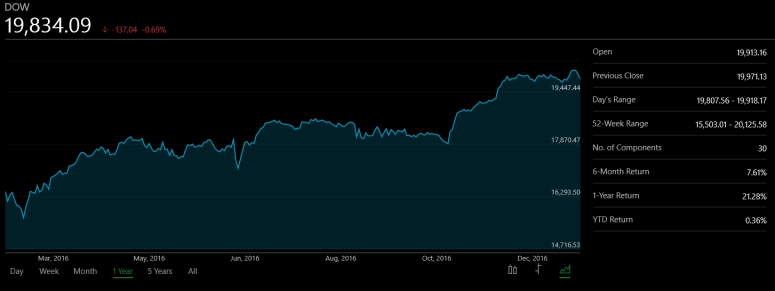
2017 will begin to rectify some of these issues. Next week we will see the arrival of President Donald Twitterbot™, finally ending speculation about what kind of president Donald Trump will be and seeing what he actually does. So far markets have been reasonably calm in the face of the enormous uncertainty that Trump represents, but his pro-business posture seems to have got traders eager for a more unregulated market with greater earnings for the future. Right now bets are that Trump might really jump start the economy, but there are real questions as to what that might mean. Unemployment is already very low and inflation looks like it is actually beginning to creep up. Housing prices (amazingly) are back to 2007 levels and the economy seems to be moving into the later stages of a growth cycle.
2017 will likely not be the year that the Canadian housing bubble/debt situation comes crashing down, but its also unlikely to be the year that the situation improves. Economically the short term outlook for Canada is already kind of bad. The oil patch is already running second to a more robust energy story from the United States. Canadian financials had a very healthy year last year, but as we’ve previously written while the TSX was the best returning developed market over 2016, in a longer view it has only recently caught up with its previous high from 2014.
2017 may be the year that automation starts being a real issue in the economy. Already much of Donald Trump’s anger towards globalisation is being challenged by analysis that shows its not Mexico that steals jobs, but robots. But as robots continue to be more adept at handling more complicated tasks there is simply less need for humans to do much of that work. Case in point is Amazon’s new store Amazon Go, currently being opened in Seattle.
While many point to this as Amazon’s foray into the world of groceries (and a better shopping experience) Amazon’s real business is in supply management. The algorithms they use and the new technology they’ve developed are not designed to be one offs, but ways to handle high volumes of business traffic with as few people, and as low a cost as possible. Combined with driverless cars (currently being tested in multiple cities & countries)and our growing app economy, we will be pushing more people out of steady work across multiple sectors of the economy in coming years.
2017 will also be the year that Brexit will begin, though it will be two years before it is complete. Many people will be watching on how Teresa May’s government handles the Brexit negotiations, how confident England looks on its position, and how hostile or open Europe seems to be to conceding to Britain’s views. Either way it should provide lots of turbulence as it unfolds over the coming years.
But despite all this, there is a kind of calm in the markets. We’ve crossed the line on these issues and there’s nothing to do but continue ahead. Trump will be President Donald Twitterbot™, Brexit will happen, regardless of how many people remain opposed and markets will either go up or down as a response. Perhaps the new normal is a great deal more similar to the old normal than we all thought.
Then again…
Meryl Streep, one of the most over-rated actresses in Hollywood, doesn't know me but attacked last night at the Golden Globes. She is a…..
The debate over marijuana has been all but won by the champions of recreational use, certainly from moral and scientific standards. All that is left is the actual laws that must be struck down, and as we near that day I have been bombarded with questions from my clients about whether it is a good idea to buy some of the publicly traded marijuana stocks available on the market. So is it a good idea?
My answer to this question is typically Canadian: “It depends…”. The question that I ask investors looking for advice is what purpose would this investment serve them in their goals? Driving the excitement for investing in publically traded grow-ops are a heady brew of excitement over the possibility of legalization, reports of weed tourism and a weed economy, and the news stories about how quickly the stocks have been appreciating. This mix of positive media have given the story of investing in the “pot business” a veneer of inevitability; that the price of the stocks will rise for some time.
In fact, according to Vice, just last week trading had to be halted on several medical marijuana companies on the TSX because their price had appreciated so quickly in a single session of trading that it tripped a “single stocks circuit breaker.” The enthusiasm for these stocks is real, but does that mean its a good time to buy?
This is the stock chart for Canopy Growth, as of 2:30 on November 22.
The knock on effect of the appointment of someone like Jeff Sessions could be felt here too. Though Canadians might like to think that our government policies won’t be impacted by that of our neighbours, the United States will be unlikely to look fondly on their neighbours to the north legalizing a drug that they are working hard to stomp out. The impact at the border on traffic and trade may be enough to dissuade the government from moving ahead too aggressively with legalization.
But even if we do get to the promised land of legal weed, that still doesn’t mean that the market will be good for marijuana companies. One of the arguments for legal weed is that weed is no more dangerous than cigarettes, which is true, but just look at how we have treat tobacco. Over the last 50 years we have been putting endless pressure to discourage and end the use of tobacco. You can not smoke inside, on a patio, in private clubs, or in a car with children. Cigarettes can’t be displayed and all packages must come with both graphic and written warnings about the impact on your health. In the very near future there may be no branding on packages at all.
Lets face it, this is subtle by government standards.
Against these challenges, medical marijuana companies are expanding rapidly. Companies banking on a future of recreational use with few regulations are borrowing money to expand their operations to meet both rising demand and expected demand. Since the companies are growing many have never turned a profit, the current surging stock price really represents a bet about the future, and not about the current financial health of the company.
And so we return to the original question, is it a good idea to buy publically traded marijuana companies? It depends; depends on whether you are comfortable with risk, with companies that have yet to turn a profit and with possibility that you could see steep losses as well as happy and rapid gains. It depends on what role you expect any of these stocks to play in your investment goals. Is this money for play, or is it meant to be an integral part of a retirement plan? If you as an investor can make peace with those realities, then maybe these stocks are for you.
These are the opinions of the writer, and not necessarily reflect those of Aligned Capital Partners Inc. Aligned Capital Partners Inc. is a member of IIROC and CIPF.
Donald Trump is president elect, and only Russia is happy. That, and of course millions of Americans. And Donald Trump.
There are many things I want to say about his election. One is that we had correctly read the sentiment last year and this year regarding citizen dissatisfaction and the likelihood of surprising or disappointing results in big electoral decisions. The other is to talk about the failure of “experts” and their inability to get much right, from big economies to statistical outcomes in elections.
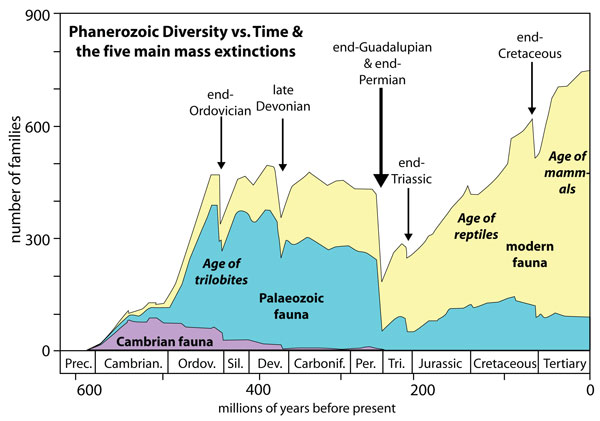
Instead I want to turn my attention to a recent lecture I attended at the ROM that discussed evolution and mass extinctions. In case you don’t know we may be living through a sixth mass extinction (insert Trump joke here), but aside from that the previous mass extinctions are not what we think. In fact every subsequent mass extinction has led to an increase in the bio diversity after it, and our lecturer concluded that mass extinctions help the planet cut down the time on evolutionary development, removing 50 million years of grinding it out overnight. Mass extinctions are big events but they aren’t the end of things, they are the beginning of far more.
Yup, this is a graph of mass extinctions.
There could be something to this with Trump’s election. There are a lot of angry people out there who “cant believe this is happened” and are talking about it like it’s the end of the world. That’s obviously not the case. So what could it be the beginning of?
There is much right now to not be pleased about. While economic news for the United States is certainly better than most other countries, most people would hardly call it robust. Threats to middle class security loom large. The rust belt is a genuine and persistent problem for millions of Americans. It also threatens to spread to more places with increasing automation. Many Americans, even if they are doing fine financially don’t feel like they can likely afford retirement. Globally the news is actually worse. Brexit wasn’t a great idea given the details of what it involved, but it wasn’t a crazy response given the total failure of the EU to manage itself or improve the economic situation for many of its members.
At some point in the last 20 years the term “technocrat” came into common usage, and refers to technical experts. Economists are technocrats. Nate Silver is a technocrat. Janet Yellen is a technocrat. The EU is a technocratic organization. It’s not a condemnation, but an acknowledgement that we have come to live in a technocratic society, one in which the levels of complexity keep rising, requiring experts with ever more refined skills to manage. 21st century complexity has seemingly killed the renaissance man, as subjects are far to varied and nuanced to be well understood. The 21st century seems to favour those of us that can know one big thing.
But given the failure of technocrats to fix the problems they’ve made, we might ask ourselves what we’re getting wrong. The answer I think lays in the ancient Greek saying that “a fox knows many things, the hedgehog one big thing.” Technocrats are hedgehogs. They know one big thing, and they tend to assume that they are right so long as their one big thing continues to provide positive results. But the minute they are wrong they are without a clue as to what happened.
The 21st century may require more foxes, generalists that better understand the many things tugging at the world rather than the narrow and parochial focus of experts. And Trump, for all his sins (and I believe there will be many) may hurry up that need. His promise to take a sledgehammer to things like NAFTA, challenge the supremacy of persistent low interest rates and bring some realism to organizations like NATO, while terrifying, represent the mass extinction of a series of ideas that are too confident in their own self worth, too precious to be tested and too fragile to survive. Whether we come out the other side of this better off has yet to be seen but its a possibility we shouldn’t dismiss.
When Jane Jacobs died in 2006, her Annex home sold for a reported $3,000,000. A lofty sum, but a fitting metaphor for the career of a woman so central to how we’ve come to understand cities and urban growth.
Cities, almost everywhere, are under a crunch to meet the needs of growing populations and affordable housing. In Canada two cities stand out as being places to go when you are looking for work, Toronto and Vancouver, and notably they have both been beset with rapidly inflating housing prices. And while I have covered this topic many times (many, many, manytimes), recently various governments have seen fit to try and wrestle the housing monster to the ground before it explodes and does long term damage to the economy.
First, a BC law was passed on foreign buyers. Totalling 15%, early signs are that it has worked in Vancouver and Victoria. Sort of. In late October several news outlets published the startling result that “Home Sales Plunge 38.8%”, which is helpfully misleading. The gross number of home sales on a year over year result (that is October 2015 vs October 2016) was 61.2% of what it had been in the previous year. 3646 homes were sold in October 2015, and 2233 were sold in October 2016. A corresponding decline in price for the same two periods was non-existent. Prices were actually up year over year, by 24.8%, though the average price had dropped by 0.8% from September.
The next set of laws has come from the federal government, which is trying to improve the financial health of those seeking mortgages by setting higher thresholds for banks and CMHC insurance qualifications. More recently imposed than the BC foreign buyers tax, we’ve yet to see what kind of impact these new rules will have, but I’m willing to posit a guess.
Like the BC law, the new national rules will do more to curtail the supply of property than it will reduce price and limit demand. The reason for this is that governments are attempting to tackle the part of the housing problem they feel most comfortable in, taxing and regulation. And while we know fundamentally very little about how many foreign buyers there are and what impact they are having on the Canadian market (among other obtuse aspects of Canadian realty, you can read about these issues here.), regulation and taxation are well understood tools that most politicians feel comfortable using even when the problem may still not be well understood.
What governments are loath to do though is tackle the part of the problem they could have the greatest impact on, which is supply. Governments, municipal and provincial, have a big say in what can get built and at what speed. But cities like Toronto frequently challenge their own growth, trying to straddle the boundary between their future needs while obsessively preserving some idea of a perfect version of itself.
Proposed highway construction for Toronto
The efforts the city and province have made, to try and “densify” urban corridors while leaving the neighbourhoods of detached homes in between them untouched, is probably failing in some measure. First because the neighbourhoods themselves aren’t super excited about 20 story buildings going up within the line of sight of their homes. Second because many people don’t see themselves raising families in condos, leading to an abundance of 500 – 700 sq-ft spaces that only serve first time buyers, but not growing families.
The resistance that neighbourhoods put up to growth can be almost comical. From petitions to “Stop Density Creep” to city councilors objecting to condos not being “in keeping with the community” in our most urbanly dense sectors, citizens and their representatives can be almost hysterically opposed to any changes that might affect them.
And so we come back to Jane Jacobs. There is unlikely anyone more influential on how we think of cities than Jane Jacobs. She’s responsible for many great ideas about livable spaces, about how sidewalks and cities need people to thrive, the benefits of cities for bringing different people from different socio-economic backgrounds together and the importance of making cities for people, and not cars. When she lived in New York she fought against the likes of Robert Moses, and the push for more highways (frequently built at the expense of poorer neighbourhoods). When she brought her family to Toronto to avoid the Vietnam war (her kids were of drafting age) she moved into the Annex and fought against plans for the Spading Expressway (now Allan Rd) and campaigned so that its southern portion was never built.
But Jacob’s legacy has born some strange fruit. Though Jacob’s herself did seem to support growth of cities and solid development, the movement she helped birth and guide has become paranoid, myopic and NIMBY-istic. Here in Toronto we both benefit from her insight, and are hobbled by it as well. We have learned to love cities as places for people, but have grown suspicious of the development needed to accommodate our growth.
Against those challenges, stricter regulations for new home buyers and a tax on foreigners seems to do very little to solve the one problem we do have, not enough supply. While tightening the lending restrictions is important to stemming the growing debt burden saddled on Canadians, the goal should still be to restore a healthy real estate market to our major cities, both a certain way to avert a massive housing bubble implosion and a way of making homes more affordable. That seems to be a challenge our elected officials aren’t up to yet.
You may not respect him, but have you ever seen someone with more luck than Donald Trump? I put it to you that you haven’t and I would wager that neither has Hillary Clinton. Three debates and a decade old video of Donald Trump lewdly discussing how he likes to grope women seemed to have moved him from a better than outside chance of winning to a massive and decisive loss. His obituary had practically been written and pundits were getting comfortable that they were never going to have to say “President Trump” with a straight face.
The reopening of the email investigation by the FBI has breathed second life into Trump’s campaign, reinvigorated a dejected base and rekindled the seemingly pathological hate many have for Hillary. Trump’s candidacy is still a long shot, but not as long a shot as it should be.
The question that has lurked in people’s minds since Trump actually won the nomination for the Republican nominee is “what if he wins?” Normally it would mean very little, much of America’s budget is spoken for, in the form of military, social security and domestic payments as well as interest on debts. But Trump’s promises have people scared. Beyond the impractical (build the wall) and unlikely (make Mexico pay for the wall) Trump has promised to change the economic landscape in a big way. He wants to tear up trade deals and have a trade war with China. To Wall Street and other hubs of investing this sounds insane, and people who understand these agreements know that trade deals can not simply be torn up without serious repercussions. These promises make investors heads reel with fears of economic collapse.
But asking “what happens if he wins” is really several questions stacked on top of one another. The first question is “What happens tomorrow?”, the next is “how likely is Trump to follow through on his agenda?” and lastly “What should investors do?”
The Day After Tomorrow
Predictions about the market impact of a Donald Trump win range from apocalyptic to the more mundane, but a sudden sell off wouldn’t be surprising. In fact given the time frame between the election win, the time it takes to assemble a new government and the ability to pass legislation, its unlikely the much would happen policy wise initially, and a sudden sell off would be met with growing confidence in the market as investors and market makers bought cheaply sold companies and economists saw economic health remain steady. That might amount to a phony war while real changes remain over the horizon, but the events following BREXIT might provide a useful guide: an immediate sell-off followed by a market bounce, but with a large amount of uncertainty looming.
Git’er Done!
How likely is Trump to follow through on “the greatest wall you’ve ever seen”? Probably not that likely. A lot of Trump’s plans rest on other people helping push his agenda, and while he holds the bully pulpit that role is only effective so long as he’s popular.
In Toronto, Rob Ford’s election stunned a lot of city councilors and led to some hasty changes of allegiance, but as time wore on and Ford was seemingly more unreliable, his opponents were emboldened. Trump may not even get the same grace period and early support, having won a highly contested election in which all the guardrails came off the political system, lots of people will feel better about challenging his success than making him great. But given the uncertainty of power and how craven many politicians seem to be, its likely some of his ideas will find their way into action. While he’s unlikely to actually end trade agreements, spending increases on defence and border control and new tariffs on countries like Mexico won’t be surprising.
What Should You Do?
To start with? Nothing. America’s economy looks strong and competitive. Job growth has been fairly consistent and GDP continues to rise. The standard approach for politicians is to denounce your opponents accomplishments and them claim them as your own after a certain time. I can only assume that the temptation will be for whatever president/congress to declare victory and say that not every aspect of a Trump’s agenda is needed. Whether that satiates his followers has yet to be seen, and if Trump finds political appetite in pushing his agenda, that may ultimately lead to a more insulated, poorer nation; one less appealing to invest in.
The most likely scenario?
Trump loses.
Trump loses and nothing goes back to normal.
Trump’s most damaging language may yet be his view that the election is “rigged.” Initially meant as a shorthand for media bias, it has morphed to be an accusation of actual vote rigging, and is coming dangerously close to demanding voter intimidation to “preserve democracy”. The outcome of this election may leave us much of where we were before, with Republicans comfortably in opposition to a democratic president who they feel no need to work with.
Politicians are public servants, but ones frequently given to bouts of moral cowardice. This is a result of being elected and needing to satisfy an ever more diverse group of people to hold on to power. The easiest way of holding on to power is to grab whatever tent pole groups the largest number of people together. In 2009 that tent pole was the tea party, which opened the door for a number of savvy politicians to take seats away from older and more principled people, even as the language became more extreme. For at least several decades it has also been quite popular to say that one “isn’t a politician”, a line so tired that it practically begs to be called out on live television.
These trends only exist because they resonate with enough of the public to facilitate getting elected. If Trump fails he will have still demonstrated how much more effective one can be ignoring the (now very few) niceties of politics. If you thought we had seen the last of people literally talking about penis size and advocating war crimes in an election cycle, think again. A number of junior and potential politicians will see this as a path to higher office and getting media attention, two things in short supply for any ambitious politician.
In the end, I expect more of the gridlock that has defined the past eight years, and for some reason I don’t think that will bother Wall Street one bit.
Let’s say I had an investment that cost around $100,000 to be a part of, and after a fixed period you would be left with debt in the area of 25% of your initial purchase. Also there is less than 50% shot at having any ROI at all. If that sounds like a bad deal that’s essentially the proposition of going to university; an expensive 4 year party that leaves many young Canadians in debt with little chance of landing a job that even requires a degree in the first place, let alone one in the chosen field of study.
In some ways universities have it tough. They have become an outlet for millions of Canadians expecting a good future; the final stop for middle class social mobility. They carry with them all of the unexamined concerns we have about class and status in our lives. They are the primary gateway to white collar high paying jobs. They hold the simultaneously contrarian positions of bastions of independent thought and radicalism while also being expected to turn out thousand of grads ready to work “in the real world.” The demand for this type of schooling is so great and has become so expected that parents begin saving from the minute their kids are born, sometimes at the expense of much needed retirement planning.
Universities don’t always help their cause either. While the number of Canadians (and Americans, Brits, Australians, or anybody for that matter) struggle to both pay off their student debt and can’t seem to find gainful employment, some of the major schools themselves have become sources of ridicule as they deal with less serious, or trumped up issues. Students have had their way at college campuses, objecting, protesting and winning arguments that seem pointless, silly or ridiculous. Halloween costumes were deemed to “triggering” at Yale, and statues of Canadian Prime Ministers were called too offensive at Wilfred Laurier.
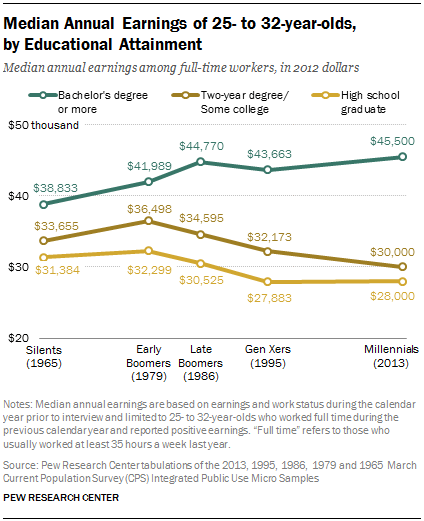
But if we look past silly controversies and focus on university attendance as an investment, we can see that returns really are low, and its hard to imagine any other investment we would make that carries with it so much speculative risk. Being smart about secondary education requires a similar mindset akin to being smart about investing. Where can my investment yield me the best return? And while universities can show that simply having a degree does improve earnings compared to those with only a high school diploma, it doesn’t make up for the fact that costs remain high and students are still saddled with too much debt after they leave school.
Saving for education is but one part in an ongoing series of financial life goals. The purpose of that education is to help set the stage for a productive economic life (so to speak), where an education provide options for meritocratic growth and allow for economic milestones like home buying and raising families. As the education system becomes both too expensive and largely pointless, the knock on effect has been young people deferring other stages of their lives.
For now there is no quick fix for the question of higher education. Since before I was in university, students have complained about the rising costs of tuition and the weakening job market. But the absence of top-down solutions doesn’t mean that parents and students are without options. Education is an investment and it should be treated like one. Parents who take the time to open RESPs, collect the Canadian Education Savings Grant dutifully and invest wisely should not consider their due diligence over once their children begin going to school.
Entering higher education is an ideal opportunity to begin expanding children’s entry into the world of finance, and is an excellent way to reframe the education conversation from one about “passion” to understanding that school is an investment akin to a home. A bad investment will end up yielding a negative return, will cost large sums of money and leave the owner feeling helpless. A good investment is one that will provide both comfort and security, allowing for future ambitions to be fulfilled.
Is your financial advisor at your table, or are you at theirs? We’ve been helping families for nearly a quarter of a century one kitchen table conversation at a time, and we’d love to help yours. Plan for your children’s education, and have us join them and you to discuss their educational options. Give us a call or send us a message today!





 Some time ago I wrote that it really didn’t matter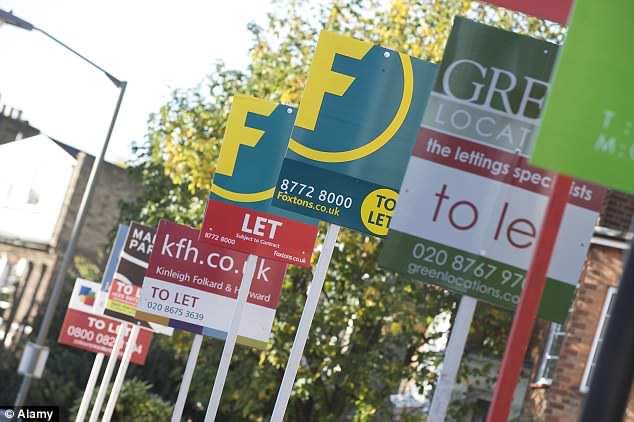







 2017 will begin to rectify some of these issues. Next week we will see the arrival of President Donald Twitterbot™, finally ending speculation about what kind of president Donald Trump will be and seeing what he actually does. So far markets have been reasonably calm in the face of the enormous uncertainty that Trump represents, but his pro-business posture seems to have got traders eager for a more unregulated market with greater earnings for the future. Right now bets are that Trump might really jump start the economy, but there are real questions as to what that might mean. Unemployment is already very low and inflation looks like it is actually beginning to creep up.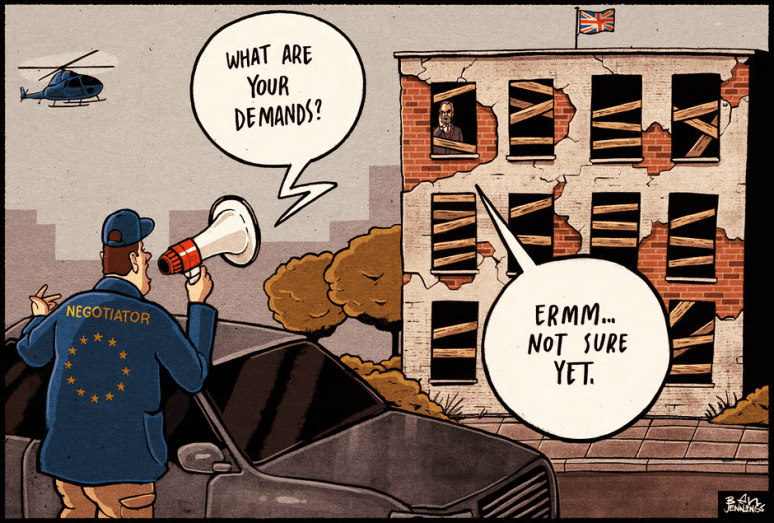










 And so we come back to Jane Jacobs. There is unlikely anyone more influential on how we think of cities than Jane Jacobs. She’s responsible for many great ideas about livable spaces, about how sidewalks and cities need people to thrive, the benefits of cities for bringing different people from different socio-economic backgrounds together and the importance of making cities for people, and not cars. When she lived in New York she fought against the likes of Robert Moses, and the push for more highways (frequently built at the expense of poorer neighbourhoods). When she brought her family to Toronto to avoid the Vietnam war (her kids were of drafting age) she moved into the Annex and fought against plans for the Spading Expressway (now Allan Rd) and campaigned so that its southern portion was never built.

 The reopening of the email investigation by the FBI has breathed second life into Trump’s campaign, reinvigorated a dejected base and rekindled the seemingly pathological hate many have for Hillary. Trump’s candidacy is still a long shot, but not as long a shot as it should be.