
Danger Creeps: Housing Bubbles and Crying Wolf

I can not find a better metaphor for Canada's housing market than this image from the movie UP! (Which is a film I highly recommend)
I can not find a better metaphor for Canada’s housing market than this image from the movie UP! (Which is a film I highly recommend)

If you’re looking for some good reading Google “Canadian Housing Bubble” and you could fill a library with the amount of material available. There isn’t a week that goes by without some new article somewhere screaming with alarm about Canada’s precarious and overvalued housing market. I’ve written many myself, but in conversation almost everyone admits that regardless of the danger nothing seems to abate the growth in home values.

From the Globe and Mail, published May 13, 2015
The history of the average five year mortgage in Canada going back to the mid 1960s. It’s hard to believe that Canadians once paid interest rates in excess of 20% to buy a home. Today rates are at an all time low and unlikely to rise anytime soon. From the Globe and Mail, published May 13, 2015

This defying of financial gravity gives ammunition to those that doubt there is any real risk at all. The combination of low interest rates, willing banks, rising prices and an aggressive housing market has given a veneer of stability to an otherwise risky situation. Combined with the “sky is falling” talk about the house prices and it is easy to understand why many simply accept, or outright dismiss, the growing chorus of concerns about house prices.

26621859Nissam Taleb’s book “The Black Swan” highlighted that negative Black Swan events tended to be fast, like 2008, while positive Black Swan events tended to be slow moving, like the progressive improvement in standards of living since the end of the Second World War. But it would be fair to say that creating a negative event requires a prolonged period of danger creep, a period where a known danger continues to grow but remains benign, fooling many to believe that there isn’t any real danger at all.

I would argue we are living in such a period now. The housing market is continuing to grow more precarious and many Canadians are finding that their own financial well being is connected to their home’s appreciating value. Between large mortgages and HELOCs, Canadians are deeply indebted and need their home prices to continue to inflate to offset the absurd level of borrowing that is going on.

As an example of how the “danger creeps” have a look at this article from last week’s Globe and Mail which highlights a young couple living in Mississauga with a burdensome debt and an unexpected pregnancy. They are classified as some of the “most indebted” of Canadians; house rich and cash poor. By their own estimates they are over budget every month and 100% of one of their incomes goes exclusively to pay the mortgage, stressful as that is they aren’t worried. It may seem irresponsible on their part to buy such a home, but they couldn’t do it if there weren’t many others complicit in making such a bad financial arrangement. Between lax rules from the government, a willing lending officer and well intentioned families that help out, it turns out that creating a financially fragile family takes a village.

A nation of debtors is a vulnerable one indeed. I’ve often said that financial strength comes through being able to withstand financial shocks, and this is exactly where Canadians are falling short. It’s the high debt load and minimal savings (and that these two issues are self-reinforcing) that make Canadians vulnerable. A change in the economic fortunes would force many Canadians to deleverage and in the process would inflict further damage to the economy and likely many homes onto the market.

Such an event is strictly in the “uncharted seas” sector of the economy. No one has a clear idea what it would take to shift the housing sector loose, or what would happen once it did. And that’s just the unknown stuff. With interest rates at an all time low it would also only take a small increase in the interest rate (say 2%) to bump up many people out of their once affordable mortgage and into unaffordable territory.

That’s the problem with slow growing danger, it has a glacial pace but when it arrives it is already too large to be dealt with easily. In one of my favorite movies, the Usual Suspects, Kevin Spacey utters the line “The greatest trick the devil ever pulled was convincing the world he didn’t exist”. That’s something we should all be wary of, the longer the housing market stays aloft the more convinced we become that not only is it not dangerous, but that there was never any danger at all.

Is It Time To End The “Senior” Citizen?

Margaret Wente is both enjoying the perks of her
Margaret Wente is both enjoying the perks of her “seniority” and worries that we may be undermining the future.

Over the weekend one of my clients posted an article from Margaret Wente about the many privileges bestowed upon seniors in Canada. Listing an almost unbelievable number of perks for “elderly” Canadians, which ranged from discounts at drug stores and movie theaters to government pensions and new federal tweaks to retirement programs, in every way seniors in Canada have it pretty good.

So good in fact that Margaret Wente has begun to despair. Not for herself, but for the future. The younger generation is definitely having a tougher time than their parents. And while none of this predicts that the Millennial’s will be poor, it does go to the heart of the uneven balance about finances that exists between generations.

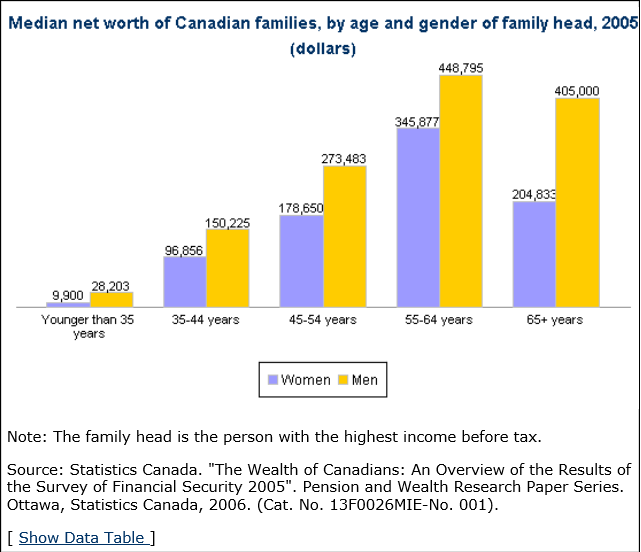
Who has the most money and assets in Canada?

One of the big changes in the federal budget was a reduction in the mandatory RRIF withdrawals that will effect everyone over 71. Putting the final nail in the coffin of the often heard and mostly pointless “RRSP/RRIF tax trap” the Conservative government has slowed the income coming to retirees from their long term retirement savings. This is being lamented as little more than “tax avoidance” for one generation by Carleton economics professor Francis Woolley, who has her own piece in the Globe & Mail about RRIF and Taxes. It’s a good read but if I may, her essential point is: “people don’t like to pay taxes.”

What’s happening is that we live in unprecedented times. Unprecedented in the life span of those living, the material wealth we have available to us, and the inverted demographics that comprise many countries around the globe. Everywhere people are richer, living longer and getting older. Many of our concerns about the economy, the cost of living, or the security of programs like CPP, or Social Security in the United States, are born directly from our success at creating a higher standard of living. Higher wages, better medicine and  a declining birth rate make us materially richer, until they don’t.

Courtesy of Gapminder

What you are looking at in the above chart is the changing nature of both Canada’s and the worlds age. From 1950 on Canada briefly saw a boom in the birth rate that has since reversed itself. The number of Canadians over 60 (the y-axis) is now better than 20% of the total Canadian population, while the number of children (on the x-axis) has been steady at about 5%.

“So, we’ll give them a little money to tide them over until they die, which will only be in a couple of years anyway, no long term financial entitlements for us!”

All the goodies that benefit the senior class of Canadians are getting more costly both because Canadians are living longer, but also because the tax-base needed to support many of those services is shrinking. But are seniors “too rich” as Margaret Wente thinks? Probably not. While Canadian poverty rates for the elderly are some of the lowest in the world, people who retire at 65 need to make all their savings last them until they are ninety, or older. You try and figure out what you are going to spend for the next 20-30 years. When Otto Von Bismark introduced the worlds first old age pension, it was for people who were 70 years old and their life expectancy was for maybe two more years. Today people retire and they live another lifetime. As we’ve previously said, when you’ve retired you’ve earned your last dollar. That can be a pretty scary thought.

The solution? There isn’t one. As I said these are unprecedented times. We still treat retirement like those who hit 65 are “old”. When my grandfather was 12 he had finished school, worked in

This book was written in 1997. 1997! It's taken 20 years for it to be relevant.
This book was written in 1997. 1997! It’s taken 20 years for it to be relevant.

a factory and eventually fought in the Second World War. By the time he was 65, suffering from lung deterioration after a life time of smoking, his face bore every year like the rings of a felled tree. My father on the other hand just had his 70th birthday and looks barely 60. That isn’t good genetics, that’s the product of good living. This trend is global, affecting everyone from China to Canada, and it will be with us for a long time. For many years people have been sounding the alarm about the demographic storm that is approaching, but such storms are slow moving. This is the beginning of a much larger set of conversations that will begin to address how we perceive retirement, savings, economic growth and government programs like the CPP. How we ultimately address and resolve the burgeoning conflicts about age and wealth will put many of us, and our retirement plans, to the test.

TFSAs Aren’t Just For The Rich

“Justin is in favour of making you pay more taxes! Vote Justin!” Okay, maybe it needs work…
We recognize that articles that involve politics can be pretty personal. The Walker Report is not endorsing or denouncing any politician or party, but merely commenting on current events.

On Tuesday the Conservative government effectively outlined their election campaign in their federal budget, and the most contentious issue (so far) has been the expansion of the annual TFSA contribution room from $5500 to $10,000. The TFSA is still a small part of the makeup of most Canadians savings, and yet the proposal of this program has already prompted Justin Trudeau to denounce it and promise to roll back the reform.

The growth of TFSAs definitely will hit tax revenues for the government. This year alone it is estimated to reduce revenue by $85 million, and in a few years that number will be over $350 million. By 2035 estimates put it will be close to $650 million in lost tax revenue. However we should be wary about attaching too much importance to long term estimates. Economic growth, population trends, even the price of oil will play a larger role in government revenues than the TFSA. We can barely get a fix on the price of oil over the next six months, so there is little use in getting worked-up over decade scaled predictions.

This leaves the other chief complaint about the TFSAs, that they only benefit the wealthy. There is some truth to this. The wealthiest Canadians are certainly in a better place to capitalize on multiple different forms of tax sheltering. But that is always the case. The wealthiest among us are able to capitalize on all things more effectively, from designer purses to sports cars. The question for average Canadians is can we also benefit from TFSAs?

Notably, this car will likely only benefit the wealthy.
I think the answer here is a resounding yes, and in some ways we may be able to capitalize on TFSAs more effectively. For young Canadians who still find their finances precarious it can be beneficial to place money somewhere to grow while still retaining access to it. For Canadians who receive an inheritance (a situation that will become increasingly common in the coming decades) such a sum might overwhelm available RRSP room. The TFSA will prove to be welcome relief for intergenerational wealth. For retirees who are forced to take more from their RRIFs than they would like or need, the TFSA is a suitable home to reinvest going forward.

Savings rate

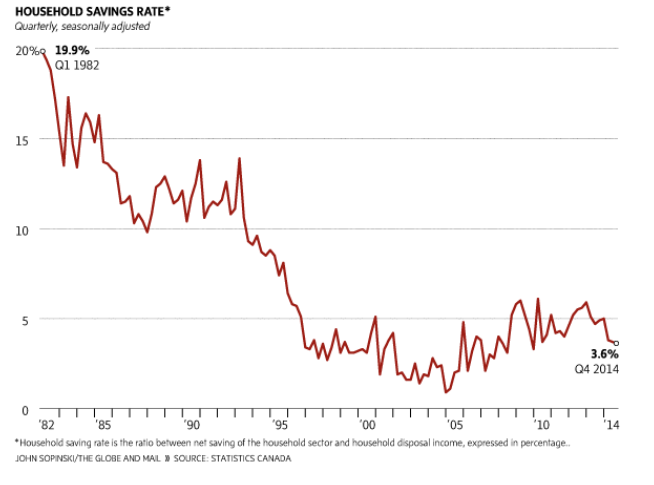
But we should all keep in mind how often a dollar that is earned, invested and spent again will be taxed. Income taxes come off your earnings, capital gains and dividend taxes will be carved from your investments, and sales taxes will be collected when it is spent again. TFSAs promise to relieve only one part of this equation, we should welcome even this small relief. Canadians in particular have need of it. Our savings’ rate is pitifully small, and has been declining for decades. The number of Canadians without pensions and suitable retirement funds is alarmingly high, and we have no simple solution to fix any of it. Decreasing long term tax revenues in favour of creating better savings opportunities isn’t a crime, it’s a blessing, one that we can all benefit from.

Cities Are Hurting Your Retirement

The Economist endorses the Walker Report!

Well not really, but they have joined my cause on the problems we face with regards to urbanism and increasing urban density. It’s not everyday that you can say that the economist endorses your position (even if they don’t know it) but in early April my constant nagging about the insane price of housing became a feature for the weekly.

Most Expensive Cities In The World To Live In

How it felt when I saw The Economist article on wasted space in cities.

If you haven’t been keeping up, I essentially have three big issues with homes in Canada:

  1. House prices are too high, especially in cities, which is driving a debt problem for many Canadians.
  2. Inflation in the housing market is likely creating a bubble, and considerable risk is building into the Canadian housing market as people over extend themselves.
  3. This problem is compounded by the need for city living. Increasingly people’s jobs depend on living in one of Canada’s big cities, where restrictions on development are aggrivating the situation.

Canada’s housing market is therefore a confusing and expensive mess. The risk is high but the need for housing is great and this fuels a great deal of arguments over how great the problem in Canadian housing really is.

The Economist’s take on this matter is an interesting one. It’s not just Canada that has an urban housing problem. Name a major urban centre and you are likely to see the same problem repeated. From Tokyo to London to New York and back to Vancouver urbanites everywhere are dealing with escalating home prices.Rising Property Prices

But the problem goes beyond merely being frustrated by increasing realty costs. Housing is a significant aspect to any economy. Building homes makes a lot of jobs, but affordable housing encourages a growing economy. As home prices eat up income there is simply less money to go around. It hurts domestic growth, slows trade and reduces standards of living.

The culprit is not a big bogeyman like the banks (though they are benefiting from this situation) but ourselves. In an effort to improve aesthetic standards of living by restricting changes to our surroundings we have unwittingly hurt our economic standard of living. Almost every city today is burdened with development guidelines and urban bylaws that restrict density and height. These rules run into the hundreds of pages and fill volumes in most city halls around the globe. It’s made cities like Bombay one of the most expensive in the world in a country that is one of the poorest. It restricts taxes and hinders economic and city improvements.

And cities need taxes. We tend to be critical of enormous budgetary outlays for cities, but whether it’s a new subway line in Toronto or a super-sewage pipe in Mexico City, cities depend on the taxes that are generated primarily through dense urbanization. This week the free newspaper Metro published an article showing which wards in the city of Toronto contribute the greatest amount in taxes. Unsurprisingly the “downtown” wards contributed the bulk of city revenue. Wards out in Scarborough had some of the lowest, a difference in the hundreds of millions of dollars for city revenue. Some are quick to point out that the “lie” about spoiled downtowners, but the reality is that density improves economic performance and reduces the burden of taxes while improving its efficiency.

https://twitter.com/Walker_Report/status/590534234059706368

The Economist argues that we waste space in cities, and that comes with a high cost. According to their article the US economy is 13.4% smaller than it could have been in 2009, a total of $2 trillion. Because cities that offer high incomes (like San Francisco) become too expensive people endup working in lower productivity sectors, while making it difficult to live for those that choose to reside in those cities. In the case of Canada this potentially fueling an enormous and dangerous housing bubble while undermining our economic growth. But this is a problem of our own doing. Through our own efforts we have masterminded a situation that threatens our own economic well being. The question that remains is whether we can be clever enough to undo it before it hurts us all.

As for The Economist I will assume they should be calling me anytime to start writing for them regularly….

That phone call should be coming any minute now...
That phone call should be coming any minute now…

How Much Should You Care About Currencies?

hanson-tourists-ii-19881As Canadians we are all familiar with the dispiriting feeling of traveling abroad and finding out our money just doesn’t travel as far with us. Canadians for generations have felt the plight of coughing up extra to go to the United States, the UK and Europe. That was until recently. As the Canadian Dollar hit parity back in 2007 and remained strong through the financial crisis we may have felt that we could hold our heads a little higher on vacation. Perhaps daring to order the steak while out with the family.

Our dollar is sometimes called a petrodollar, or petrocurrency, which means that the price of oil and the value of our currency are interlinked. As the price of oil rises so too does our dollar, hurting domestic manufacturing and improving the lives of Canadian tourists everywhere. But rising and falling dollars also have an impact on our investments, complicating portfolios and either diminishing or improving returns, like an unwelcome fifth column.

For instance, back in 2007 the sudden rise in the dollar made two types of investments popular. Canadian equity funds, (specifically energy and natural resources) and currency hedged global funds. While other markets had done well they couldn’t keep up with the ascension of the dollar, and by the end of the year the buying power of the dollar had outpaced the growth of many investments. Since 2013 the dollar has lost 20% of its value, undoing that previous balance and making unhedged foreign investments more attractive.

CAN Dollar

Hedging works by protecting the value of the currency against future changes. If you hold a currency hedged investment, the true performance will always show through, regardless of good or bad markets. When a dollar is falling unhedged investments are more appealing since a falling local currency means your foreign investments are worth more. This can mitigate bad markets, so if performance is anemic in the United States, but the Canadian dollar has dropped by 5% or 6%, you will still show a strong gain on your US holdings.

So how much time and energy should people dedicated to currency hedging? Some people argue that you should always currency hedge (so you see the accurate performance) while others prefer to let it currencies play out, and still others like to tactically manage both. In my experience it has been easier to pick funds where managers either always or never hedge, since claims to be “tactically managed” are either too small to matter, or currency swings are too fast and unpredictable to be suitably countered. For myself I prefer to use currency hedging to try and reduce volatility rather than capture more performance.

Rebuilding Economics: George Soros
George Soros – Currency Superhero!

Currency trading is very risky, and those who do it successfully may be super human. Nevertheless there are books that encourage mere mortals to gamble with the direction of currencies and try and profit from those swings in value. That seems crazy, if only because my approach to dealing with currencies is to try and mitigate their impact, not try and profit from their unpredictability. Regardless, opportunities abound for individual “do-it-yourself-ers” to throw money at currencies and try and make some money.

The title of this book is called Currency Trading for Dummies.  Take the hint.
The title of this book is called Currency Trading for Dummies.
Take the hint.

So how should Canadians mange currency exposure? One (terrible) idea is to only invest in Canada, but after a couple of years of writing this blog I don’t think I should need to explain why. Another, perhaps better, idea is for Canadians to be mindful of when they need their money. If saving for retirement is about balancing risk versus time, currency hedging or employing some currency hedging can become more useful as you get closer to needing your money on a regular basis. It may reduce growth as dollars depreciate, but protect against significant and unwelcome swings. If you are younger and investing for the long run currency swings tend to work themselves out and the fluctuations will mean less over time. But the best thing for all investors to do is ask their financial advisors for guidance about currency hedging and what will make them most comfortable with their retirement plans.

Forever In Search of Greener Pastures

Takabisha_roller_coaster
Fun for the family, not for your RRSP…

Over the past few years, the growing chorus from the media about Exchange Traded Funds (ETFs) and their necessity within a portfolio has approached a near deafeining volume. In case you’ve forgotten, ETFs are the low cost investment strategy – frequently referred to as passive investments – that mimic indices, providing both the maximum up- and down-sides of the market.

I continue to harbour my doubts about the attractiveness of such investments, though I do use them from time-to-time when the situation calls for it. On the whole, though, I find it interesting that Canadian investors have been reluctant to walk away from their mutual funds, despite the assurance by talking heads that costs are too high and that ETFs are more attractive.

businessweek_png_CROP_article568-large

This isn’t the first time that Canadians have been encouraged to broaden their investment horizons and adopt “better” vehicles for their money. Hedge funds were once an investment option for only the most wealthy, but eventually they found their way into the mainstream of investment solutions. The result was a flood of new money, which made some star managers household names, extensively broadened their investment reach and lined their pockets. The industry, once a niche, became far more commonplace. And why wouldn’t Canadians want a slice of an investment strategy that promised to be able to make money regardless of the market conditions? There has been a regular supply of managers promising to short stocks, juggle derivatives, and leverage cash to deliver positive returns regardless what was transpiring in the world. All of them (or almost; I will assume that there were some lucky ones) have fallen decidedly short. Canadians were largely let down by the last “big thing”.

The appeal of investments that are not mutual funds is understandable. Mutual funds are boring, and ubiquitous. Canadians have a lot of them, and almost without exception they make up the majority of any average portfolio. The workaday nature of these investments gives people the nagging feeling that the wealthiest among us very likely have something different, something better than what can be bought at any bank or offered by any financial advisor.

In some respects, this is true: more money does, in fact, open doors to different investment opportunities. However, people might be surprised at how small a percentage they make of any portfolio, even those that belong to the wealthiest 0.01% of Canadians, and before seeking to participate in these, we should be mindful of the lessons associated with the broadening hedge fund market. For the last three years, hedge funds have been badly underperforming in Canada, well out of line with either mutual funds or indexes. The reasons for this are not immediately obvious, as hedge fund managers offer many explanations as to their lacking performance while giving a mix of investment bombast and optimistic views about “next year.” 

One idea, floated back in 2013, was that hedge funds were good because they were smaller, when money was limited but opportunities seemed abundant. As more money has poured into the hedge fund world, that balance has shifted. Now there is too much money and the opportunities are too sparse. This is an explanation that I think has merit, but will unlikely be echoed by the proprietors of such products.

ETFs, of course, are a different animal altogether and are therefore unlikely to befall the same existing fate of hedge funds and their rock star managers. But the ease and cost effectiveness of these funds has inspired a slew of new products that either invest in smaller, more volatile markets, or are so complicated that they cannot be properly understood, and thereby expose investors to risk they may not be prepared for.

screen%20shot%202015-04-13%20at%207_46_04%20am

A colleague of mine described the coverage in the press as being one of “getting all the facts right and still drawing the wrong conclusion”. Canadians don’t continue to stick with Mutual funds because they are oblivious to higher costs, but because volatility and the fear of loss is of much greater concern and poses a bigger set of risks for investors than the cost of their holdings. And while it is true that, over time, ETFs may perform slightly better than actively managed funds, most of us cannot afford to be approaching our investments on a decade-by-decade level. In bad markets people are loath to sit back and simply “wait it out” as their portfolio value continues to drop without alternative. As a result, this “passive investment” strategy, while seemingly attractive, is not realistically an appropriate alternative to the traditional “active management” strategy of mutual funds, which provide an opportunity to deal with risk and keep people invested – which, to my mind, is what truly counts for long term success.

The Financial Challenges of Being a Young Canadian

Meanwhile, at Starbucks

It is a common enough trope that people do not save enough, either for retirement or just generally in life. We are a society awash in debt, with some estimates showing Canadians carrying an astonishing $27000 of non-mortgage debt and an average of three credit cards. This financial misalignment, between how much we spend (bad) and how much we save (good) is a source of not just economic angst, but denouncements of sinfulness and failings of moral behavior.

This isn’t an exclusively Canadian problem. Pretty much everyone across the developed world has been accused of both not saving enough and carrying too much debt, and the remedy is usually the same, save more and spend less. Underneath that simplistic advice is the nuance that goes into managing money; the importance of paying down debt, of saving some of what you earn on payday (so you don’t see it) and a host of other little things that define good money habits.

bombardier-thunder-bay-plant-subway
This TTC Subway car is built in Thunder Bay. Because Toronto needs more subways, because it is a desirable, albeit expensive place to live.

But for young people trying to save and spend less they may find that the struggle is far greater than anticipated and the advice they are given can be frustrating in its obtuseness. For instance, one of the first solutions financial gurus give is “cut back on the lattes”. In one of our first articles we ever wrote was about the “Latte Effect”, (That Latte Makes You Look Poor) and how the math that underlies such advice, while not bad, isn’t going to fund a retirement.

In fact cutting costs is extremely difficult. Vox.com recently offered some advice for saving more. Pointing out that big ticket items are more useful in cost cutting than small items, the article made the improbable suggestion to “consider moving to a cheaper metropolitan area” if you are finding San Francisco or New York too expensive. Seriously. As though living in cities was a choice exclusively connected to cost, or that Minneapolis was simply New York with similar opportunities but cheaper.

In Canada this advice falls even flatter. While you can live many places, not all offer similar opportunities. Living in Windsor means (typically) making

As a financial advisor I am required to spit on the ground and curse when the subject of credit cards comes up.

cars. Thunder Bay offers both lumber production and a Bombardier plant. But if you are part of the 78% of Canadian GDP that is connected to the service sector, either through banking, finance, health services, government, retail, or high tech industries you are likely in one of four major cities, Toronto, Vancouver, Calgary or Montreal. It should be no surprise that young Canadians, facing ever increasing house prices haven’t actually abandoned major cities for “cheaper alternatives” since most of the jobs tend to be concentrated there.

full-leaf-tea-latteSo for young Canadians the challenge is quite clear. Cutting back on your expensive coffees could save you between $1000 – $2000 per year, but that won’t get you far in your retirement. Serious changes to costs of living are challenging since the biggest cost of living in cities is frequently paying for where you want to live. In between these extremes we can find some sound advice about budgeting and restraining what you spend, but it is fair to say that many young people aren’t saving because they enjoy spending their money, but because they don’t yet have enough money to cover their major costs and maintain a lifestyle that we generally aspire to.

It’s worth noting that most financial advice is pretty good and sensible, even things like watching how much you spend on coffee. Credit cards, lines of credit and overdrafts are all best avoided if possible. A solid budget that allows you to clearly see your spending habits won’t go amiss. And if you do choose to spend less on the small luxuries, it isn’t enough that the money stays in your purse or wallet. It must go somewhere so it can be both out of reach and working on your behalf or you risk spending it somewhere else.

At university and have no income? How about a credit card?

But it is financially foolish to assume that people don’t want to save. The Globe and Mail recently ran a profile on the blogger “Mr. Money Mustache” – a man who retired at 30 with his wife and claims that the solution to retiring young is to wage an endless war on wasteful spending. And he means it. Reading his blog is like reading the mind of an engineer. From how he thinks about his food budget, to what cars you own, his advice is both sound and confounding. It might be best summed up as “live like your (great) grandparents”. Sound advice? Absolutely! Confounding? You bet, since the growth in the economy and our standard of living exists precisely because we don’t want to live like our grandparents.

There is no good solution or answer here. Young Canadians face a host of challenges on top of all the regular ones that get passed down. Raising a family and buying a home are complicated by financial peer pressure and inflated house prices. Choosing sensible strategies for saving money or paying down debt (or both) often means getting conflicting advice. And young Canadians have no assurances that incomes will rise faster than their costs, nor can they simply relax about money. They must be vigilant all the time and avoid financial pitfalls that are practically encouraged by the financial industry. Finding balance amidst all this is challenging, and young Canadians should be forgiven that they find today’s world more financially difficult than the generation previous.

What Being Poor Should Mean to a Millennial

Last night I was kindly invited to speak at an event for the “Millennial Generation” hosted by AGF Investments. It was an interesting and fun evening filled with a lot of great questions and great food. But of all the questions sent to the advisors at the front of the room the question that I failed at was “what do you tell a poor client?”

Somehow this became my image of the millennial generation.

This question took me off guard because when I looked in the room I didn’t see any poor people. I saw a lot of young professionals that weren’t yet at their peak earning potential, but that is part of growing up. These people weren’t poor, they just didn’t have a lot of money.

That distinction may seem academic to someone sitting at home on a Friday night who can’t afford to go out. After all, what is it to be poor if a lack of money doesn’t define you? But poverty is about a permanence of state, and not earning enough money can be temporary. Real poverty is about having a lack of options.

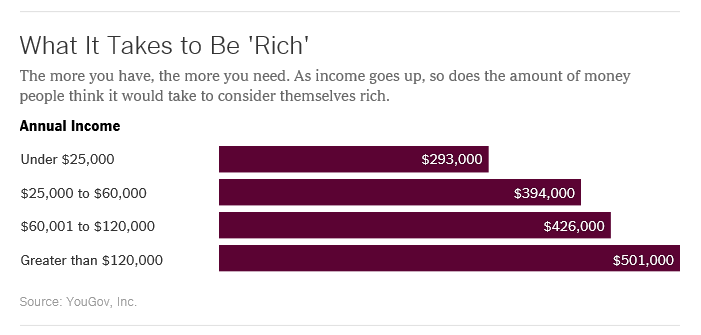
For instance, most Canadians would likely say that don’t have enough money, which isn’t the same as saying they are impoverished. It is simply a reflection of how our wants increase and grow with our incomes. In 2014 the research firm YouGov, Inc. did a survey looking for people to identify how much they needed to earn to be “rich”. Unsurprisingly as people earned more their idea of what constituted “rich” grew with their income bracket, which is why so few people self-identify as being wealthy.

Rich You can read the whole story about that from the New York Times. But for young Canadians who are fresh out of university, the climb up the financial ladder to long term wealth can seem daunting to say the least, and living in big cities can make modest salaries seem virtually impoverishing.

This place is awesome but it costs a fortune!

But that doesn’t make you “poor”.

Poor means a lack of options, or opportunities to change your situation. Well educated young Canadians in junior professional roles have lots of opportunities. But there is also a reason that we say youth is wasted on the young. Because young Canadians who don’t start saving, defer starting RRSPs and TFSAs, find that they are scrambling in their 40s and 50s to save for their retirement. They do have fewer options and are a great deal poorer for it. This isn’t a hypothetical; lots of Canadians are finding themselves in exactly this situation. Saving isn’t just about putting money aside, it’s about keeping options open in the future.

Globe & Mail Senior

The other day the Globe and Mail talked about the growth of debt among seniors, a move that was described as making seniors “Financially Fragile”. The core of investing revolves might be described as revolving around this principle: avoiding fragility. Frequently we represent investing as freeing people to enjoy their retirement on the beaches of Cape Cod, with sweaters draped over shoulders. But investing and saving is about being able to deal with all the rough spots in life.

Is this your retirement? Commercials for retirement planning frequently feature retirement as one of endless vacation.

Unexpected costs like new furnaces or car repairs can undo vacation plans and cottage retreats. Saving early doesn’t just help plan a life of leisure, it insures that your best laid plans aren’t upended by all the other things that life throws at you. It is far easier to be poor in old age once you’ve earned your last dollar than it is when you are younger and millions of opportunities await you.

So if you were one of the young Canadians worried that you don’t make very much, keep in mind that it is temporary. But if you want to avoid being actually poor in the future, start saving today so you aren’t panicking tomorrow.

Don’t want to defer your saving any longer? Drop us a message!

← Back

Thank you for your response. ✨


It Doesn’t Matter if There Isn’t A Real Estate Bubble

Last week I published a piece on the dangers of the housing bubble in Canada. It caused a stir with a number of clients and followed many articles over the past two years about our concerns with the Canadian economy.

Debt-Shackle-Charlotte-Bankruptcy-Lawyer-North-Carolina-Debt-Attorney

But on Wednesday I was at an industry lunch with another group of advisors talking about the Canadian housing market and was met with a curious objection over whether there was any real danger at all. Another advisor happily pointed out to me that while the indebtedness of Canadians may be high, it is still affordable, and we should be mindful of the famous investors you have been hoisted by their own doom saying petards.
While it’s true that many doom saying predictions don’t come to pass and we should be careful before signing on to one particular points of view, arguing that lots of debt is affordable and therefore no threat is similar to a drug addict arguing everything is under control because they still hold down a job. The job is irrelevant to the problem, although it’s absence is likely to make matters worse.

calgary1

This is why it is somewhat irrelevant to worry about the Canadian housing market. Whether you believe there will be a soft landing, a hard landing or no landing at all, what Canadians have is a debt problem. Only it’s not a problem because it’s affordable. Also it’s a problem.

If that last sentence is confusing, don’t worry. It sounds worse coming from the Bank of Canada, who in their December Financial Systems Review pointed out that debt levels continue to climb but the relative affordability of the debt remains consistent. And while an economic shock to the system could make much of that debt unserviceable, for now that seems unlikely. They concluded this section of the report identifying the risk to Canadians as “elevated”.

This is non-committal nonsense. In economic terms there is a bomb in the room that needs to be diffused, has no timer but will go off at some indeterminate future point. The problem is that Canadians can’t seem to help by adding more debt to the pile. In January Canadians added another $80 billion of debt through mortgages, lines of credit and credit cards, a jump of 4.6%. Our private debt is now over $1.8 Trillion, larger than our GDP. Household saving’s rates are at a five year low, 3.6%. But in 1982 the savings rate was 19.9%. In other words we’ve had a dramatic shift away from savings and towards debt.

Savings rate

While 30% of Canadian households have no debt, almost every demographic is susceptible to the growing debt burden. Even seniors have a growing debt issue. Canada is now unique in the world for having debt levels in excess of the peak of the American debt bubble in 2008, and is currently only surpassed by Greece. Traditionally I am highly cautious about grand pronouncements about market doom and gloom, but in this instance I am of the opinion that ignoring Canada’s debt problem is willful blindness.

How to best handle this problem will have to be left to others. There is no simple solution that will not trigger the bomb, and the goal of any government is to slowly reduce the average debt burden without hurting the economy or deflating the bubble. For my part I tend to advise people to pay their debts down, shy away from things they cannot afford and encourage saving rather than debt spending to limit risk. When it comes to saving for the future there is no reason to make many people’s problems your problems.

The Next Debt Bubble or The Last War?

car-bubbles
Illustration by Mike Faille/National Post

I recall hearing from my mother once that my grandparents had been deeply scarred by the great depression. In a multitude of ways it had affected the financial decisions they made for years after it was all over. It would probably be fair to say that investors have been similarly scarred by the 2008 financial collapse, and that no matter how far into the past it recedes, for a generation there will likely always be a nagging doubt about investing as they recall the days when the very future of currencies, countries and their savings seemed in very real danger.

This guy right here would like to give you a car loan even if you can't afford one! Isn't that nice?  Don't read the fine print.
This guy right here would like to give you a car loan even if you can’t afford one! Isn’t that nice?
Don’t read the fine print.

That concern has made us all highly suspect of debt and the cavalier attitudes of Wall Street financiers who remain unfazed by the dramatic peril they engineered through the early 2000s. So it should not go unnoticed when sentences with the words “subprime”, “growth” and “asset backed loans” seem to be on the rise, and recently that has been exactly the case.

Back in the early summer of 2014, Yahoo Finance ran a story about the growth of subprime auto loans and high interest leveraged loans. The short story was that banks had begun to take on more risk to counteract the weak economy and lack of decent yielding products in the market (themselves a product of trying to stimulate the economy).

In September The Economist also published a story called “Bad Carma” detailing some frightening statistics about borrowing rates, riskier assets and ample credit, all dog whistle terms to any investor who took the time to read anything following 2008.

That was followed by a report from CNBC in October regarding concerns of a new subprime lending bubble on the backs of auto loans. Again citing the same looming threat of a growth in the loan market of riskier quality, primarily driven by the desire to boost short term profits.

18psh2kqhvhtcjpg

Finally, in the beginning of this year we have begun to see some of the expected fallout of these subprime loans going bad. While default rates are still low, delinquency rates have started to creep up. Again, the culprits were car buyers with weak credit scores that had been offered subprime rates (like 22% or more) to buy cars. In fact according to the Wall Street Journal 8.4% of borrowers with weak credit scores who took out loans in the first quarter of 2014 had missed payments by November.

It’s easy to be suckered into an early freak-out with these reports, but details matter and in this instance the details, while troubling, are not the cause for concern it would be easy to let ourselves get into. According to The Economist, while the blueprint may look similar to the lead up to 2008, the fundamentals don’t match. First the total car borrowing market is $905 billion, or less than a tenth of total mortgage debt. Secondly subprime lending in the auto sector is a more established practice and accounts for about 20% of auto loans since 2000. But most importantly no one is under an illusion about the value of a car after it is driven off the lot. In the housing crisis borrowers and lenders convinced themselves that they would never lose value on a home, but in the auto sector cars are always a depreciating asset.

So should we be worried? I believe this is more a case of fighting the last war. We are so hyper aware now of what created the last bubble that we are watching for it with super vigilance. That’s not to say there isn’t risk. Wells Fargo recently announced that they would be capping the total percentage of subprime auto loans they make, and in Canada subprime auto loans are part of our dangerous growth of consumer debt. So it pays to e vigilant, but imagine if we were equally wary of tulip bulb prices and technology stocks? Wouldn’t that be ridiculous? It is good to be wary of known dangers, but it’s what we don’t know, or worse, what we choose to ignore that invariably wounds us most deeply.